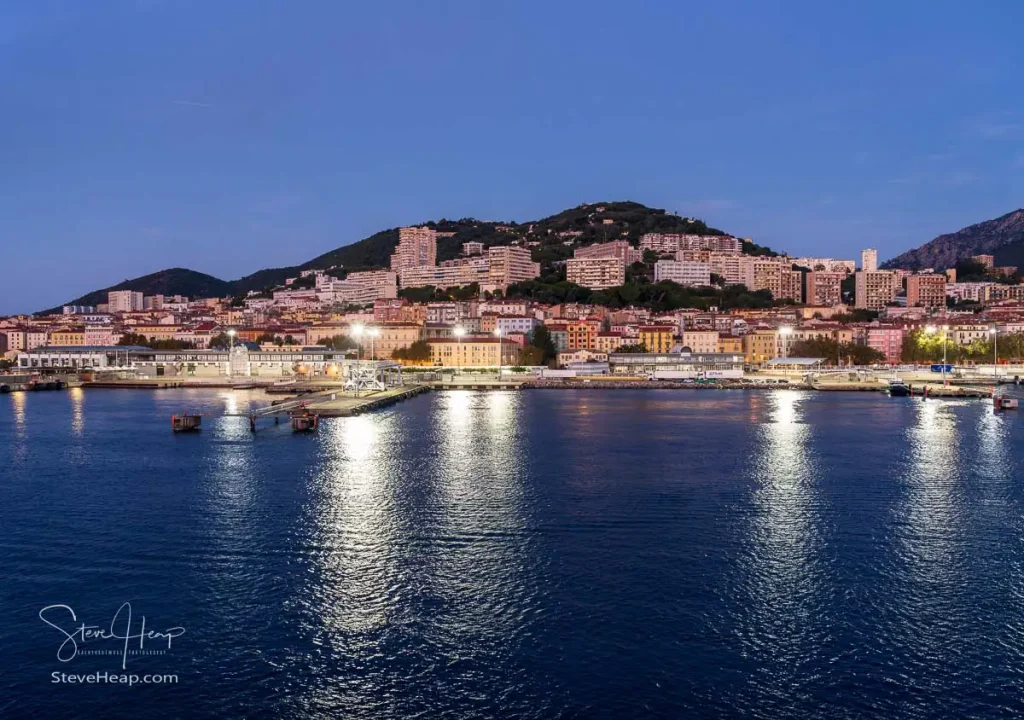
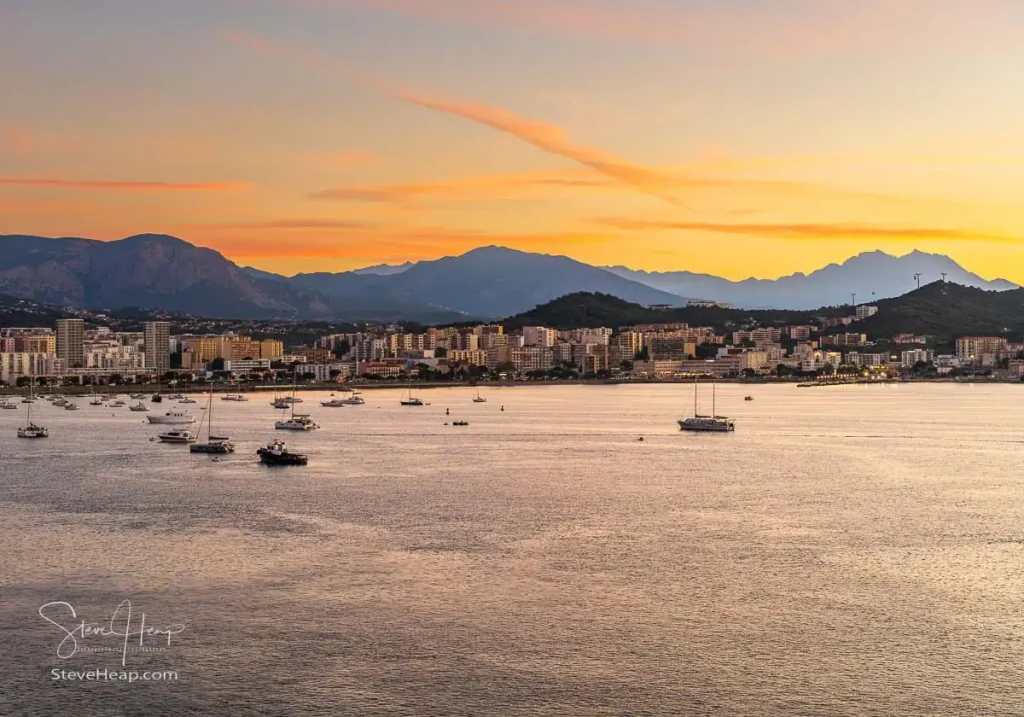
Waking up to a soft, golden sunrise over the bay of Ajaccio, with pastel waterfront buildings reflected in the calm harbor water, was the ideal start to our stop in Corsica.
Because we were eager to see the dramatic western coastline without being locked into a rigid bus schedule, Ajaccio became the first port on our Mediterranean cruise where we canceled our pre-booked ship excursion and arranged a private driver instead.
Finding the Right Private Driver in Ajaccio
As I mentioned in my recent article about the pros and cons of using the ship excursions, I left it to almost the last moment before looking at alternatives. Booking an independent driver in a smaller Mediterranean port takes a little homework, especially if you want to combine multiple stops into a single half-day loop. Viking offered a morning excursion to the coastal village of Cargèse, which sounded like quite a long coach ride with relatively little to see at the end of it. I was looking for more freedom and a wider view of the island.
I initially reached out to Corse VTC, one of the established local chauffeur companies in Ajaccio. Because we were booking just one week from the tour date, their English-speaking drivers were already fully committed, and their initial quote for a five-hour trip with a local driver came back at €600. When I replied that €600 felt steep for a non-English-speaking driver and asked if something closer to €460 was possible, the company’s co-director immediately stepped in to help. Rather than leaving us empty-handed, he called one of his trusted independent driver partners who agreed to run our exact route for €460 and messaged me directly on WhatsApp to confirm the details.
It turned out to be a seamless arrangement. Our driver, Laurent, met us right at the port gates at 8:30 AM in a Mercedes 8-seater van, and his command of English was more than enough for us to communicate pretty successfully during the trip. If you are interested in making a reservation directly with Laurent, he can be reached on +33 6 24 31 99 71.
Climbing the Pass to Cargèse and Its Twin Churches
Leaving Ajaccio behind, we headed north on the winding D81 road, climbing steadily out of the basin toward the Col de San Bastiano. On the way, he offered to take a detour to a less well-known overlook over the bay of Ajaccio and I’m sure no coaches make it here!
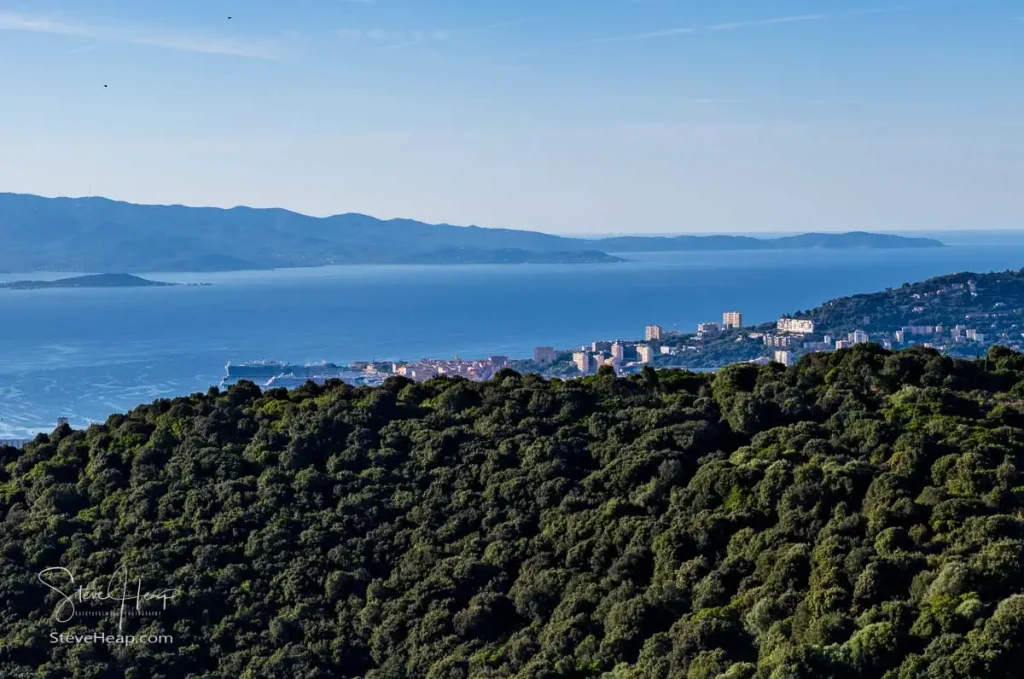
One major thing to know about Corsica, is that it is very hilly! I doubt there are any roads without an endless series of turns as we rose and then fell down to the next valley. Laurent was very careful not to drive quickly and risk car sickness – and we were both fine throughout the day.
At the top of the pass, he pulled into a small parking area with a church and cafe to take in the views.
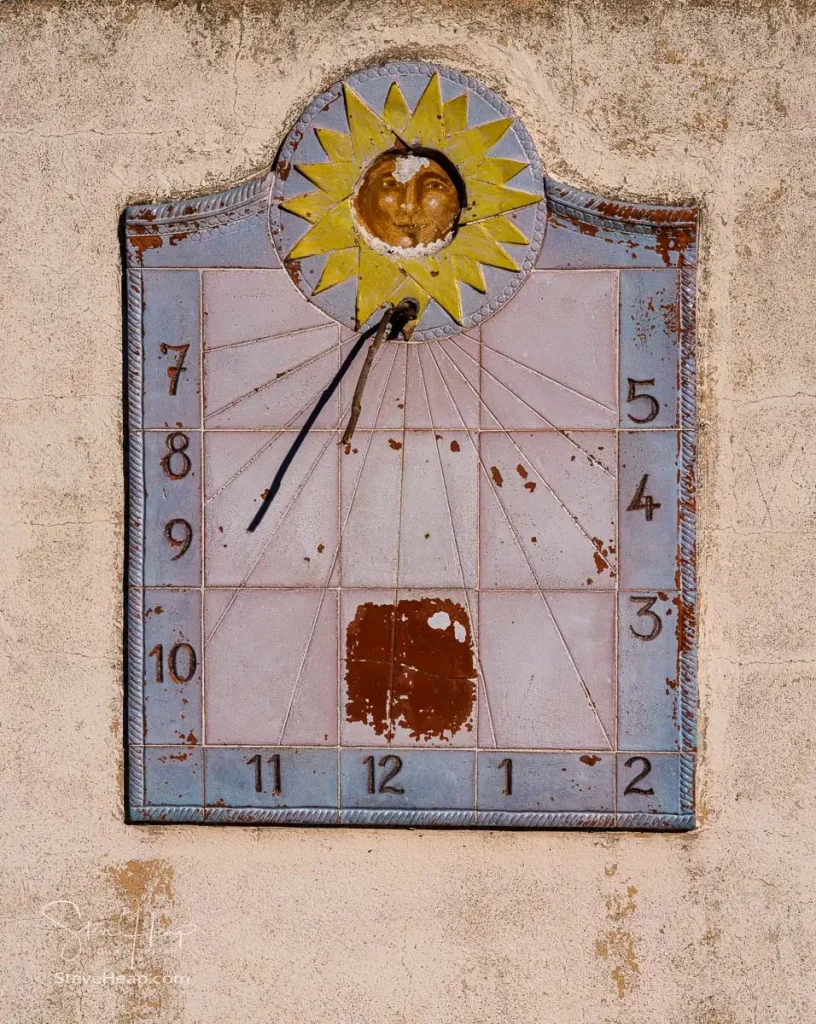
I was intrigued by this sun dial which has obviously seen quite a history. Even with a stick for the shadow, it was remarkably accurate. My camera notes that I took this at 9:44am!
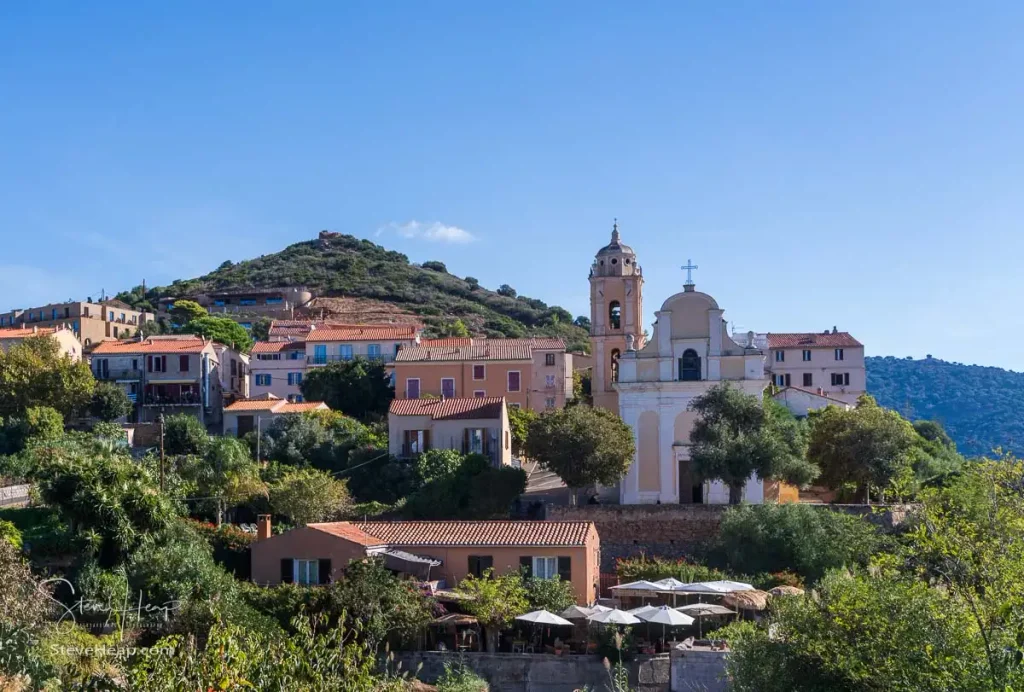
Our first major stop was Cargèse, a picturesque hillside village overlooking the Gulf of Sagone. Cargèse has a fascinating history—in the late 17th century, a colony of Greek refugees settled here alongside the local Corsican population, resulting in the town’s most famous landmark: two imposing churches standing on opposite sides of a small valley, facing one another.
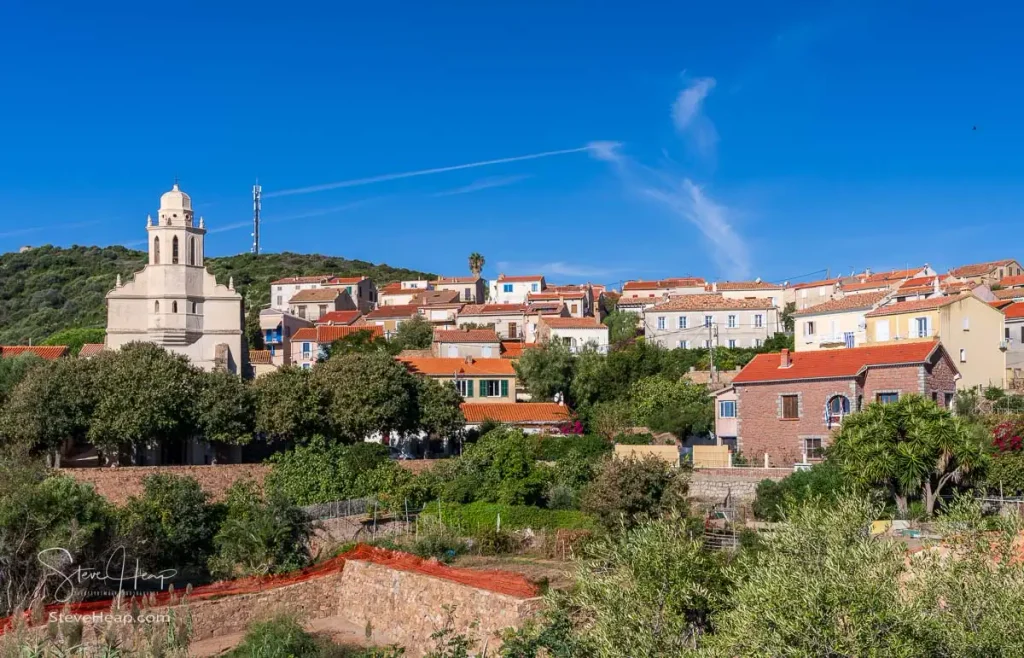
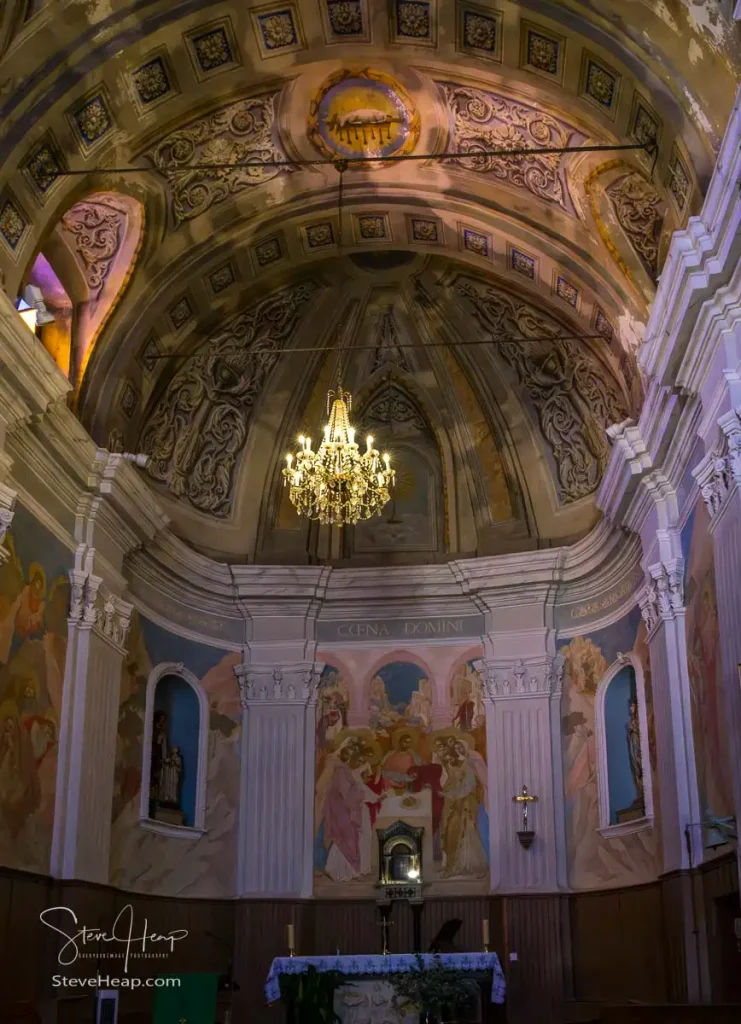
Walking through the quiet village streets before the tour buses arrived, we arrived at the Roman Catholic church. This is not a wealthy village, and the baroque ceilings were painted onto the plaster rather than being carved, but it was a small and welcoming church.
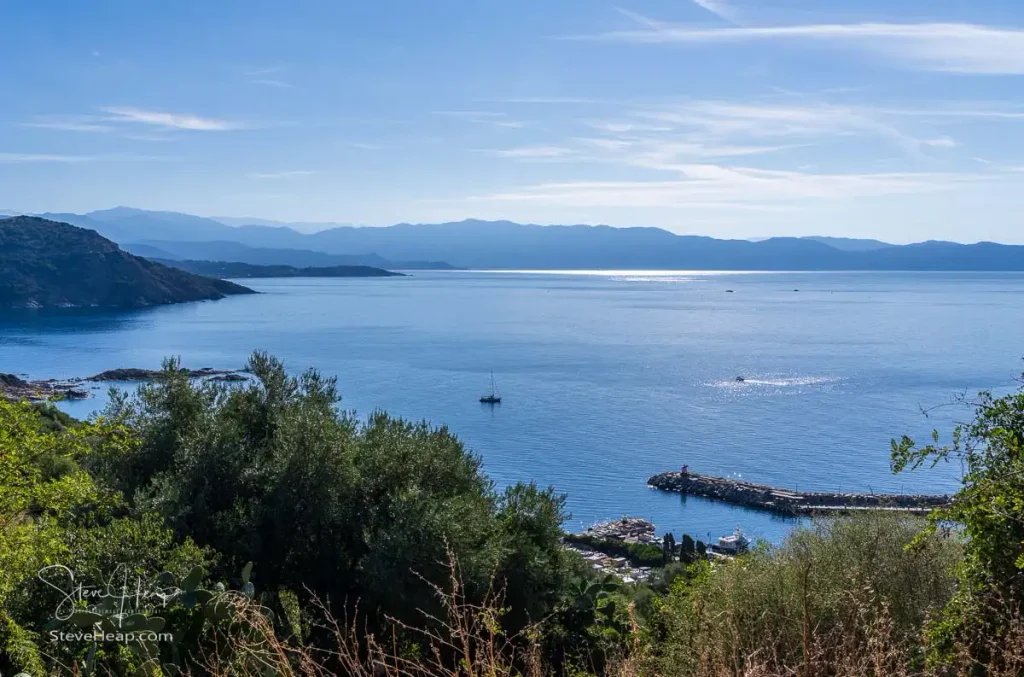
Taking the walk through the village to the Greek Orthodox church, we had a magnificent view across the Mediterranean of the mountainous terrain of Corsica.
On arrival, time to look back to the catholic church opposite.
Inside Église Saint-Spyridon, the 19th-century Byzantine-rite Greek church in Cargèse you enter another world. While the Latin church across the valley features traditional Western Baroque decoration, Saint-Spyridon follows Eastern Christian iconographic traditions, with sweeping wall paintings covering its vaults and arches. Unfortunately it is very dark inside the church, but this first image is of the Last Judgement.
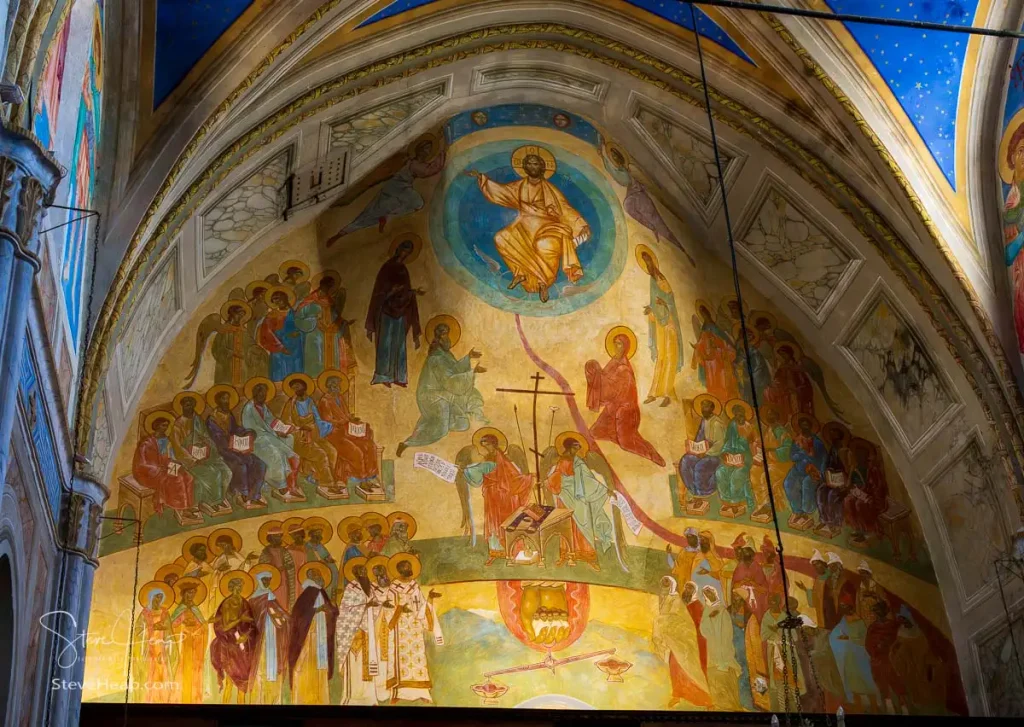
Christ sits enthroned in glory inside a circular mandorla of light, flanked by the Virgin Mary, John the Baptist, and rows of apostles and angels. Flowing downward from Christ’s throne is a fiery red stream that carries the condemned down into the lower right corner of the fresco.
But more surprising is a panel painted on one of the walls by the entrance.
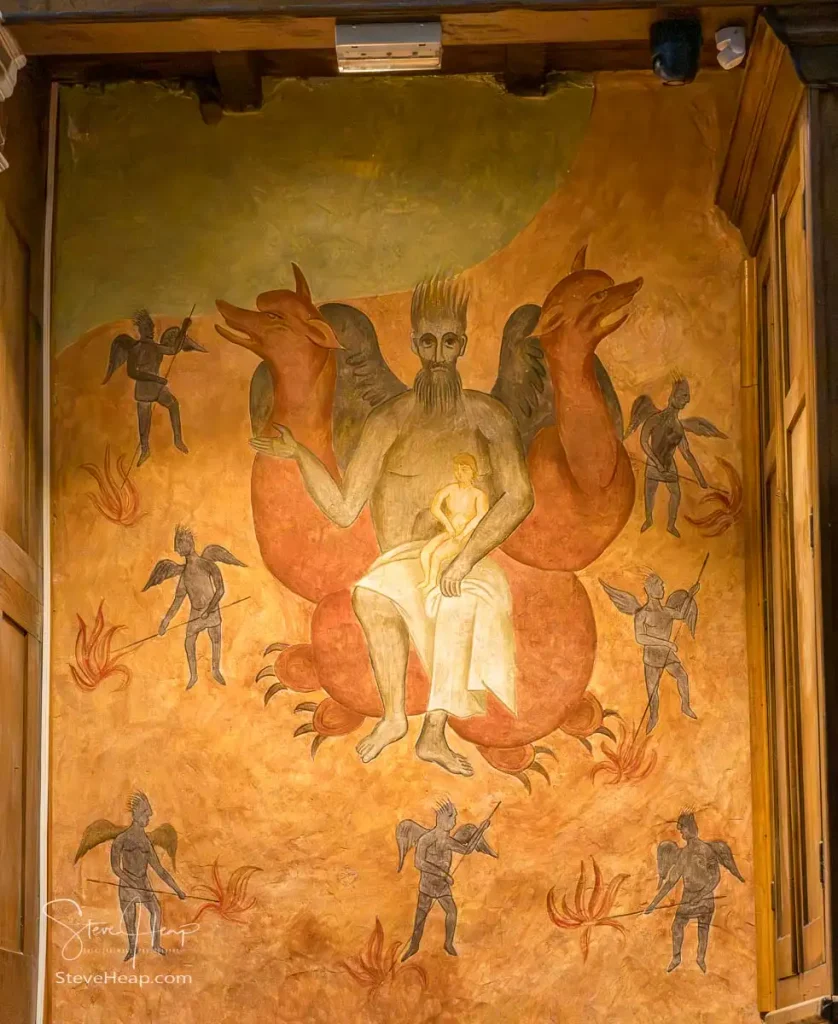
This panel zooms in on what we would find at the bottom of that River of Fire—the depiction of Hell—and what looks at first glance like a figure holding a baby is actually a famous, deliberate visual parody in Byzantine art. Enthroned in the flames is Satan, depicted with horns and seated atop a two-headed beast representing the monster of Hell. The small, child-sized figure sitting on his knee is the soul of Judas Iscariot (in Byzantine iconography, human souls are traditionally painted as small, child-like figures). Artists intentionally posed Satan holding Judas on his lap as a dark mirror—or anti-icon—of the Virgin Mary holding the Christ Child. The smaller dark, horned figures dancing and gesturing around the throne are demons tormenting the damned within the flames. So, now you know!
The Viking tour bus turns round here and returns, via the obligatory restroom stop, to the ship, but we had more excitement in mind!
Mountain Goats and the Red Cliffs of Piana
From Cargèse, the road grew narrower and more dramatic as we pushed north toward Piana. Along one shaded stretch of mountain road, we came around a bend to find a small group of free-roaming goats standing right in the middle of the asphalt, completely unbothered by passing traffic.
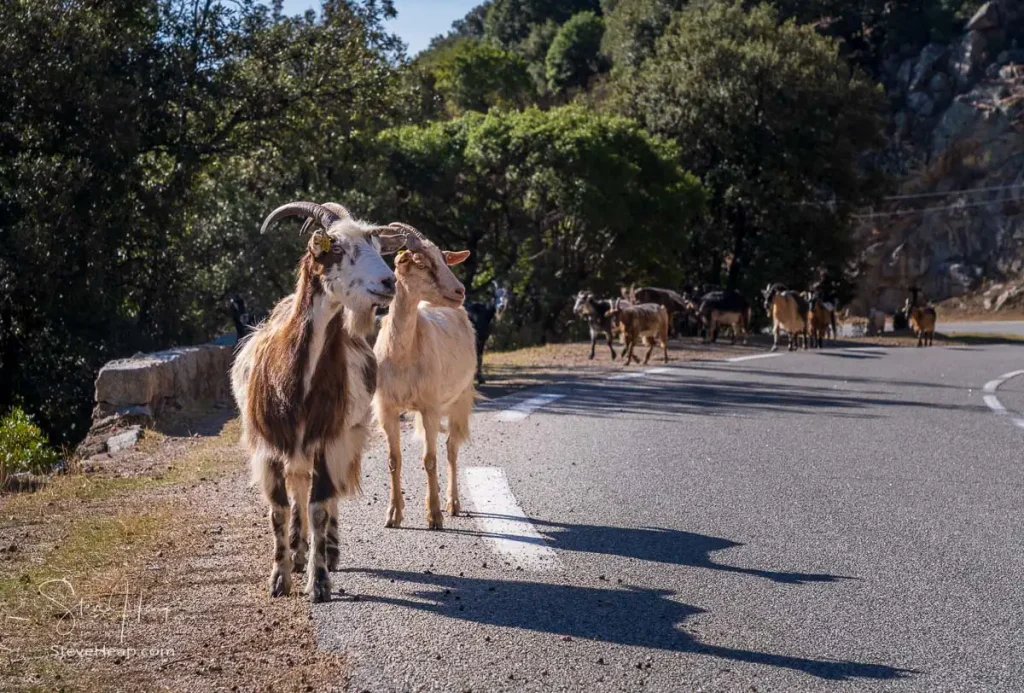
Having a private car meant we could simply pause, laugh, and snap a few photos while waiting for them to stroll off the road.
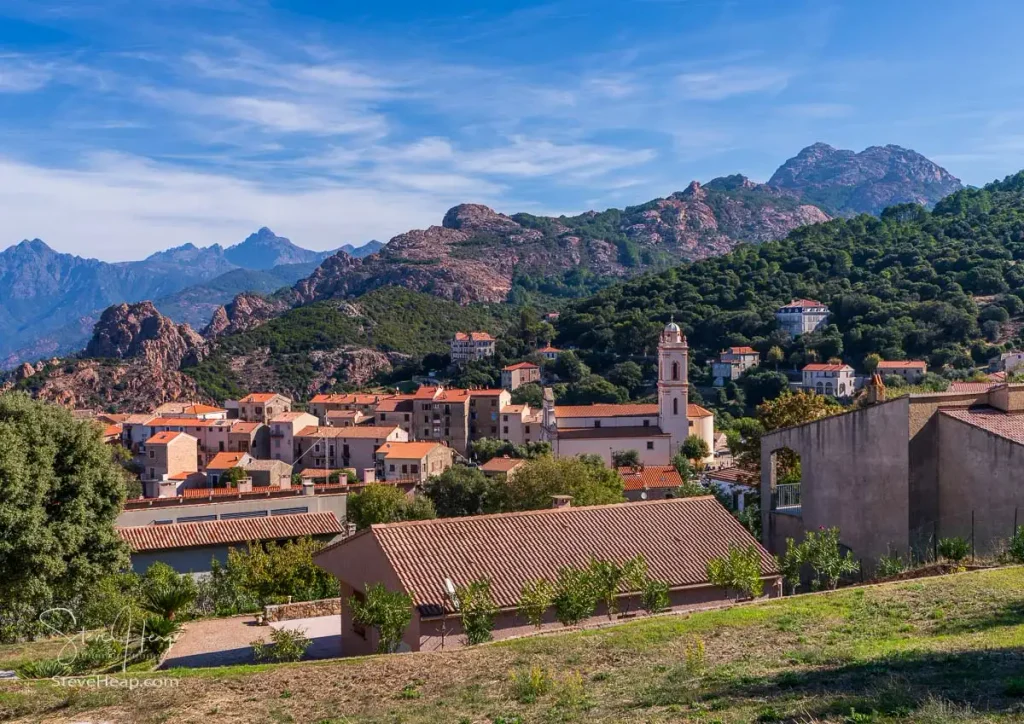
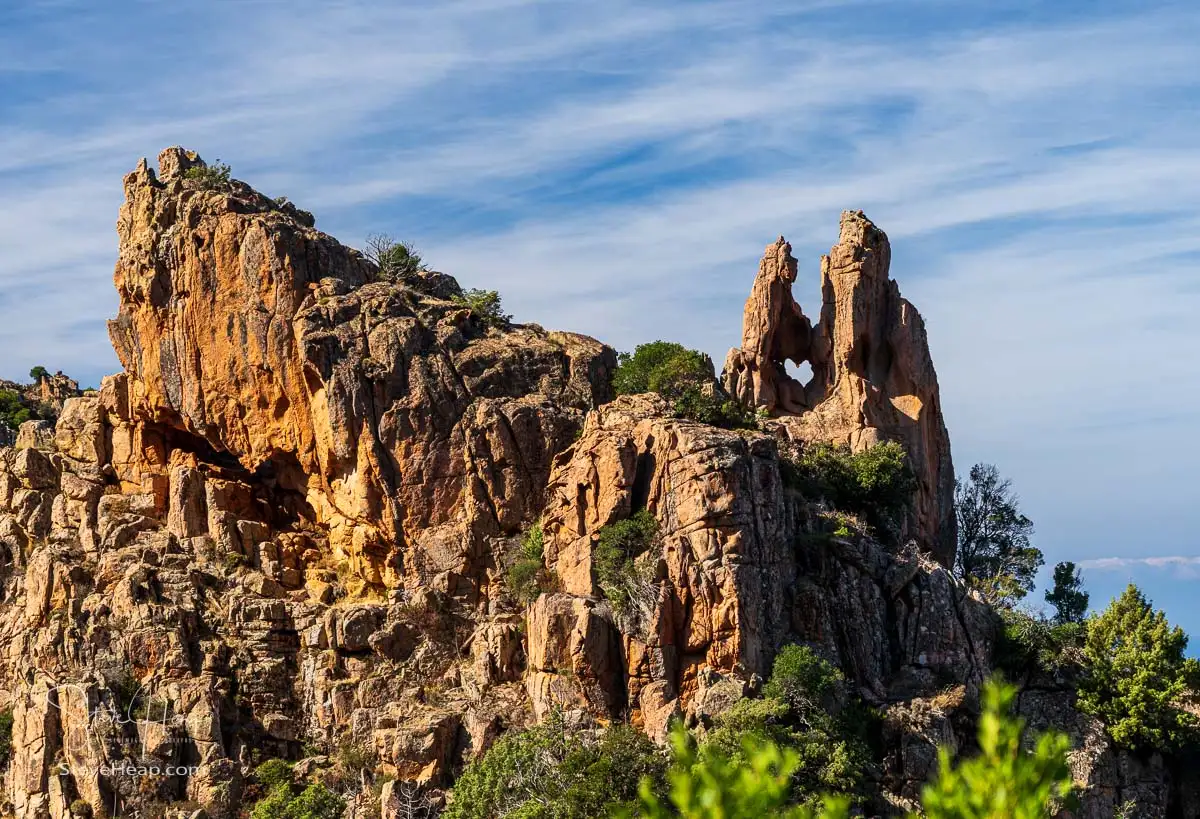
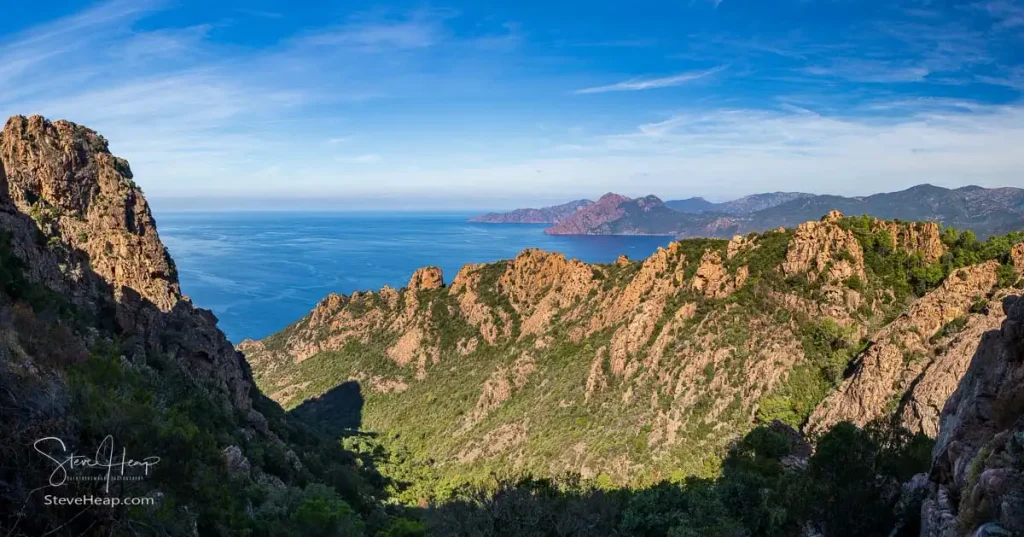
Passing the village of Piana—its terracotta roofs clustered neatly beneath jagged, dark mountain peaks—we entered the UNESCO-listed Calanques de Piana. Here, massive formations of weathered red granite rise straight out of the deep blue Mediterranean, sculpted by wind and sea into towering cliffs, arches, and surreal rock shapes.
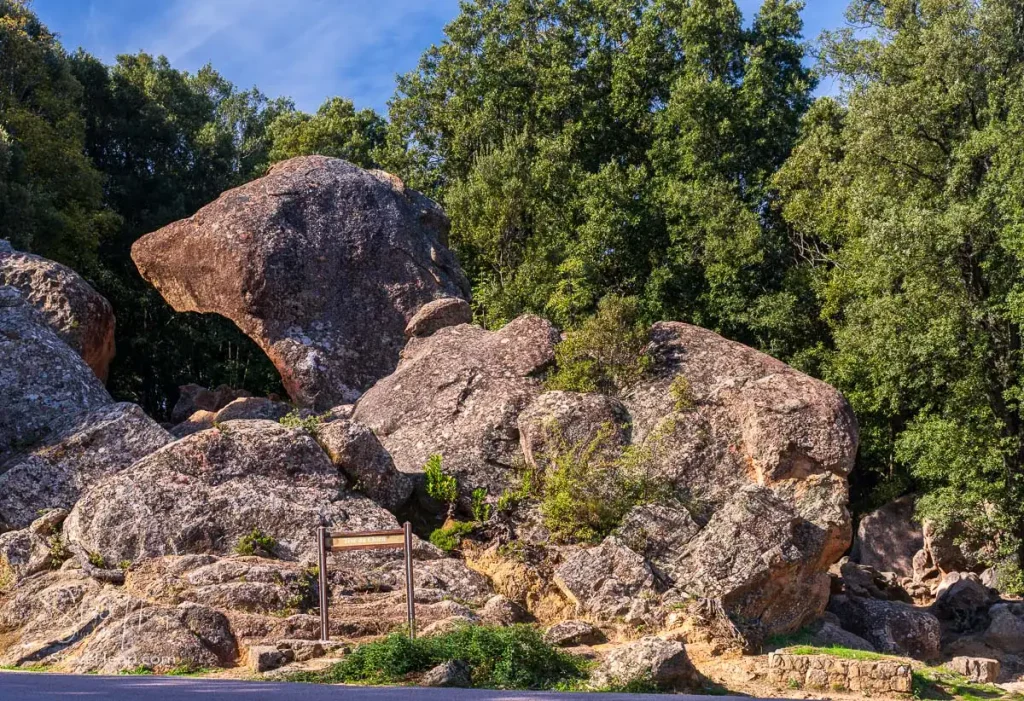
We had heard of one of the attractions being the “Head of a Dog”, and our driver searched for it in my map app. Success, the Tete du Chien!
Our driver was quite happy to just stop by the side of the road – no-one seemed to mind. We were able to pull over at scenic viewpoints along the cliffs and look down over sheltered turquoise coves along the coast without ever feeling rushed.
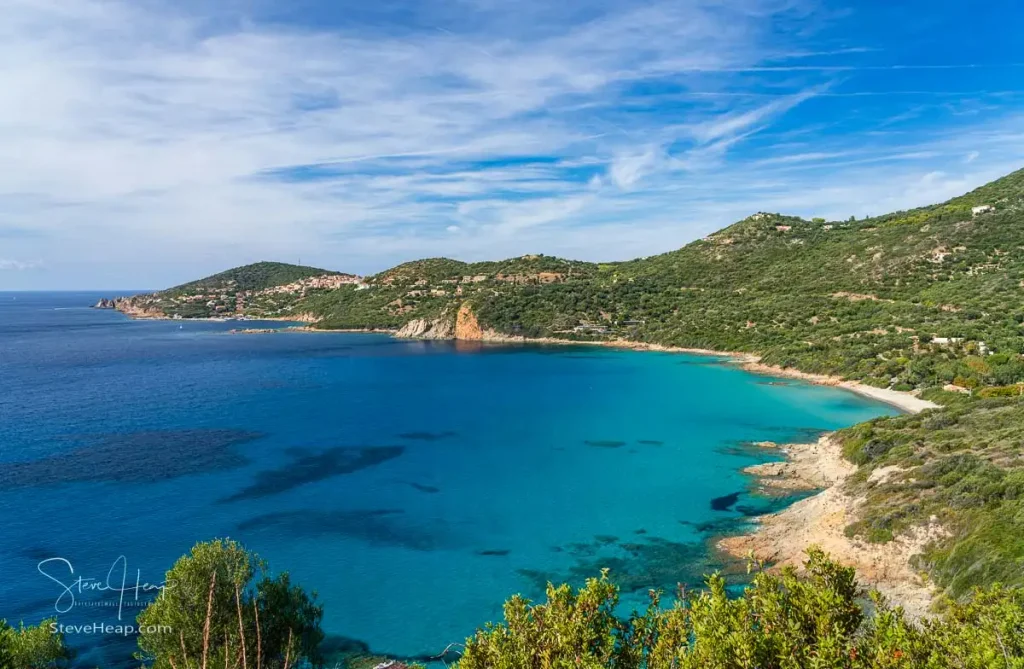
We did stop back in the village of Piana for our own restroom break (generally these are in restaurants in Corsica) and a quick look round the church there, before making the drive back towards Ajaccio with stops to look back along the coastline to Cargèse, which is nestled into that headland on the left of this photo.
An Afternoon Stroll by the Citadel in Ajaccio
True to our schedule, our driver had us back at the Ajaccio cruise terminal right at 1:30 PM. With plenty of time left before our afternoon sail-away, we enjoyed lunch on the ship and then a relaxed walk along the Ajaccio waterfront, taking time to visit the Napoleon home in the city. Now a museum, this was a fascinating little tour that gave us a good education into one of Corsica’s most famous residents!
We followed the shoreline past the massive stone bastions of the Ajaccio Citadel overlooking a narrow sandy beach, taking in the views across the harbor.
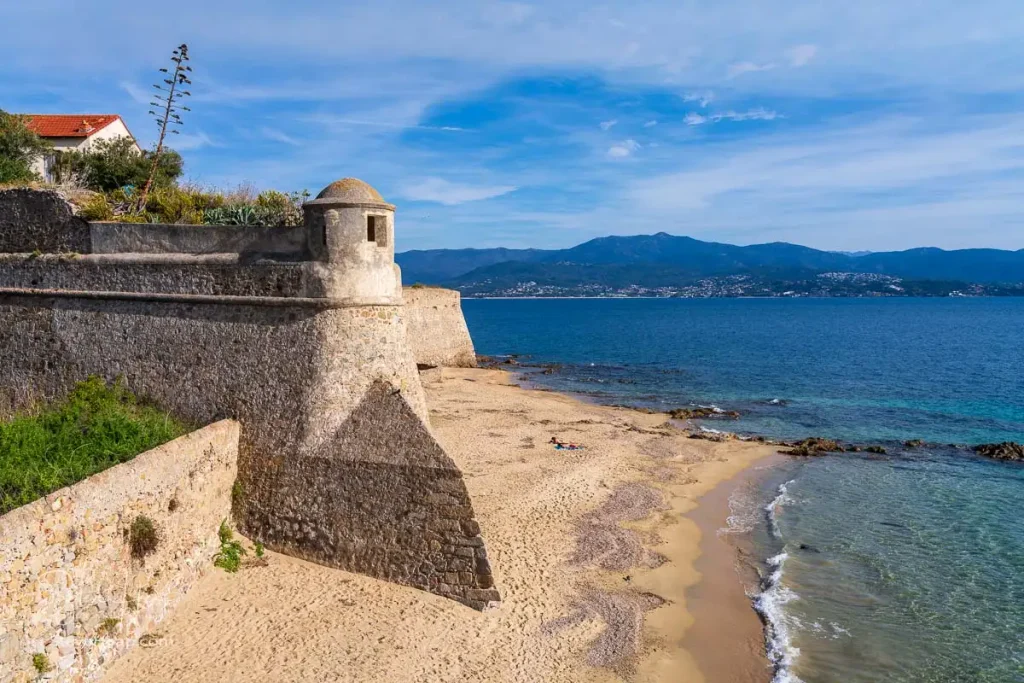
Combining a custom morning road trip through Corsica’s rugged coastal mountains with an unhurried afternoon walk in town gave us the best of both worlds—and proved just how rewarding a well-planned private driver can be. Next stop, Rome. Or more accurately, the port of Civitavecchia.


