Roughly five miles northwest of Chippenham in the Cotswolds area of England, is the delightful village of Castle Combe. English weather is rightly known as changeable and as we drove towards the village, the sky turned the color of a bruised plum. To keep the 14th-century illusion intact, visitor parking is entirely banished from the historic center. We pulled into Dunns Lane, a decidedly modern, tarmac-surfaced lot about half a mile up a steep hill from the actual town. The second I stopped the engine, the heavens opened up. A dramatic, violent thunderstorm with hail rattling the car windows started, forcing us to sit there for fifteen minutes, questioning our timing and hoping the local weather radar was accurate. It rarely is, but this time it showed that perhaps this storm would pass!
A Wet Walk into Cinema History
Once the rain reduced itself to a manageable, highly English drizzle, we made our way down the wooded incline toward town. Walking into Castle Combe is a bit like wandering onto a Hollywood lot—which makes sense, given Steven Spielberg used these exact streets for War Horse, and it doubled as the village of Wall in the movie Stardust.
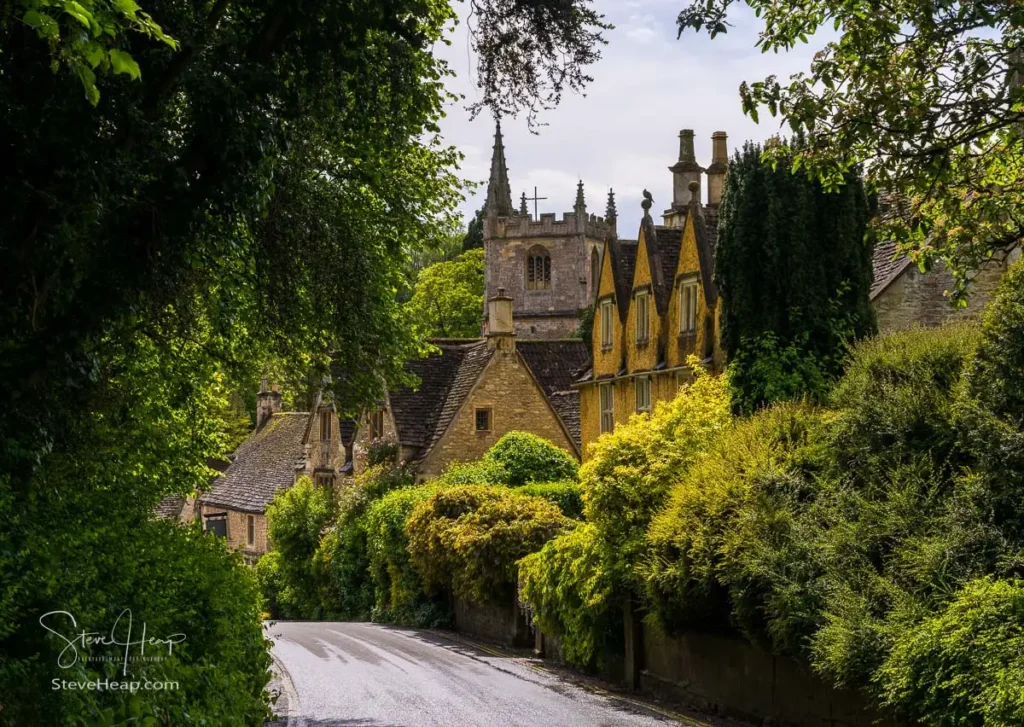
The illusion of stepping back in time is absolute, primarily because the town completely missed the Victorian industrial boom. Without a railway station to drag it into the modern era, the village just sat here, perfectly preserved in its honey-colored Cotswold limestone, while the rest of the country built factories and knocked down or “improved” their properties.
The Riverbed Scene
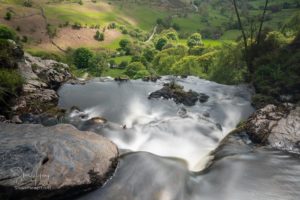
I wanted a low angle of the Bybrook River, specifically looking back at the row of cottages. The composition was obvious: the slow-moving river provided perfect reflections right toward the famous low-arched packhorse bridge. I hopped down about four feet into the rocky riverbed with my camera ready for the image. From down there, the view was spectacular. The fresh rain had saturated the Jurassic-era limestone, making the warm yellow walls and gabled dormers pop against the lush green trees beyond. The water was shallow and glass-clear, reflecting the mullioned windows and the hand-split slate roofs perfectly.
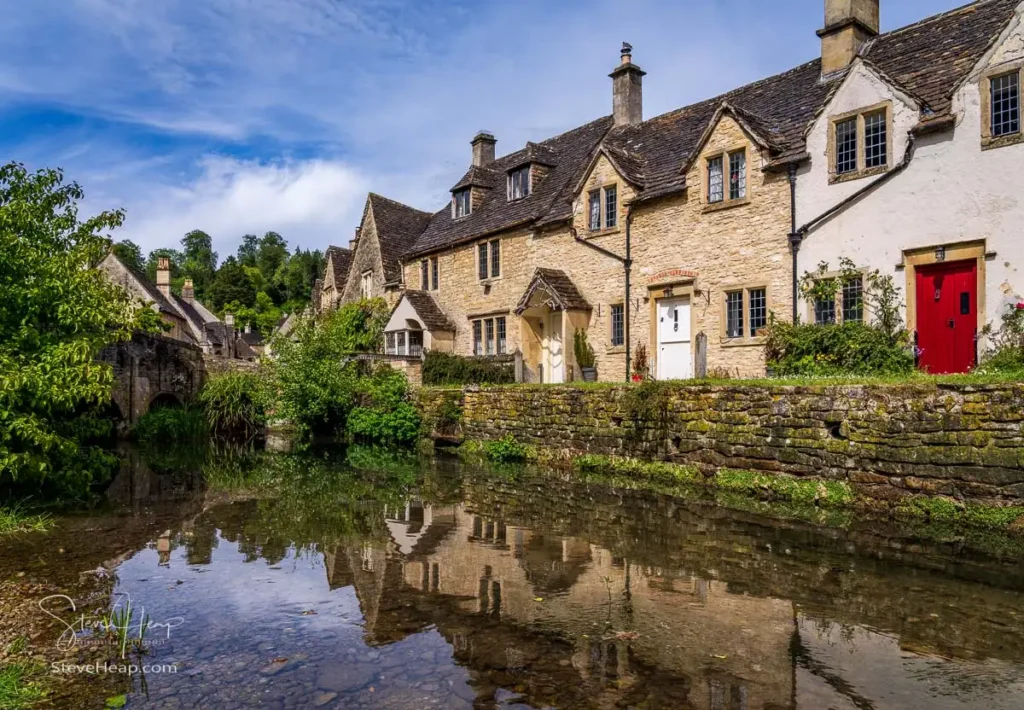
Historically, the waters of the brook were the lifeblood of Castle Combe’s medieval wealth, as they were used to wash fleeces and power the local fulling mills during the height of the village’s cloth industry – now it adds perfectly to the scene!
Getting the shot was easy. Getting my aging knees to propel me back up a four-foot vertical stone embankment was another story entirely. I spent a rather undignified few minutes scrambling for a handhold on the wet rocks, acutely aware that my physical stamina isn’t quite what it used to be. Luckily, few people were there to see my shame!
The Weaver’s Cottages
Dusting myself off, we looked back across the water. The architectural uniformity here is staggering, but it wasn’t built for tourists. Back in the 14th century, under the ownership of Sir John Fastolf, this place was an absolute powerhouse for the English wool trade. Those quaint cottages lining the water were once heavy-duty fulling mills producing a durable red-and-white fabric known as “Red Pale”—a heavy cloth Fastolf actually used to supply his troops during the Hundred Years’ War.
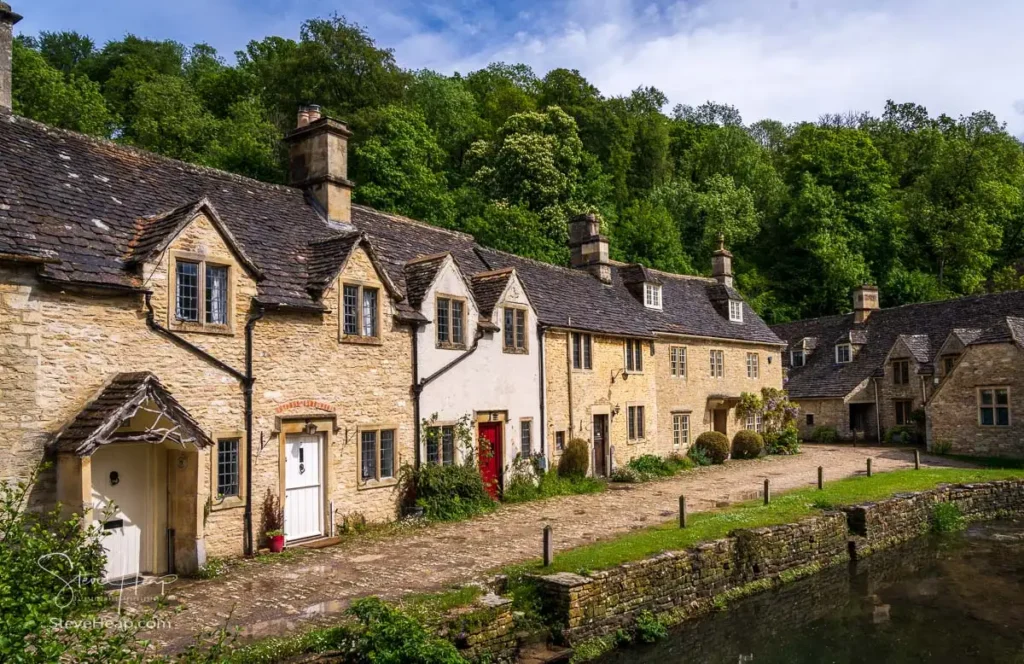
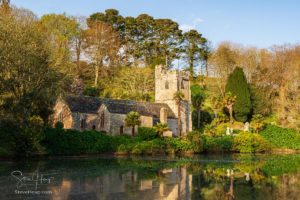
This gorgeous garden is perfectly placed by the river, with the Church tower nestling in the woods behind.
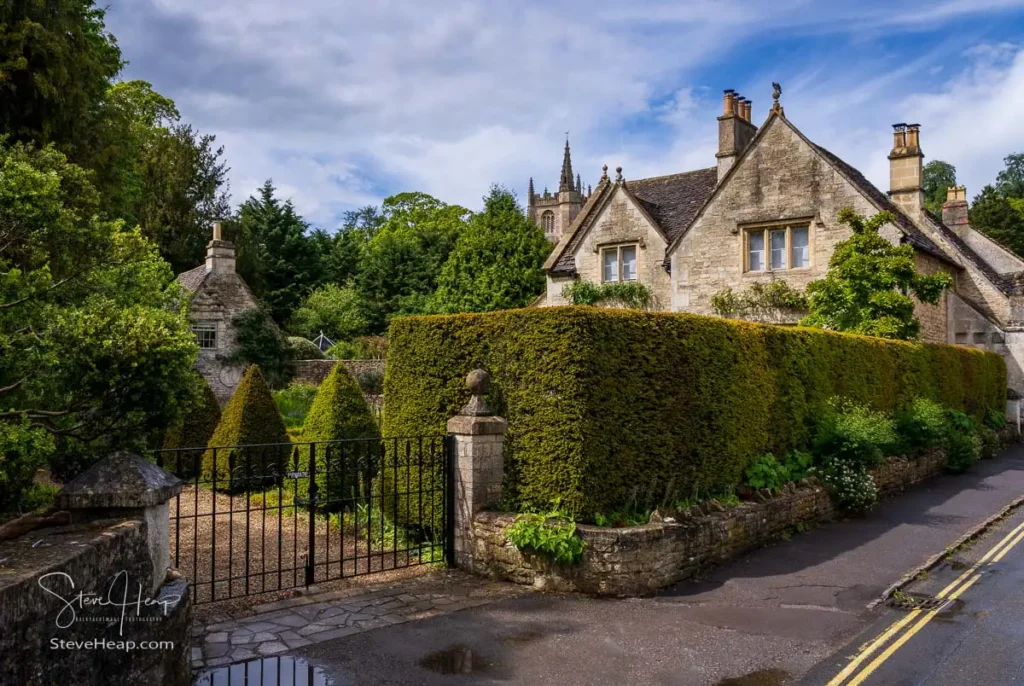
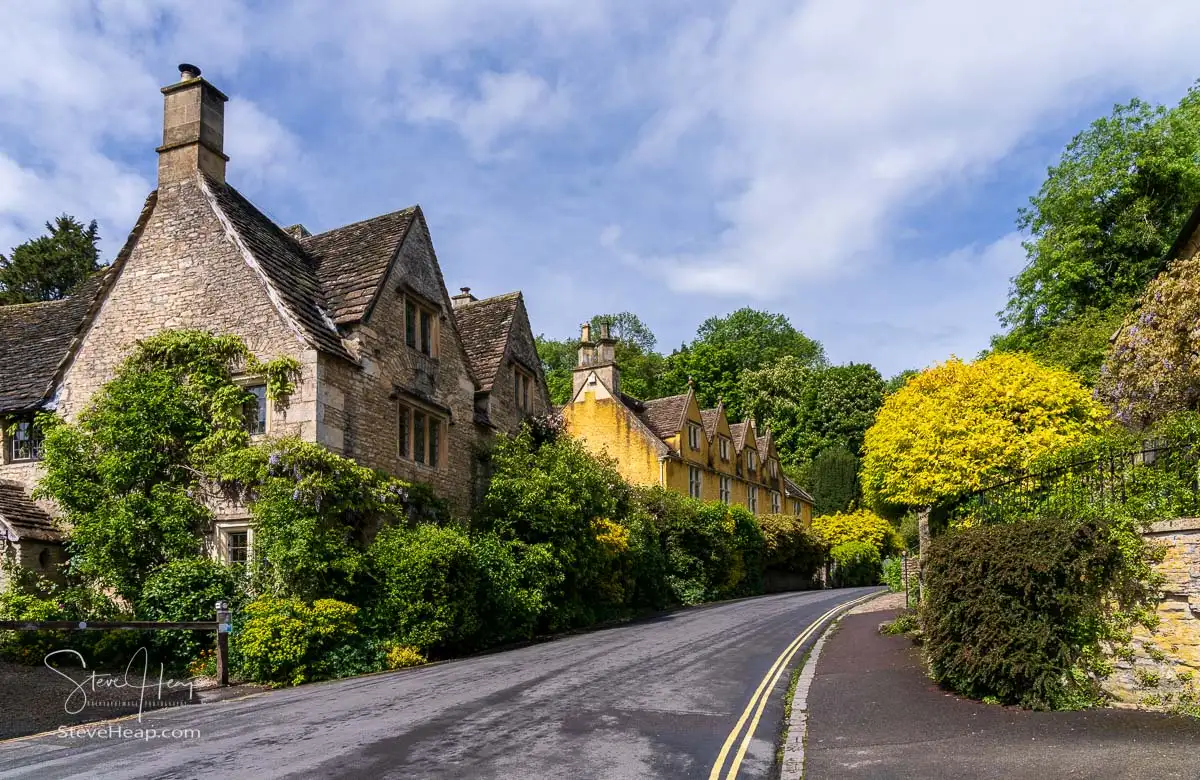
We wandered slowly up the main street towards the Market Cross in the center of the village. Each house along the street is perfect – only the double yellow no parking lines spoil the illusion.
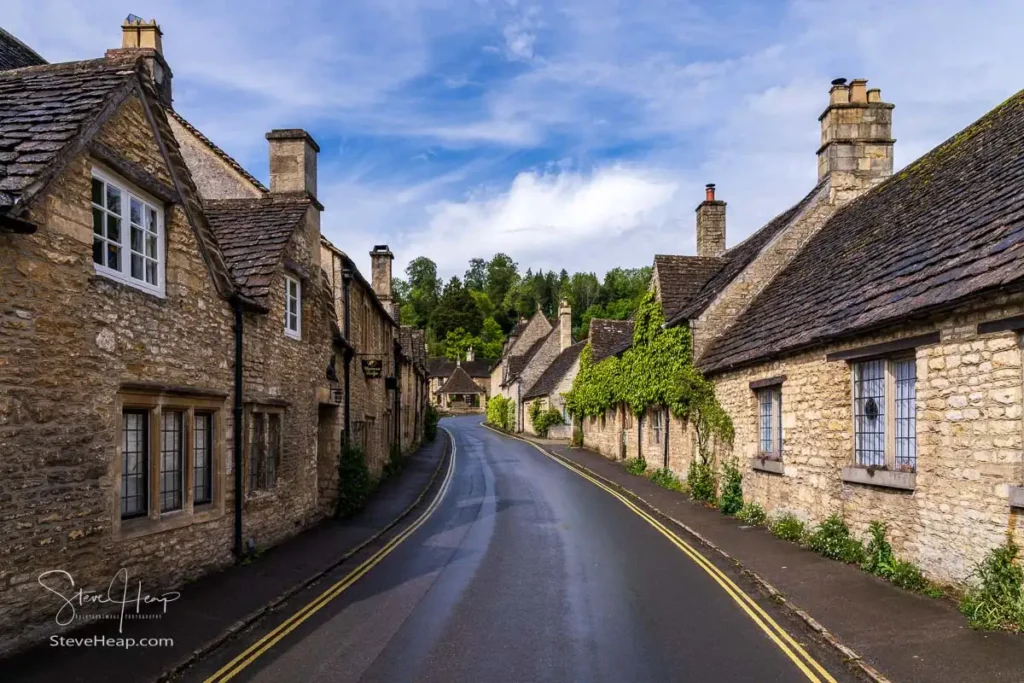
You can see our next destination as the focal point of the image above – the historic 14th Century stone and timber roofed Market Cross. A perfect spot for a framed photo of the village:
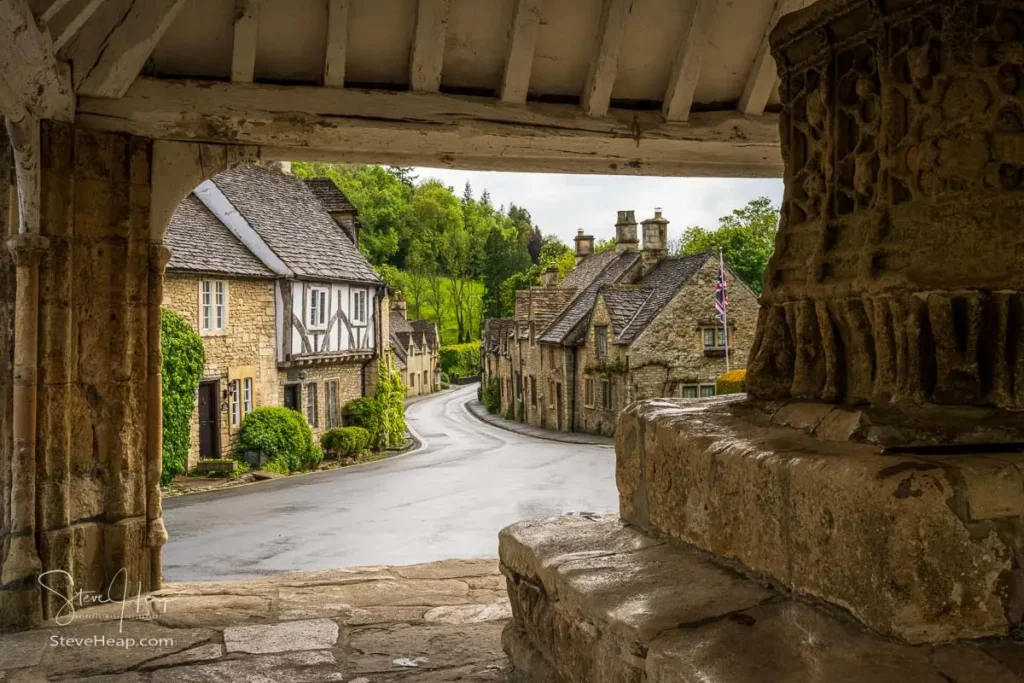
That structure is called the Market Cross (and because it was used for selling dairy and produce, it’s also historically referred to as a Buttercross). It dates all the way back to the 14th century, built when the village was granted the right to hold a weekly market during the height of its wealthy cloth-weaving era.
Close by is the pathway to St Andrew’s Church. The 13th-century churchyard is a quiet expanse of heavy, moss-covered tombs set into vivid green grass. Inside sits one of the oldest working timepieces in the country: a 14th-century faceless clock. It has no external dial, originally designed just to ring a bell for prayer times. It is a highly practical piece of medieval engineering that managed to outlast the very industry that funded it.
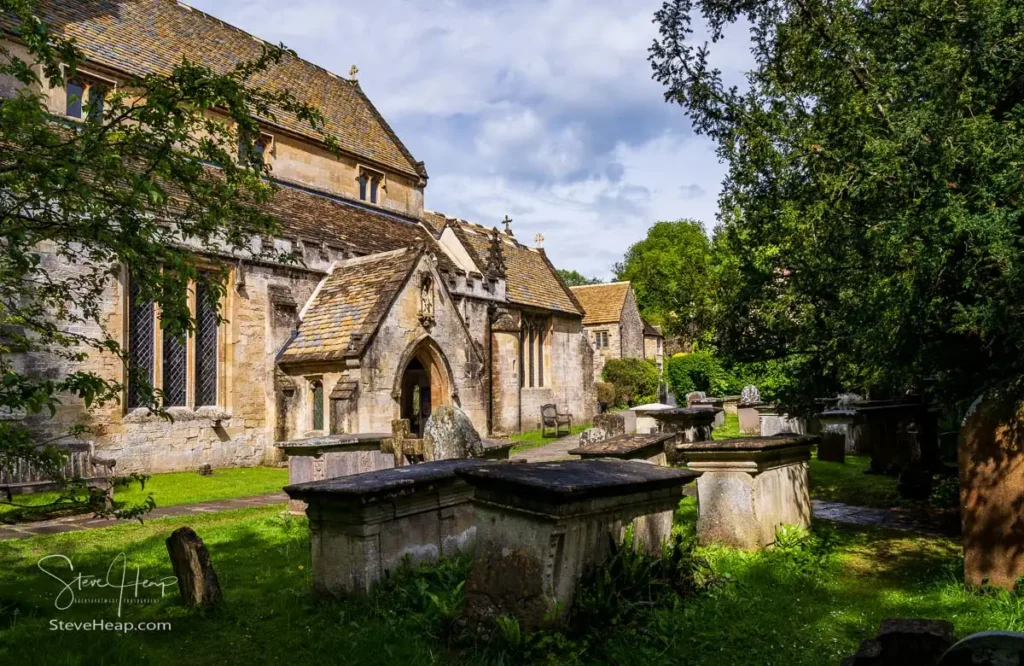
Fading into the Foliage
By late afternoon, the damp chill was starting to settle into our bones. We began the half-mile trudge back up the steep incline toward the modern world of pay-and-display machines. Glancing back down the valley, the village seemed to physically recede into the landscape.
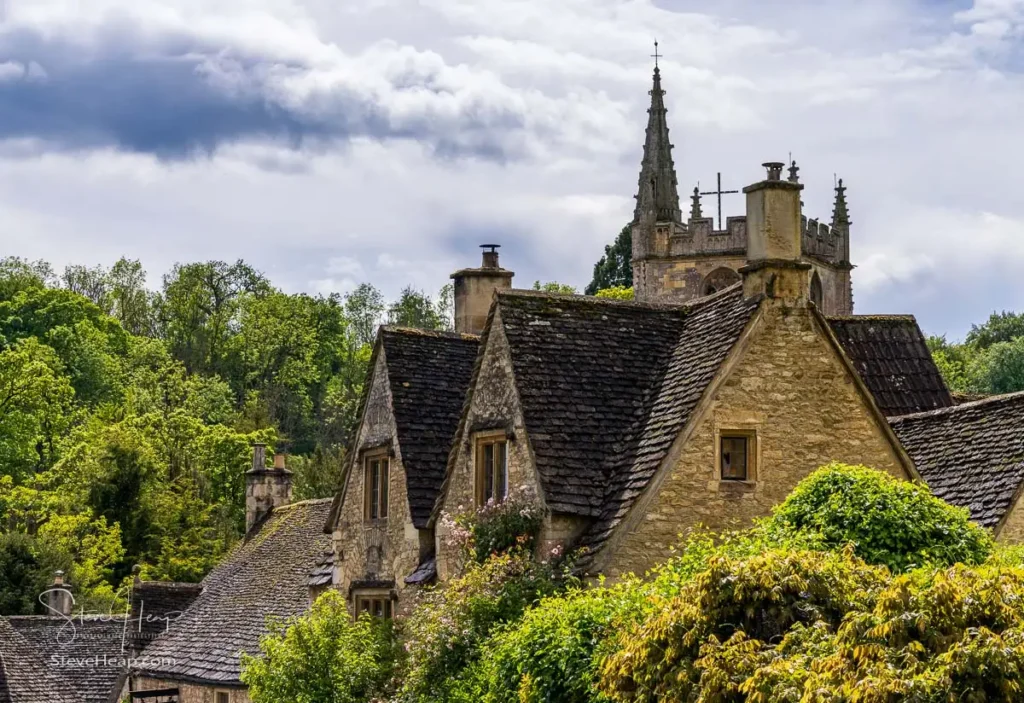
The diminishing courses of the stone roof tiles blended seamlessly into the thick canopy of the surrounding trees, effectively swallowing the town whole. It’s easy to see how the industrial revolution bypassed this place entirely—if you didn’t already know it was down there, you’d walk right past it.
I will add these images to my online gallery for prints, jigsaws and other photographic products soon. If you see something that you would like in your home or office, please let me know.