If you’ve just returned from an intense week capturing a thousand images in Kauai, the thought of setting out again on another photo excursion can feel exhausting. But a few days after we got back in early February 2025, Jacqui and I realized we had three vouchers for a free night in a Marriott hotel from a credit card offer that were set to expire on the 28th of the month. Never one to look a gift horse in the mouth, the bags were packed yet again for a short-notice, highly focused road trip to see more of our new state.
We decided to head south from home to San Antonio, booking a two-night stay at the historic St. Anthony Hotel, with plans to work our way back up through the Hill Country.
Day 1: The Silent Stones of the Missions
Our first afternoon was dedicated to the San Antonio Missions. My primary goal was to explore textures: the ancient stonework, the weathered wood, and the structural geometry of these historic sites.
Established by Franciscan friars in the early 1700s, this chain of five outposts—stretching north along the San Antonio River—was designed as massive, fortified agricultural communities to anchor Spain’s rugged frontier in the New World. But as a photographer, what draws me isn’t just the timeline; it is the physical legacy of how they were built. Constructed primarily from native Texas limestone by indigenous artisans, the walls feature a fascinating blend of strict Spanish colonial geometry and organic native craftsmanship. The deep grooves in the masonry, the heavy, weathered timber, and the intricate, time-softened carvings we were chasing are the surviving textures of over three hundred years of harsh Texas sun, storms, and history. Today, they stand together as the only UNESCO World Heritage site in Texas, offering an endless study in light and endurance. You can find the official page for the National Historical Park here.
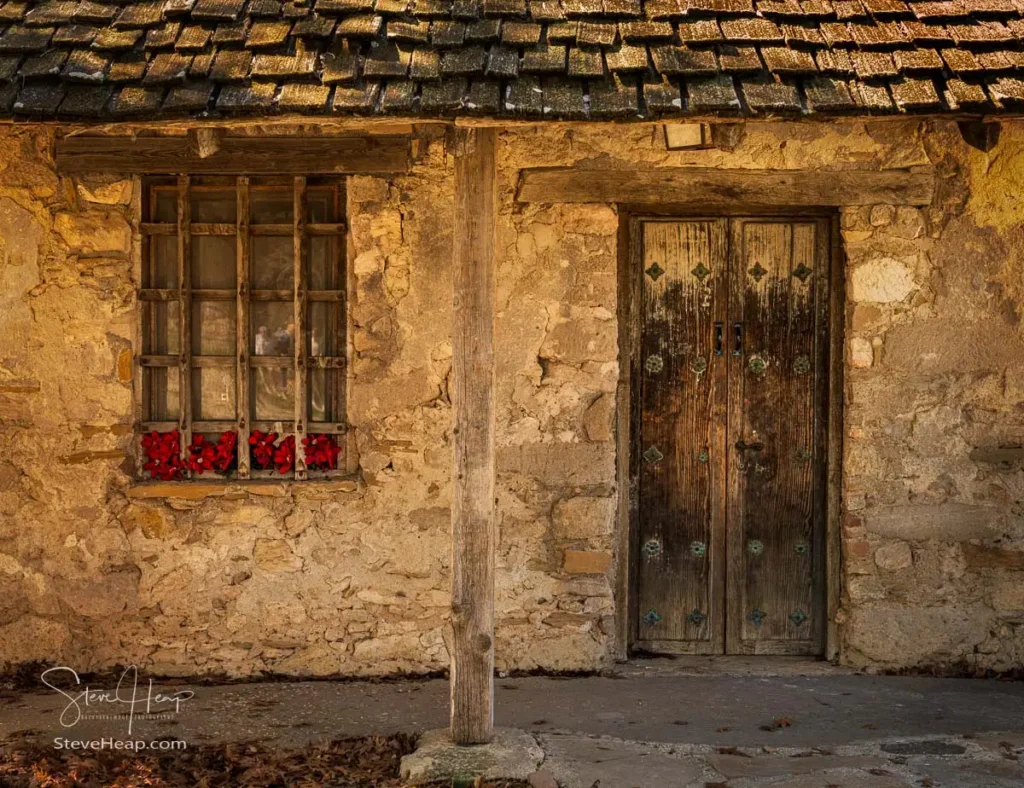
We started with a close-up texture study. A rustic, aged wooden door against a time-worn plaster wall caught my eye immediately, celebrating the raw, historic textures of early Texas in a small outbuilding at the San Juan mission. As you might imagine, in late February, we were on our own most of the time!
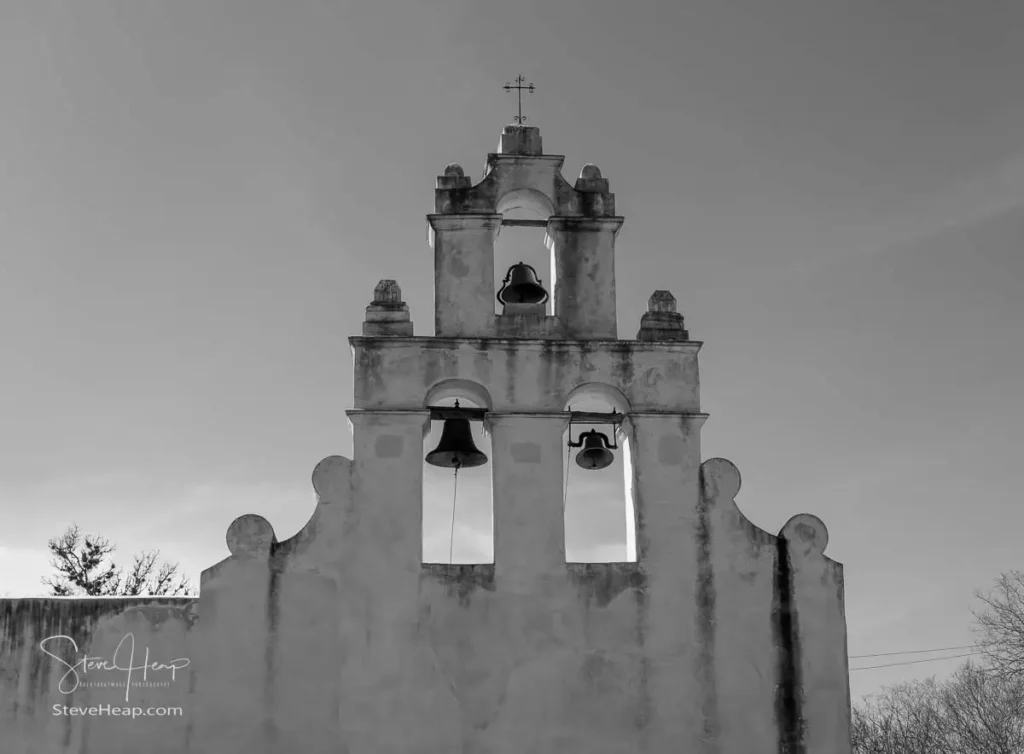
Moving deeper into the mission grounds, I focused on the formal elements of the architecture. A classic bell tower, rendered in black and white, emphasizes leading lines and the sheer geometry of the structure against the sky. It is quite easy to make skies appear quite dark in monochrome images, but I think the lighter tones of this image of the San Juan bell tower works very nicely.
The warm afternoon sunlight was just beginning to skip across the textured stone floor of the courtyards.
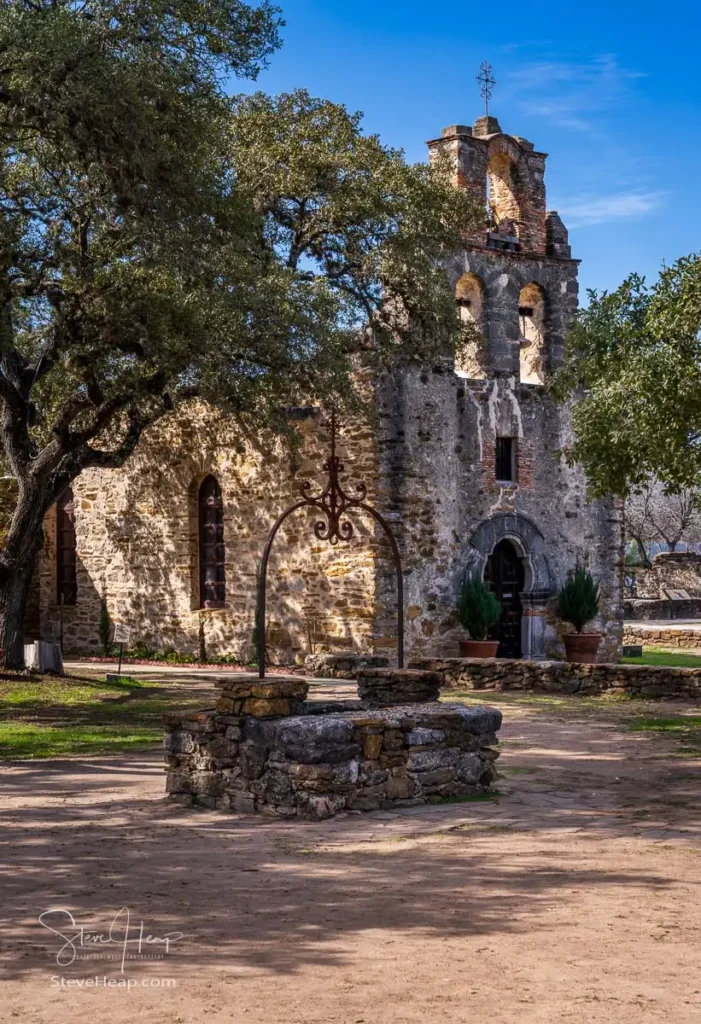
The Mission Espada was next on our list. I was really taken with the cast iron well head in front of the weathered stone of the church fascia. A perfectly peaceful way to spend a warm February afternoon in the Texas sun – sitting quietly in this courtyard.
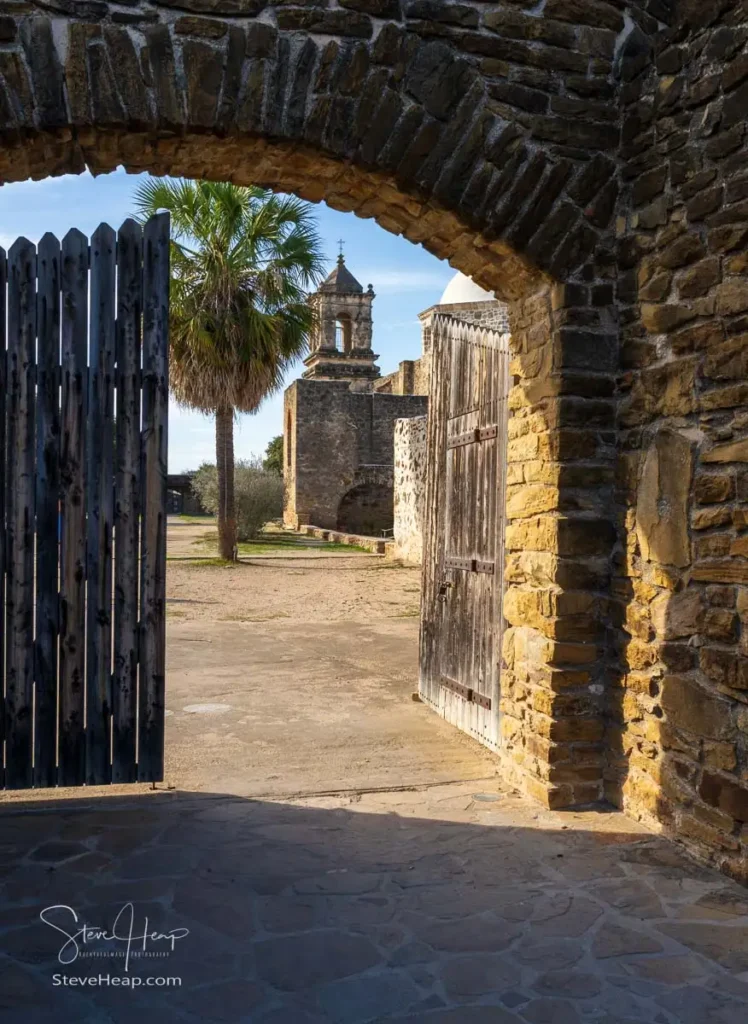
One of my favorite techniques is using the environment to frame itself. By stepping back and using a powerful archway with wooden door as a natural frame, I could capture the depth and composition of the inner courtyard at the Mission San Jose.
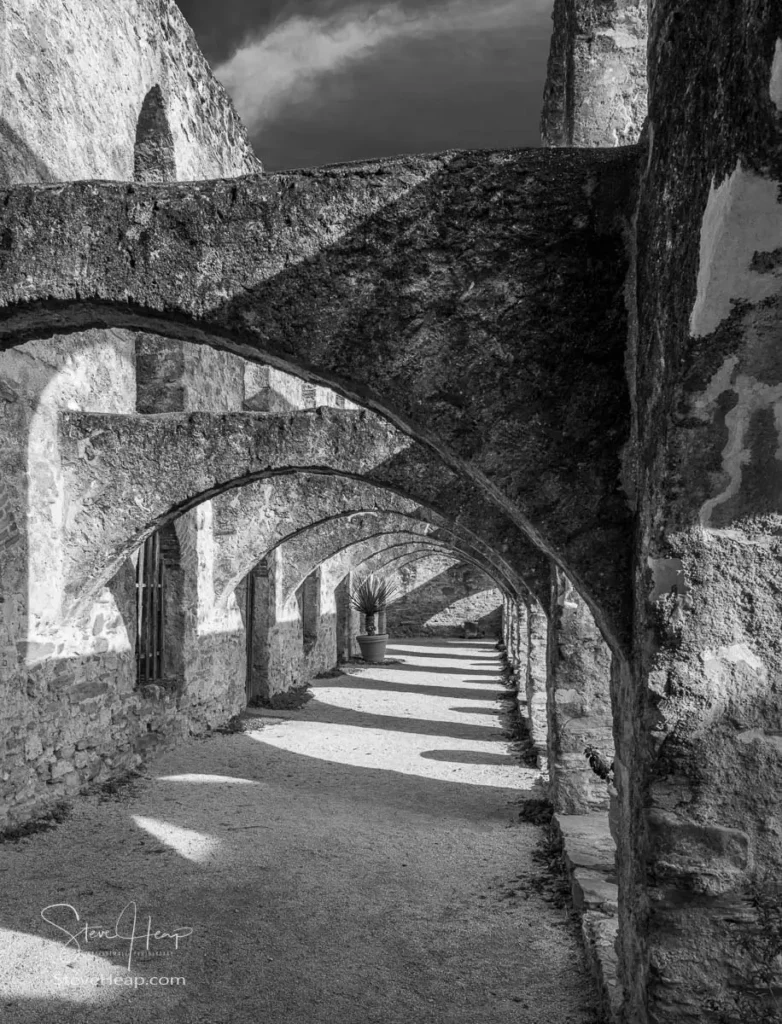
This mission is one of the largest of the group with a very large courtyard with buildings set into the walls. The gardens and archways alongside the church itself provides a more dramatic, leading-line composition in black and white which focuses on the long colonnade. The high contrast between the textured stones and the deep shadows creates powerful visual statement.
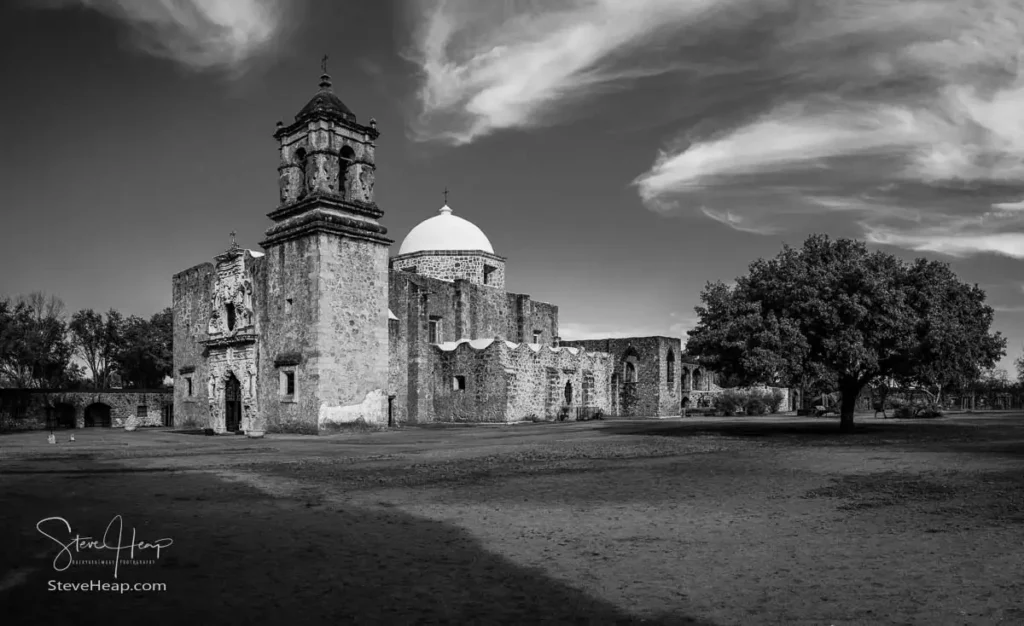
Moving back from the building itself, a black and white view of the entire facade sitting in a massive square gives a fantastic sense of scale and isolation. The wispy clouds provide a nice frame in itself around the structure of the church.
As the day began to transition, the artificial floodlights mixed with the ambient light, creating a vibrant blend that highlighted the stone textures before night fully set in.
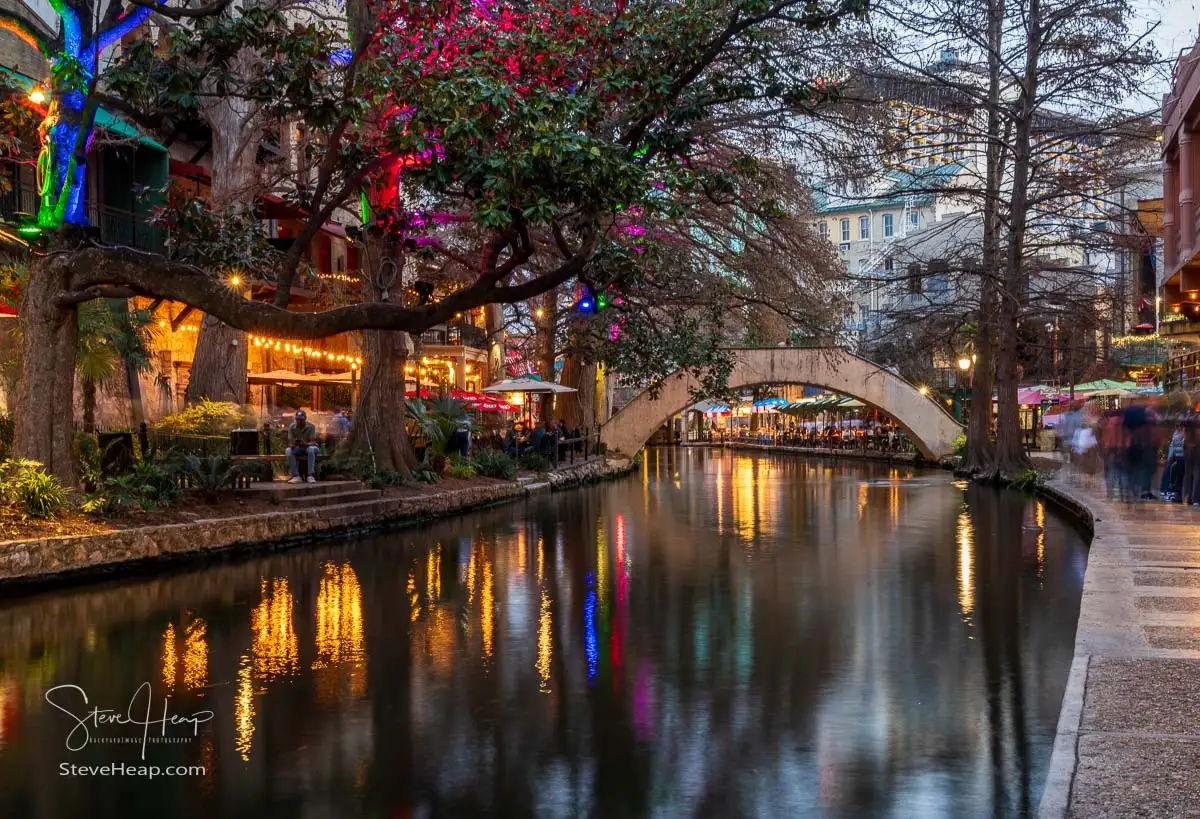
As the afternoon drew to a close, we made our way into downtown San Antonio for our first evening in the historic St Anthony hotel – a great way to end the day. We did stroll into the riverfront area of the city and capture some shots of the tour boats shuttling tourists along the busy pathways, but to be honest, our minds were more focused on the meal in one of those waterfront restaurants!
Day 2: The Dawn River Walk and Villa Finale
Yes, the beer was fantastic with our meal the evening before, but I was still up bright and early before dawn to capture the River Walk without the evening tourist crush. The colorful artificial lights are still illuminating the walkways and bridges, but the environment is entirely yours. I decided to walk to the Alamo first to hopefully capture it in the soft light of dawn, and I started to set up my tripod in the completely empty square when the security guard made his unwelcome appearance. “You can’t do that”, he said. Not just erect my tripod, which I sort of understood (although who would trip over it?). He said that because I had a proper camera, I had to have a permit to take photos of the Alamo. He just would not let me continue and ushered me away from the famous building. I tried searching their website and there is mention of permits for commercial filming, but there was no way I could persuade him otherwise.
So, I retreated to the street that is just off the property and handheld some telephoto images of the scene. That will show him, I thought!
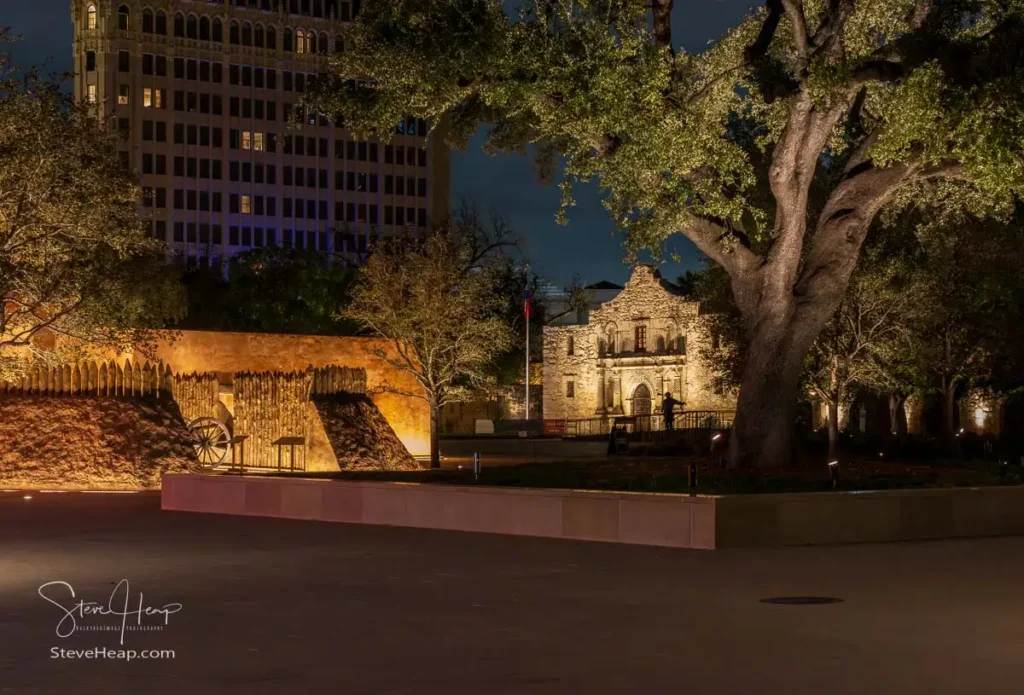
It turned out to be a pretty nice image under the circumstances, I think!
With that one under my belt, so to speak, I ventured down towards the riverbank, but first saw this calm scene from the steps down from the road.
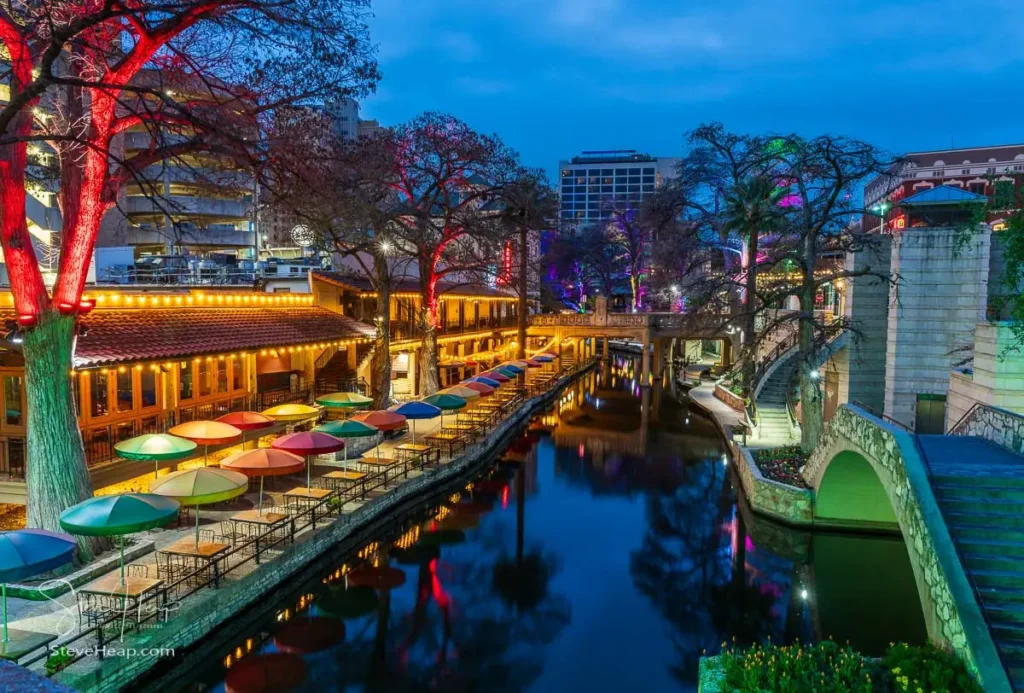
The place takes on a totally different feel at dawn. No noise, no boats, but the famous architecture. My next image was taken under the bridge you can see in this scene. The classic, colorful lighting under the bridge arches creates vibrant textures against the dark water.
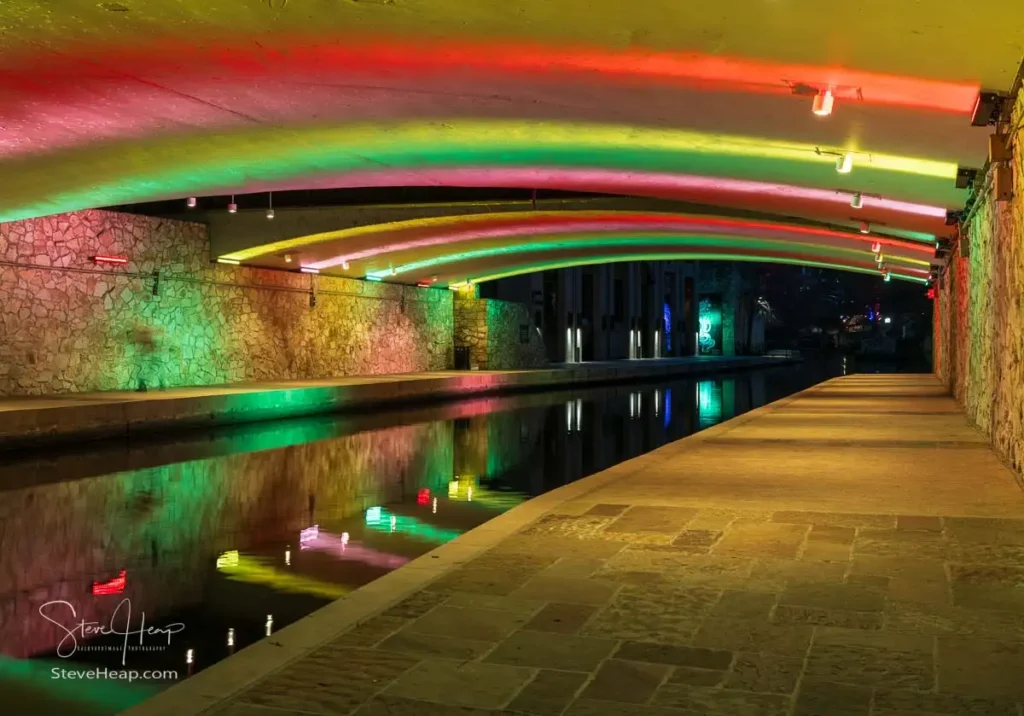
I think I deserved the breakfast at the hotel after this early morning walk!
Continuing our adventures that morning, we headed to the Japanese Tea Gardens. The light here is all about reflections and rich foliage, using the man-made water features to create mirrored surfaces.
Originally an abandoned limestone rock quarry—the very same stone used to build much of early San Antonio—the space was ingeniously reclaimed in the early 20th century and shaped into a lush, sunken oasis. From a photographic standpoint, descending into the garden feels like stepping into a naturally lit studio perfectly designed for capturing tranquility. The harsh Texas sun is filtered through a dense canopy of bamboo and palms, creating soft, dappled light that is ideal for highlighting natural textures. The heavy, rustic stone walkways and bridges provide strong architectural frames, while the still koi ponds and the rushing 60-foot waterfall offer endless opportunities to play with mirrored reflections and the dynamic motion of water against raw rock.
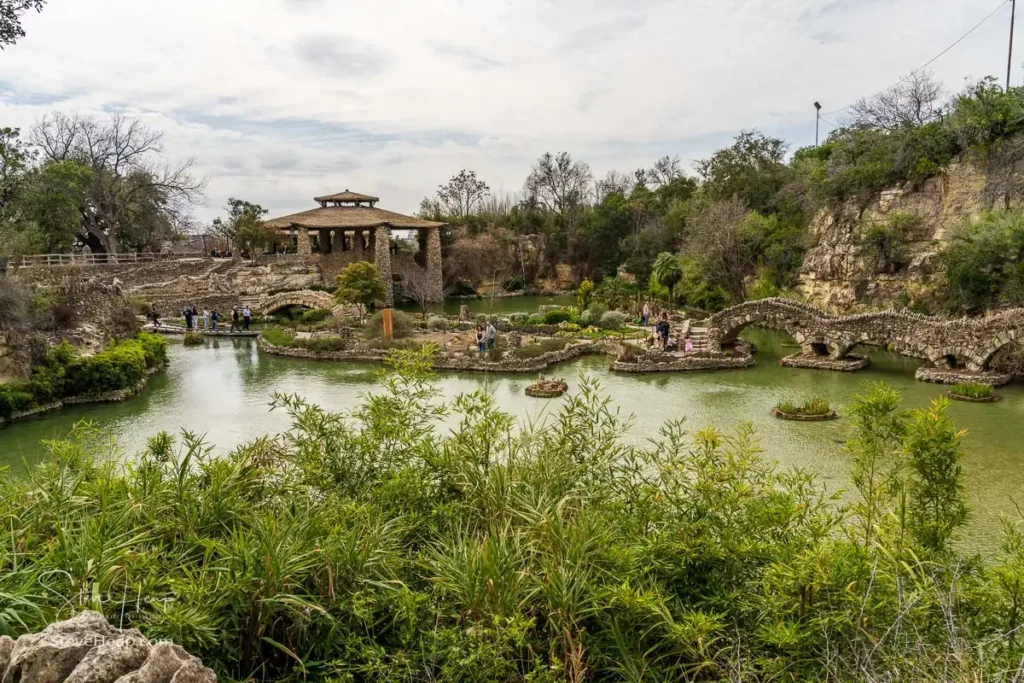
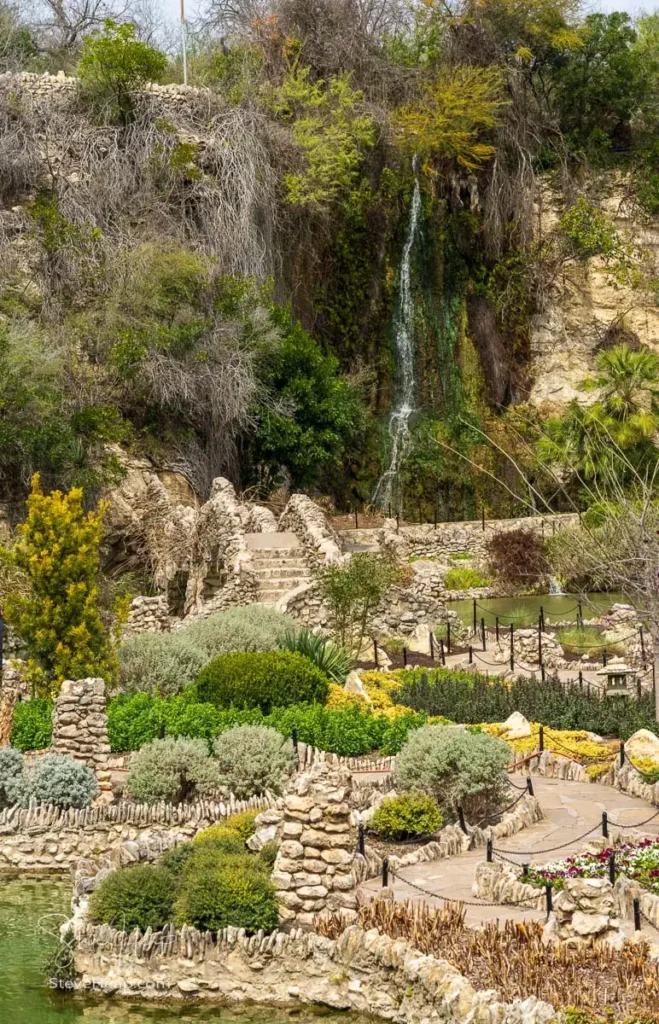
Later that day, we pivoted to a completely different era of Texas history: the Victorian charm of the King William district.
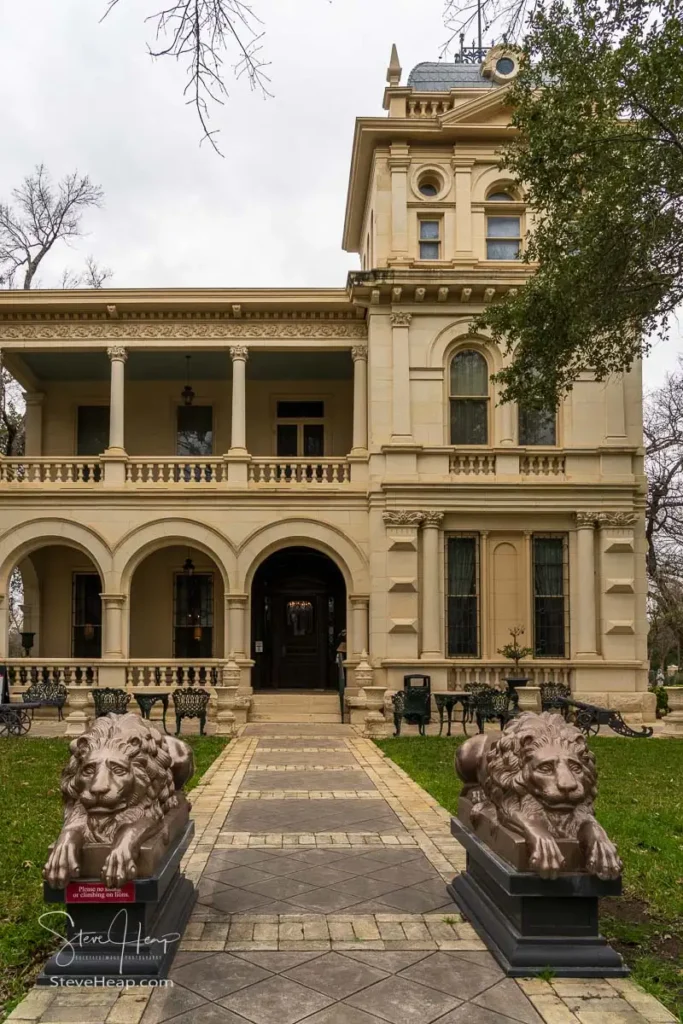
Moving from the rugged, sun-baked limestone of the missions to the King William District feels like a deliberate shift in the Texas narrative, and Villa Finale is the crown jewel of that transition. Built in 1876, this striking Italianate mansion was the home of Walter Mathis, the man largely credited with revitalizing this historic neighborhood. The house is a masterclass in detail—from the crisp, rhythmic lines of the hand-pressed brickwork to the intricate carved wood trim that catches the shifting afternoon light. Inside, the textures become even more curated, housing a vast collection of art and Napoleon-era artifacts that reflect a lifetime of meticulous preservation. It stands not just as a museum, but as a polished, sophisticated anchor of San Antonio’s urban history and we had a fantastic, guided tour with one of the docents there.
Day 3: The Guadalupe River State Park and New Braunfels
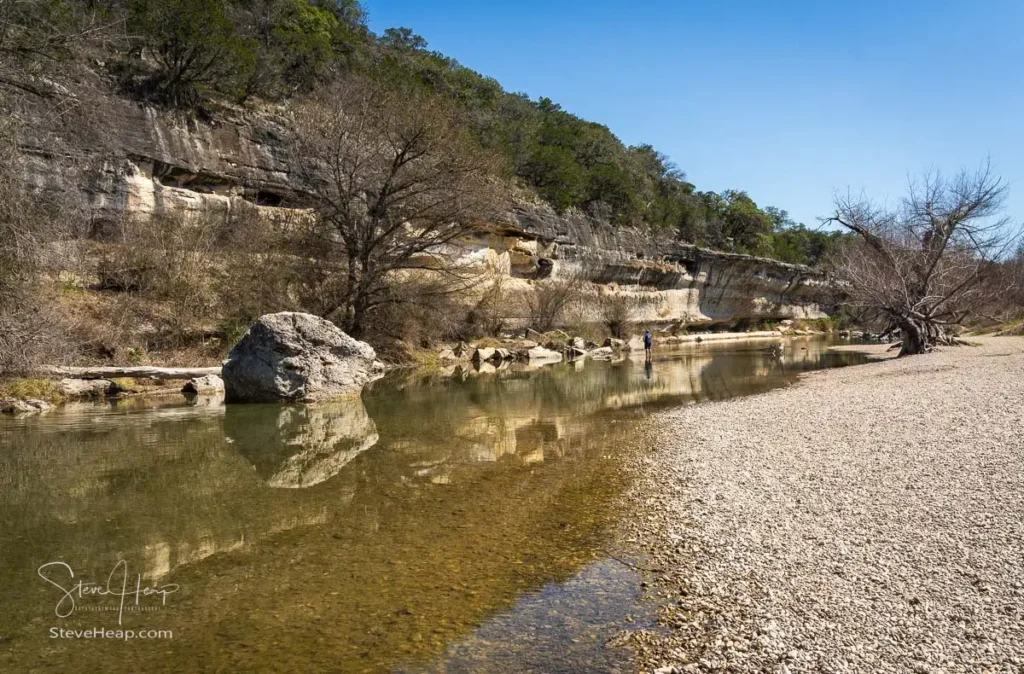
After wrapping up in San Antonio, we drove up to Guadalupe River State Park to transition from urban textures to natural ones. The rocky banks and flowing water provided excellent landscape opportunities. It is really hard to picture that this is the self-same river that caused all the destruction and loss of life just a few months later in July. Here it is so calm that you might be able to see some chairs for relaxing just set in the water while their owner tried his hand at a little fishing.
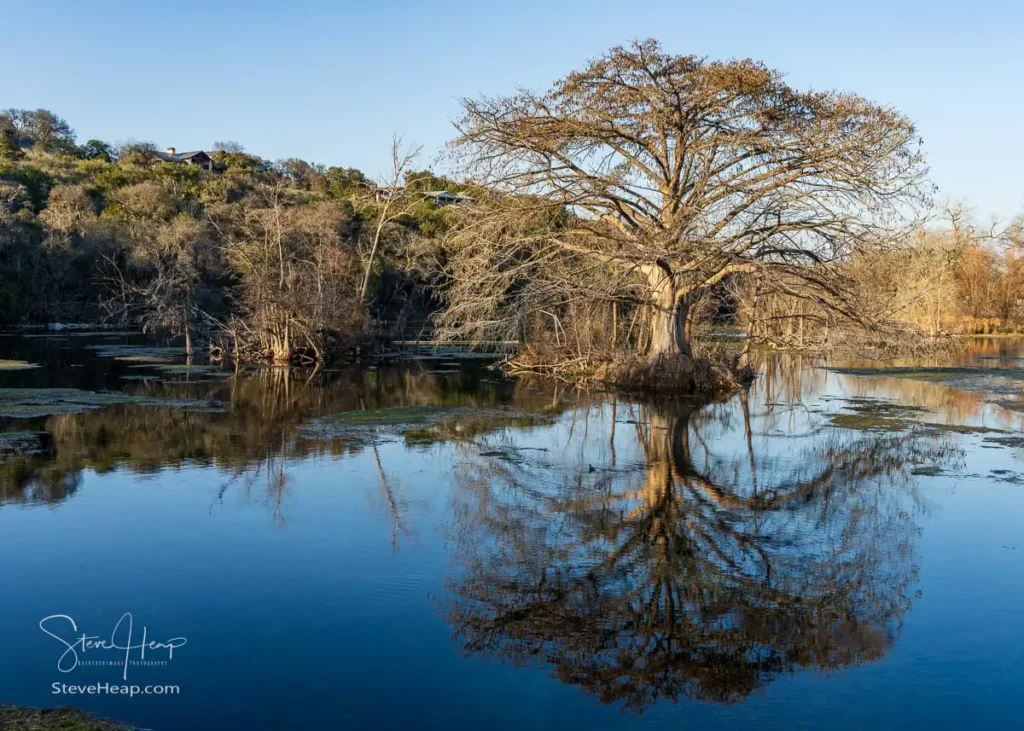
As the afternoon passed by, we visited Landa Park in New Braunfels – a great place just to reconnect with nature. As you can see, the day was completely calm with fantastic reflections of the bare trees in the river here.
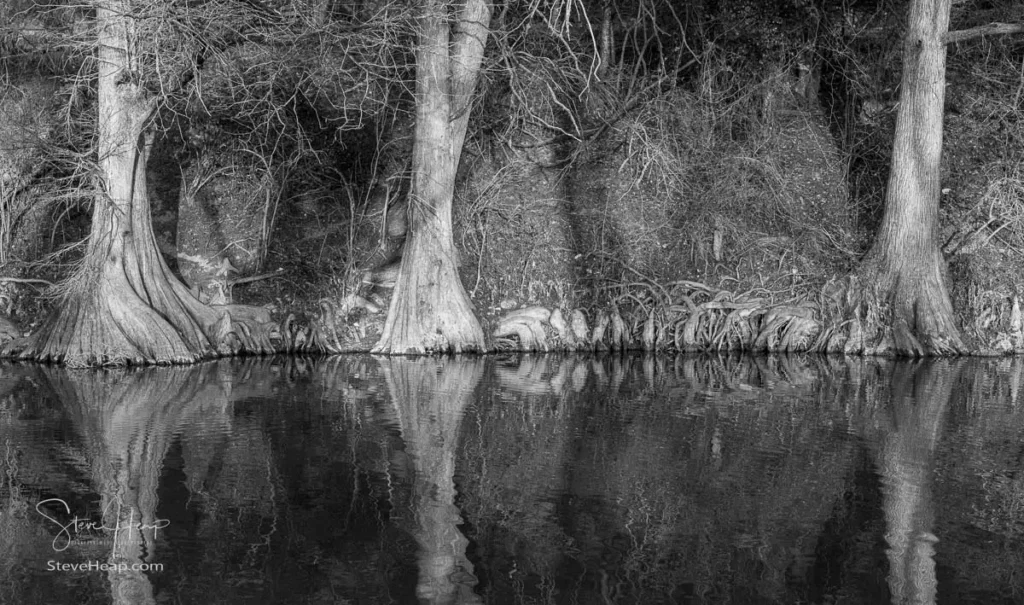
The Cypress Bend park gave us our last view of the river that evening. By now the sun was very low in the sky and I couldn’t resist a high-contrast black and white shot of those gnarled cypress roots reflected in the dark, mirrored water of the river.
And, on the opposite bank, the ancient, towering cypress trees lining the water created incredible silhouettes and leading lines in the fading light.
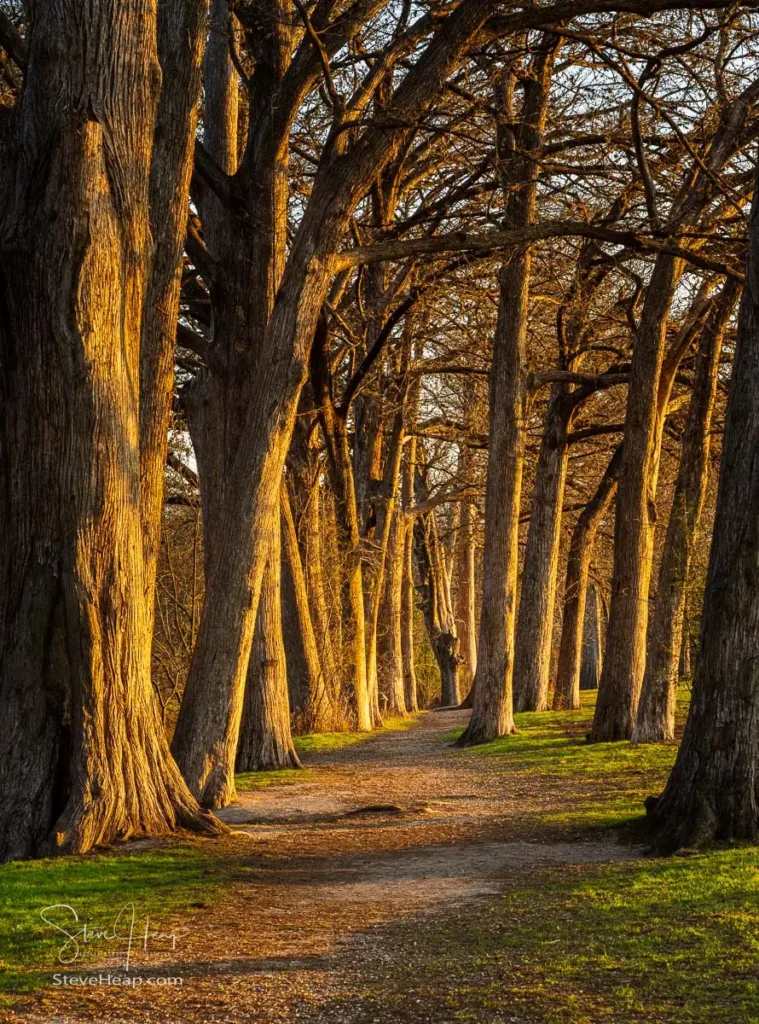
This one looks great in black and white as well!
That evening, we checked into the Courtyard New Braunfels River Village – the last of our Marriott hotels on this trip. This hotel has a fantastic, sprawling garden that leads right down to the river that I photographed the next morning.
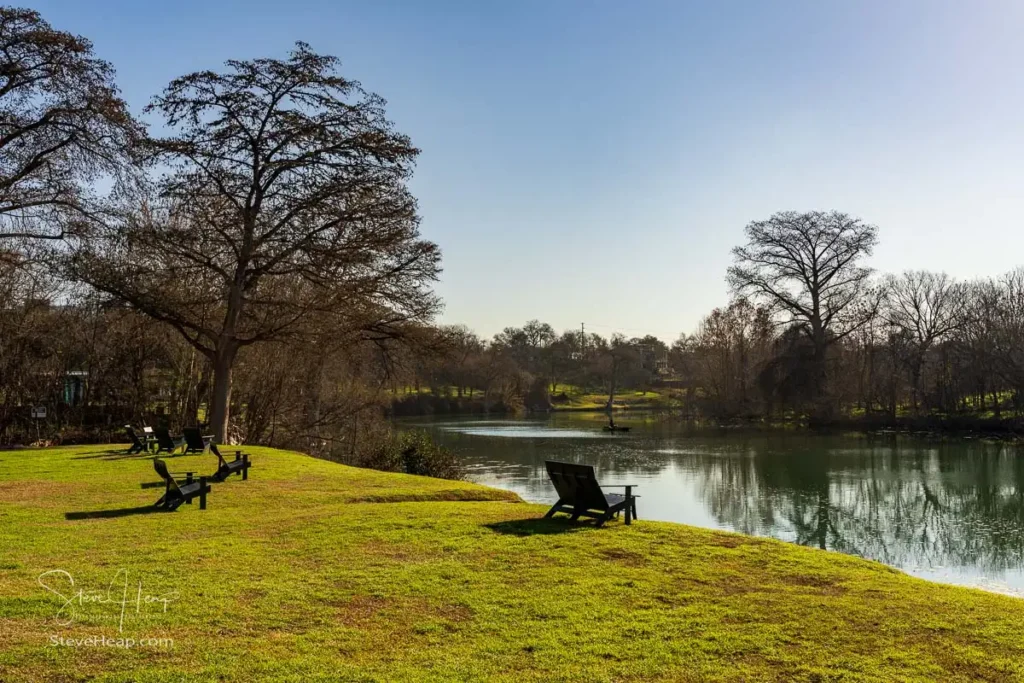
Day 4: Texas State University and the Journey Home
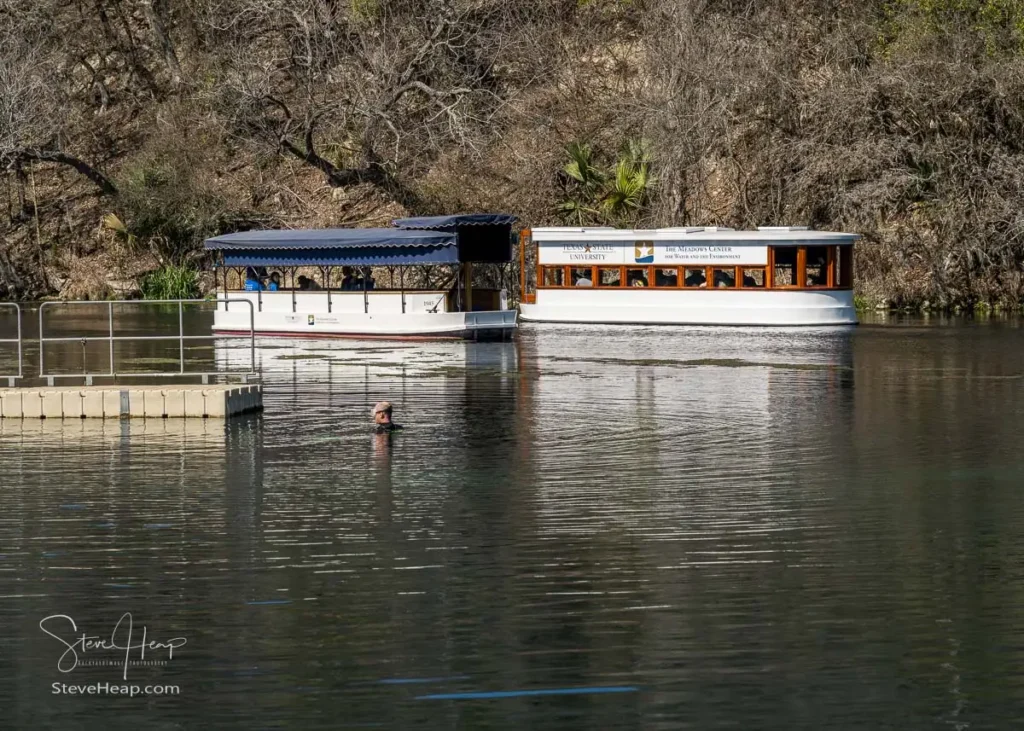
On our final morning, heading back home, we concluded our trip at the Meadows Center in San Marcos which felt like a natural finale, moving from the human-made history of San Antonio to the primal, liquid history of the Texas Hill Country. Formerly known as Aquarena Springs, this site is a rare window into the Edwards Aquifer, where over 200 springs bubble up to form Spring Lake. For a photographer, the draw here is the legendary fleet of glass-bottom boats. These vintage wooden vessels, some dating back to the 1940s, serve as more than just transport; they act as a stable platform for viewing the surreal, high-clarity textures of the underwater world. Peering through the glass, the water is so startlingly clear that it feels like looking through a polished blue lens, revealing a vibrant subsurface landscape of waving seagrass, ancient limestone vents, and darting endemic species.
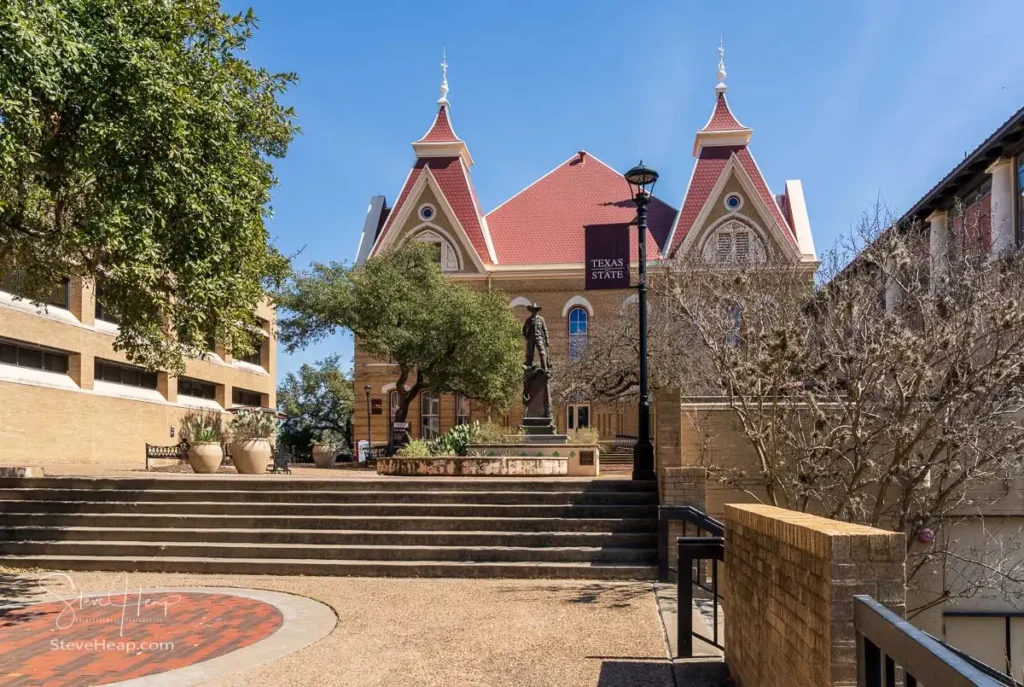
Before finally hitting the highway, we took a moment to capture the stunning architecture of Old Main on the university campus, a perfect historic anchor to wrap up our trip.
This short-notice adventure allowed us to expand our focus well beyond the Austin skyline and dive deep into the diverse textures that define the region. It certainly whetted our appetite for more!
COMING SOON: Prints from this San Antonio and Hill Country collection will be available soon. Please check back or subscribe for updates when they go live. If you have any favorites, please let me know and I will make sure those are the first to be uploaded.
Loren Brand
22 Apr 2026Wonderful shots of what looks to be a very beautiful city!
Steve Heap
22 Apr 2026Thanks Loren! We made this trip over a year ago now, and it suddenly struck me I had done nothing with the photos. So here we are!
Lindy Schillaci
2 Aug 2026What a lovely photo essay of your journey !
I’ve been to all of those areas but to see them through your lens was all new ! I especially loved the leading line shots of the mission arches including the arched cloud and then the Cypress trees in the warm light . You’ve a fine eye for beauty. I was a graduate of Texas State University many moons ago. A beautiful town and river. We boarded the famed
glass-bottomed boats on family trips when I was very young, coupled w trips to San Antonio. Seeing all this makes me want to plan a trip of this nature, when things cool down a bit !
Thank you !
Steve Heap
3 Aug 2026Thanks, Lindy, so much for taking the trouble to comment and I’m really happy that it did give you a new view of the places you had grown up with. I need to write more of these articles – just need to find the time!
Steve