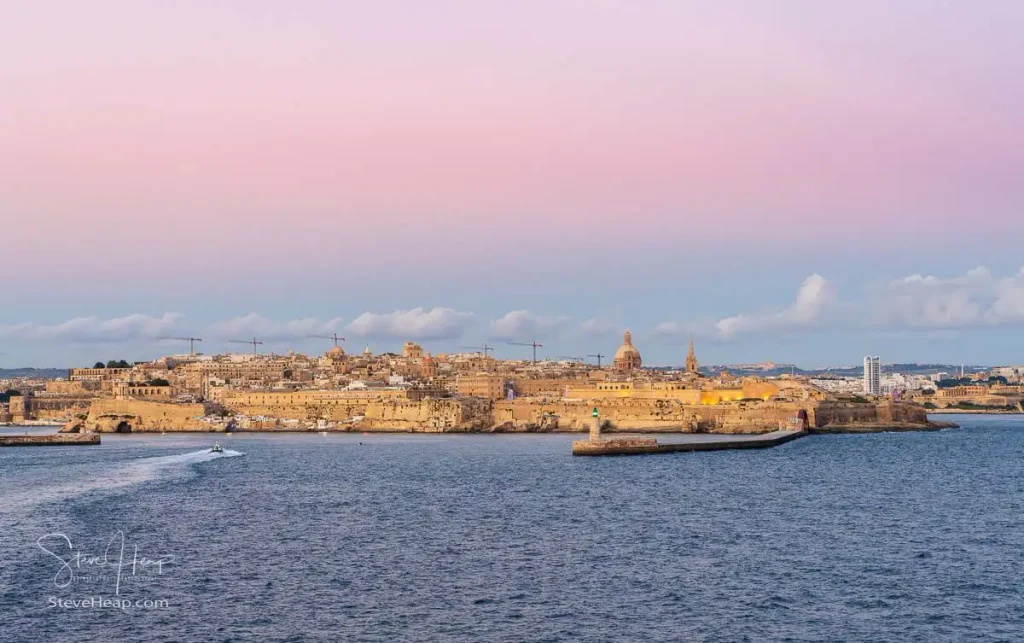
Approaching Malta at dawn, as the first pastel light of morning catches the golden limestone bastions rising straight out of the sea, is one of the great arrivals in the Mediterranean. On this Viking Malta, Morocco and the Mediterranean cruise, this was definitely one of the highlight ports.
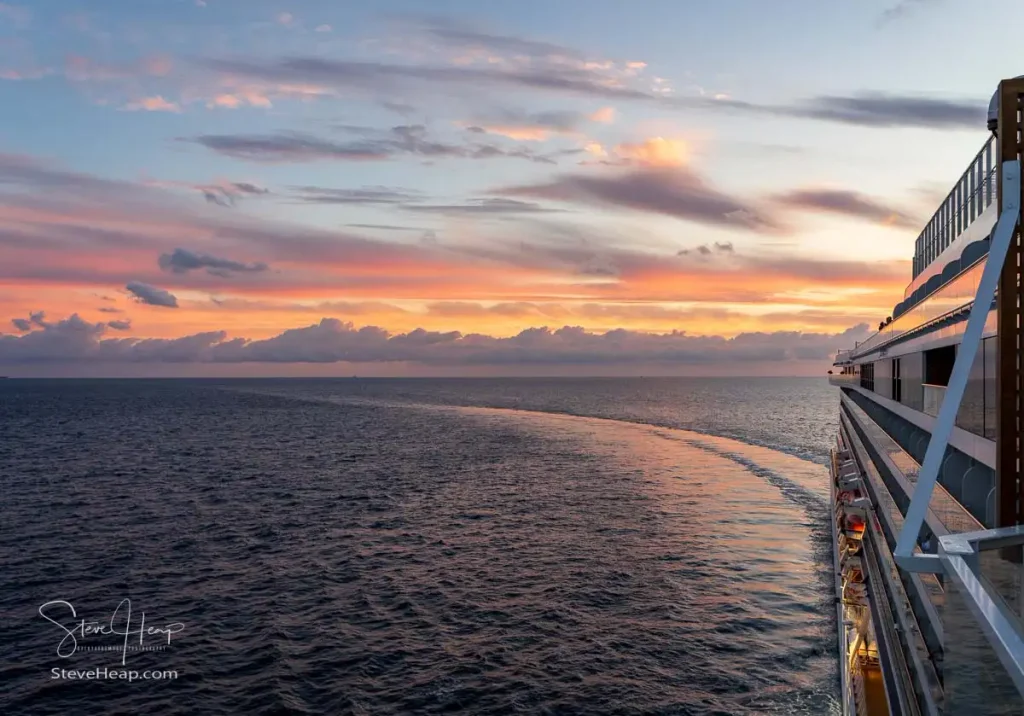
Even better, turning round and watching our ship’s curved wake sweep across the calm water under a pink-and-gold sky, we knew that things were looking good for the day.
Having an overnight stay—giving us two full days in port—was going to make all the difference to our exploration of Malta.
We actually took a package holiday (as it was called in those days) in Malta in around 1976. Would we recognize it? The answer, just sailing into the harbour, was yes!
With forty-eight hours at our disposal, we were able to divide the visit neatly in half: dedicating Day 1 to a custom full-day route around the island with a private driver, and saving Day 2 for an unhurried, included excursion – the walking tour through the historic streets of Valletta.
Day 1: Beyond the Harbor with a Private Driver
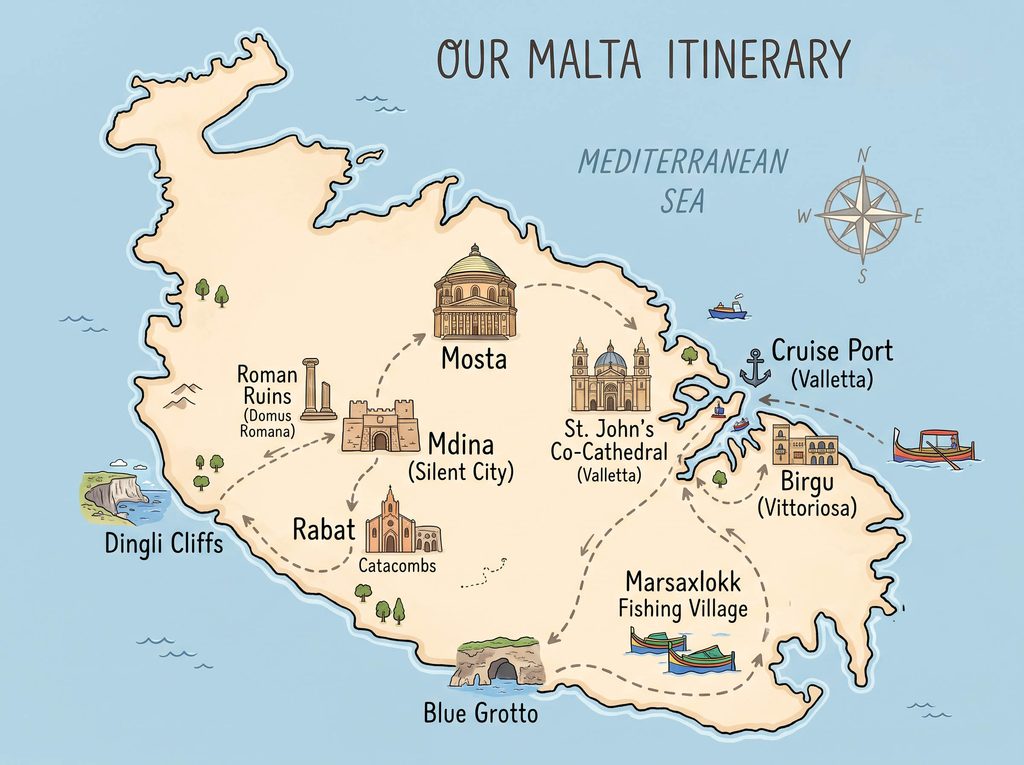
Because Malta is compact yet packed with historic sites spread across rugged hills and coastal cliffs, hiring a private driver for our first day allowed us to cover the island’s highlights smoothly without waiting on large tour buses. I wrote about our first experiences with private tours on the Malta, Morocco and the Mediterranean cruise with Viking in this article. Today was our second experience and we booked this one via Edmond Garage, a local company specializing in tours, and booked a full day tour of the island. 8 Hours for $326. The driver, Reuben Bonnici, was waiting for us at the port gates at 9am with a comfortable sedan and a welcoming attitude. I had the day roughly planned out, starting with the Silent City Mdina, ideally before the tour buses arrived. Reuben did suggest that visiting the Blue Lagoon might be better for the light for photography (and I’m sure he was right), but we stuck with our plan. This was our approximate route.
Mdina and the Catacombs of Rabat
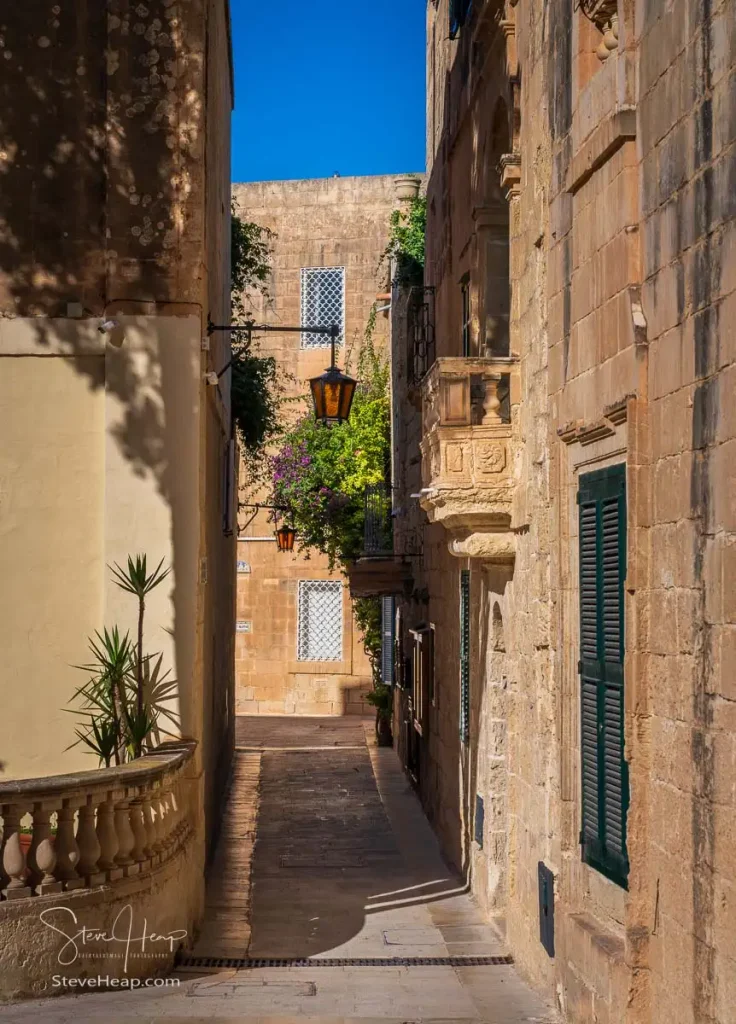
We started early in the center of the island at Mdina, Malta’s ancient walled capital known as the “Silent City.” Passing beneath the ornate carved stone coat of arms crowning the main gate, we stepped into a maze of quiet, sun-dappled limestone lanes before the crowds arrived.
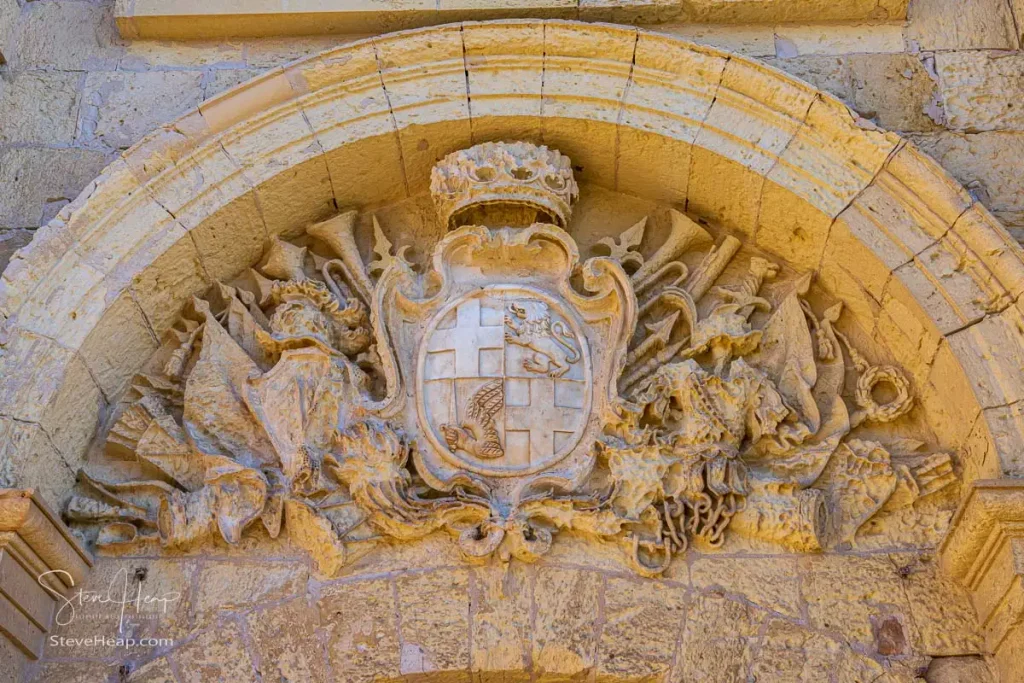
Just inside this gateway, we realized one mistake we had made. Both of us came out that morning with no credit cards, no ID – just some cash in my pocket! First rule of taking a private tour broken! We visited the Natural History museum and found that without a card, we couldn’t buy a ticket! The very nice person on the desk eventually used his credit card in the machine and we gave him the Euros – so cards are an essential here! The museum, in a historic palace is interesting, but probably not an essential part of enjoying Malta.
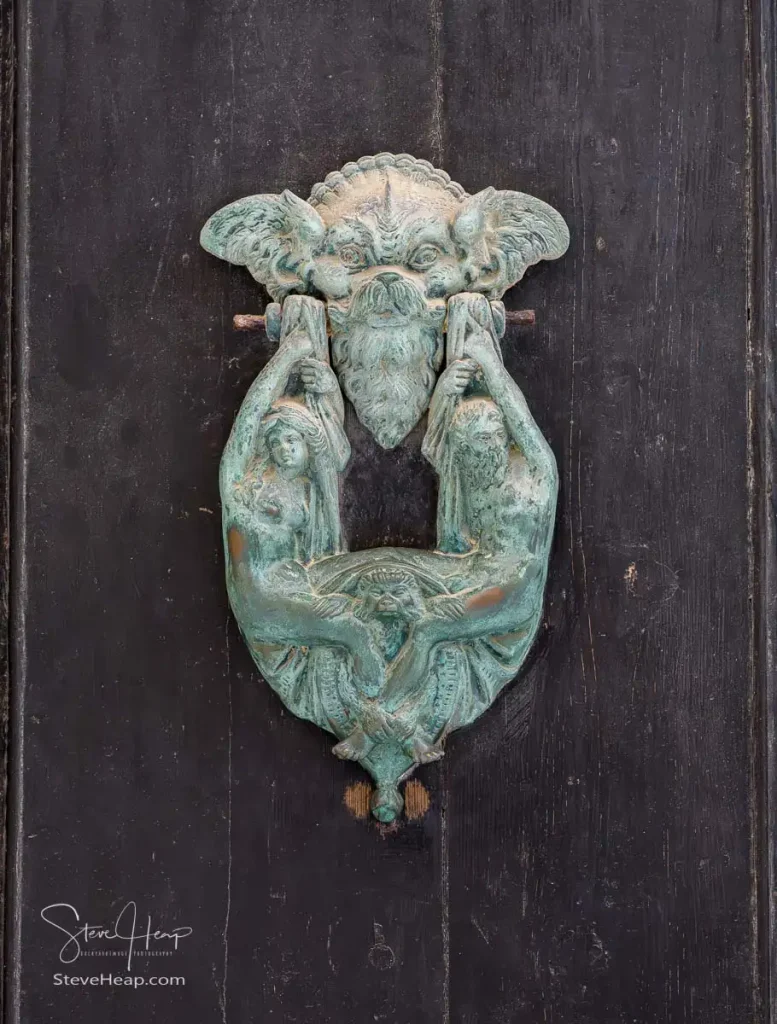
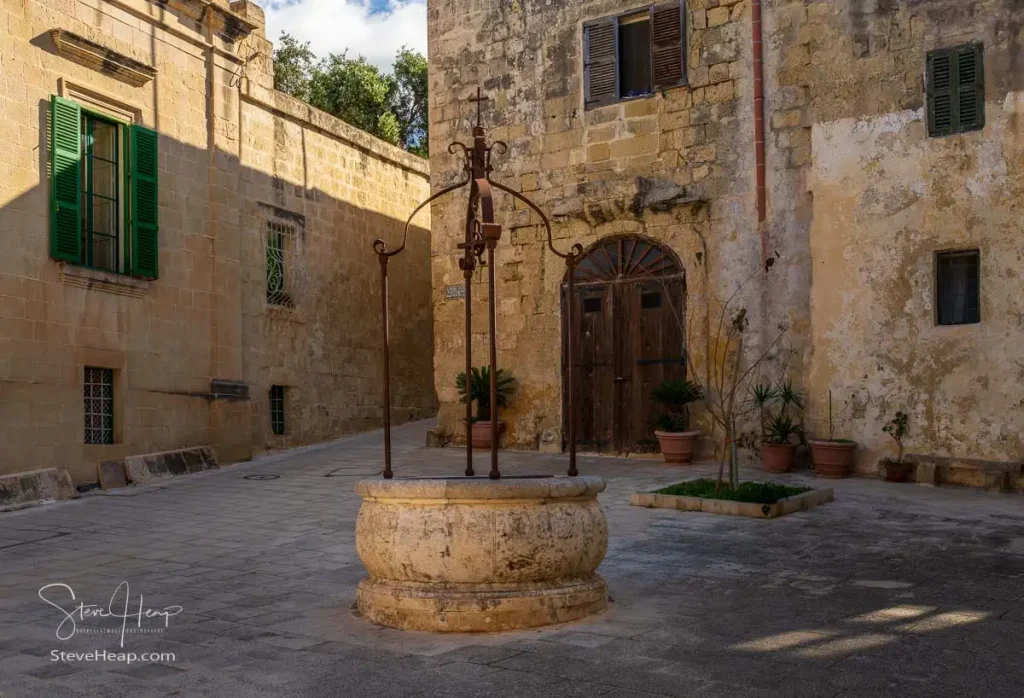
Every corner of Mdina offered small architectural details worth pausing for—from weathered bronze door knockers shaped like mythical sea creatures on heavy wooden doors to the quiet stone courtyard of Mesquita Square with its wrought-iron wellhead.
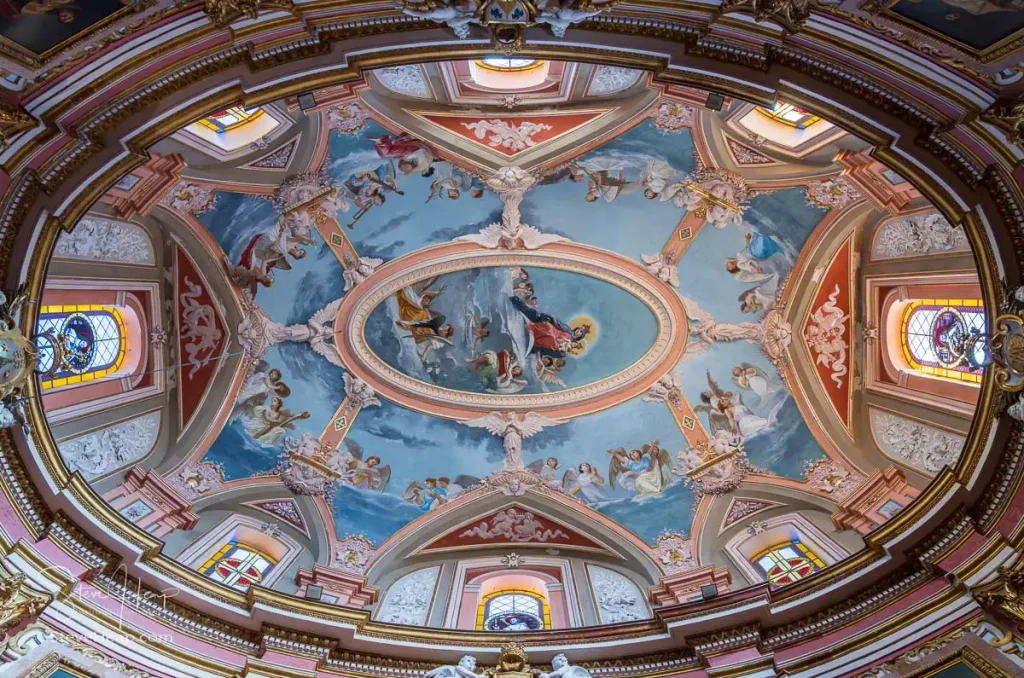
Inside St. Paul’s Cathedral, looking straight up revealed an intricately painted Baroque dome bathed in soft morning light.
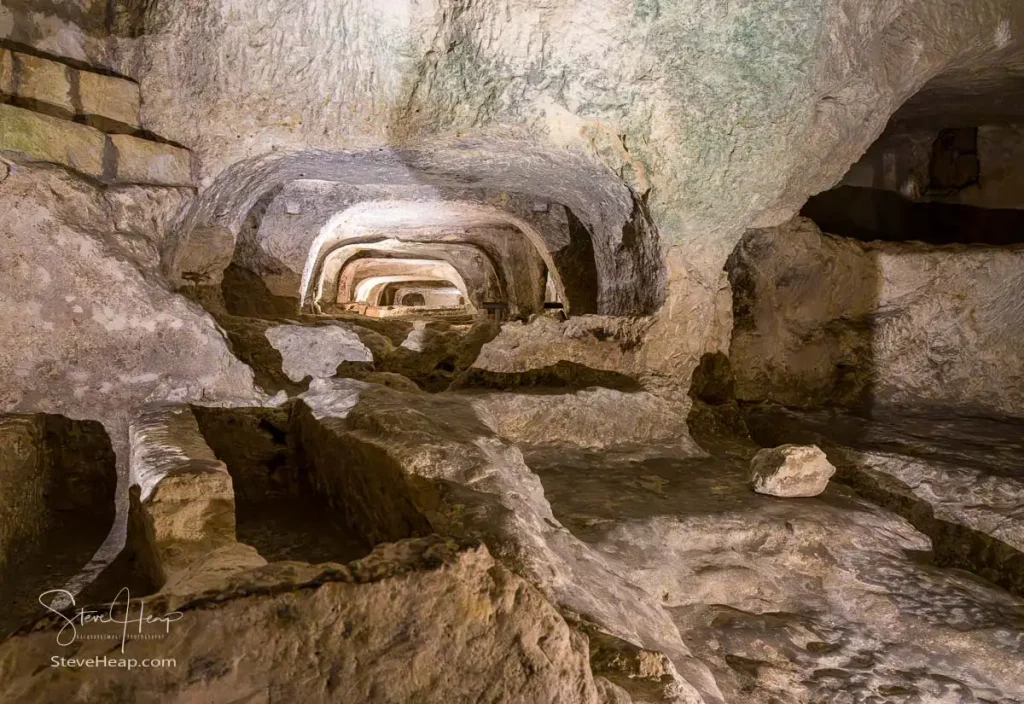
Just outside Mdina’s walls in neighboring Rabat, we also used the second part of the multi-location ticket we purchased at the Natural History Museum to visit the intricate Roman polychrome mosaic floors at the Domus Romana. Walking further into Rabat, we used the final ticket to descend beneath street level to explore the rock-cut chambers and ancient stone burial niches of the local catacombs, a fascinating glimpse into Malta’s early Christian and Roman past.
Once we had explored these underground tombs, a quick WhatsApp message called our driver, and he came quickly to move onto our next experience.
Dingli Cliffs and the Rotunda of Mosta
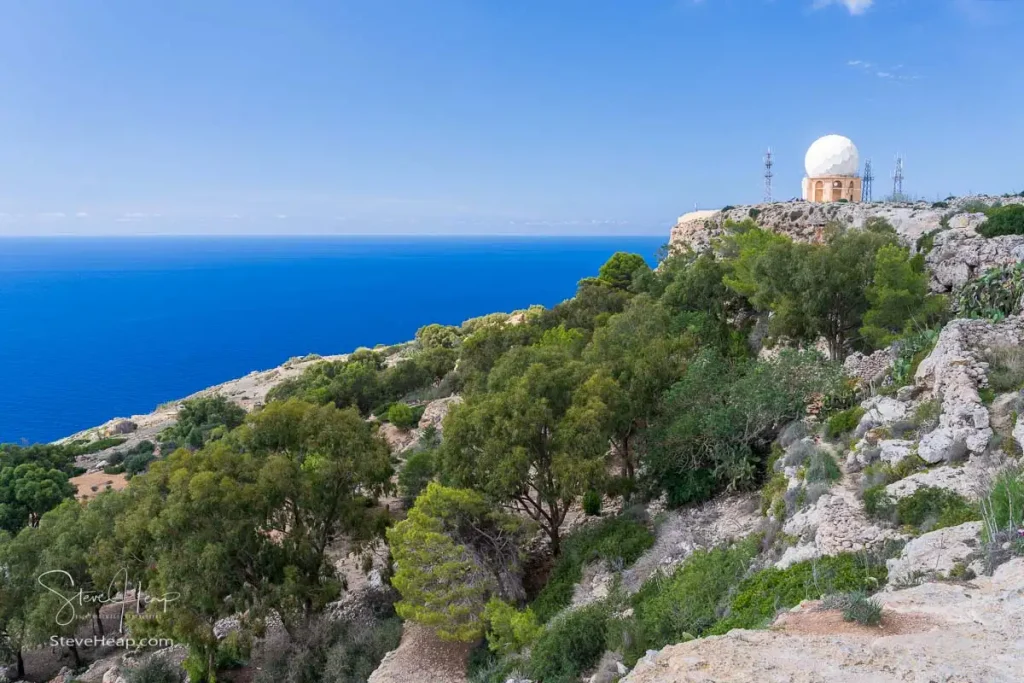
From the quiet stone alleys of Mdina, our driver took us west toward the coast to the dramatic Dingli Cliffs, the highest point on the Maltese islands. Standing near the white aviation radar dome perched high above the escarpment, the sheer limestone cliffs drop sharply into the deep blue Mediterranean far below. Reuben accompanied us to tell us something of the view we were admiring – and how locals gather here to try to shoot migrating birds coming from mainland Europe – not exactly the story of Maltese customs we wished to learn!
Turning back inland, we stopped at the town of Mosta to see the Rotunda of Mosta—a massive neoclassical church modeled after the Pantheon in Rome. Stepping inside, the scale of its unsupported dome is breathtaking, its geometric coffered ceiling drawing the eye upward to the central oculus above a richly decorated blue-and-gold sanctuary.
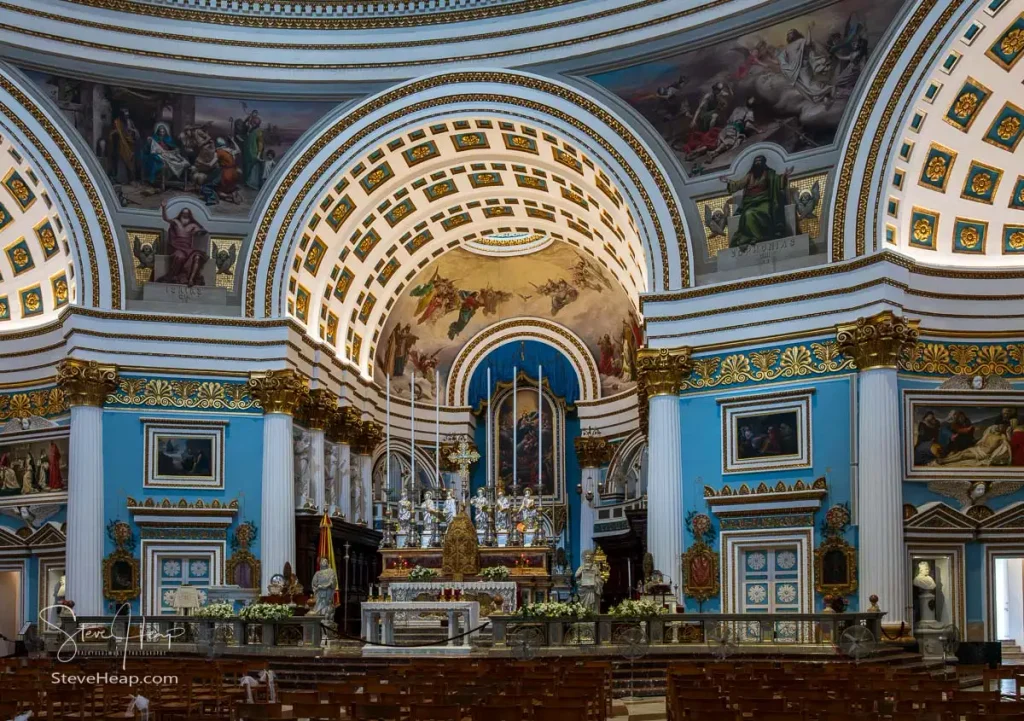
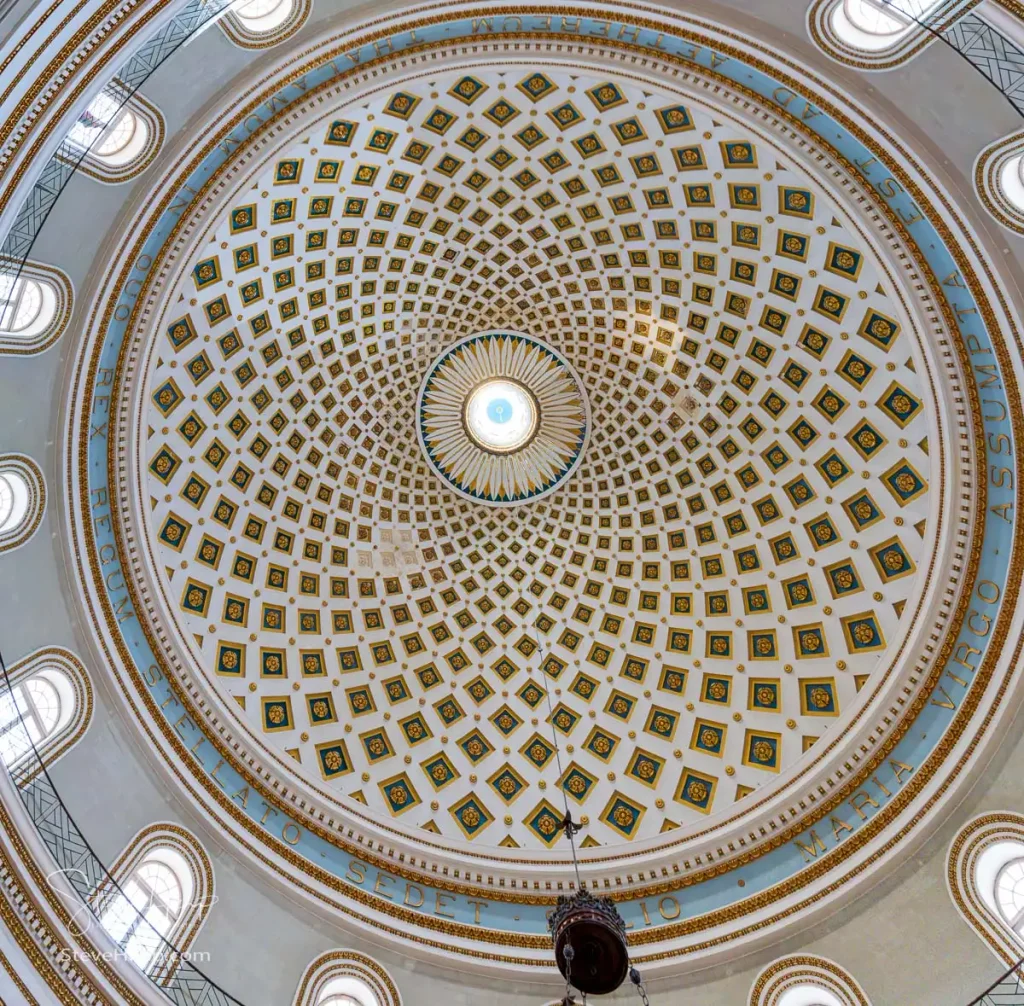
Looking closely at the coffered ceiling of the Mosta Rotunda, you can still spot the subtle repair patch in the plasterwork—a lasting reminder of one of Malta’s most famous World War II stories. On April 9, 1942, during an afternoon air raid while more than 300 parishioners were gathered inside awaiting evening Mass, a 500-kilogram German Luftwaffe bomb pierced straight through the dome and bounced across the marble floor without exploding. Two smaller bombs also deflected off the roof without detonating. Locals immediately hailed the event as a miracle, and after the unexploded shell was safely defused and dumped at sea, the hole in the dome was carefully patched—leaving the faint scar visible in the ceiling coffers today, while a replica of the bomb remains on display inside the church. You can also visit the very evocative wartime tunnels under the church where the locals sheltered during air raids over the city.
Inside St. John’s Co-Cathedral
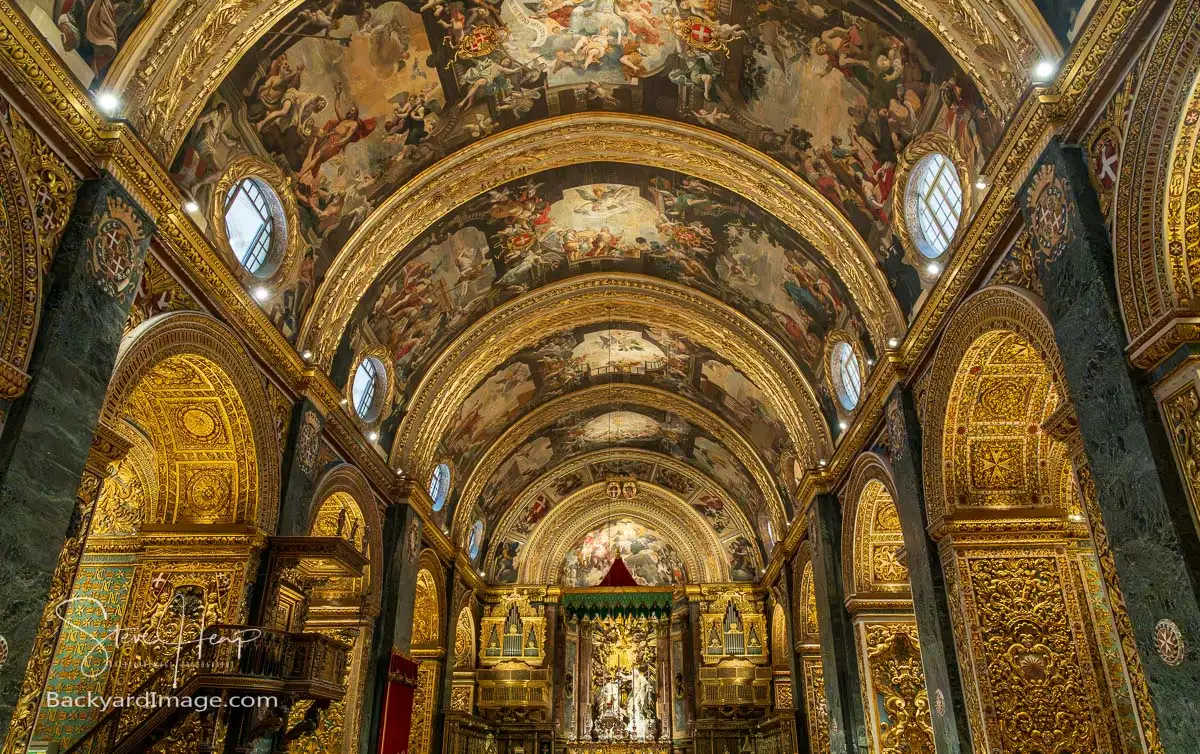
We were talking to Reuben about our plans for the next day, Sunday, in Valletta. He pointed out that the cathedral there, the St. John’s Co-Cathedral does not allow visitors inside on a Sunday and so we immediately changed our driving plan and headed back into Valletta instead. He dropped us close to the building with instructions to sign up online for tickets to get an early entry. The church, with a plain stone exterior hides one of the most opulent Baroque interiors in Europe.
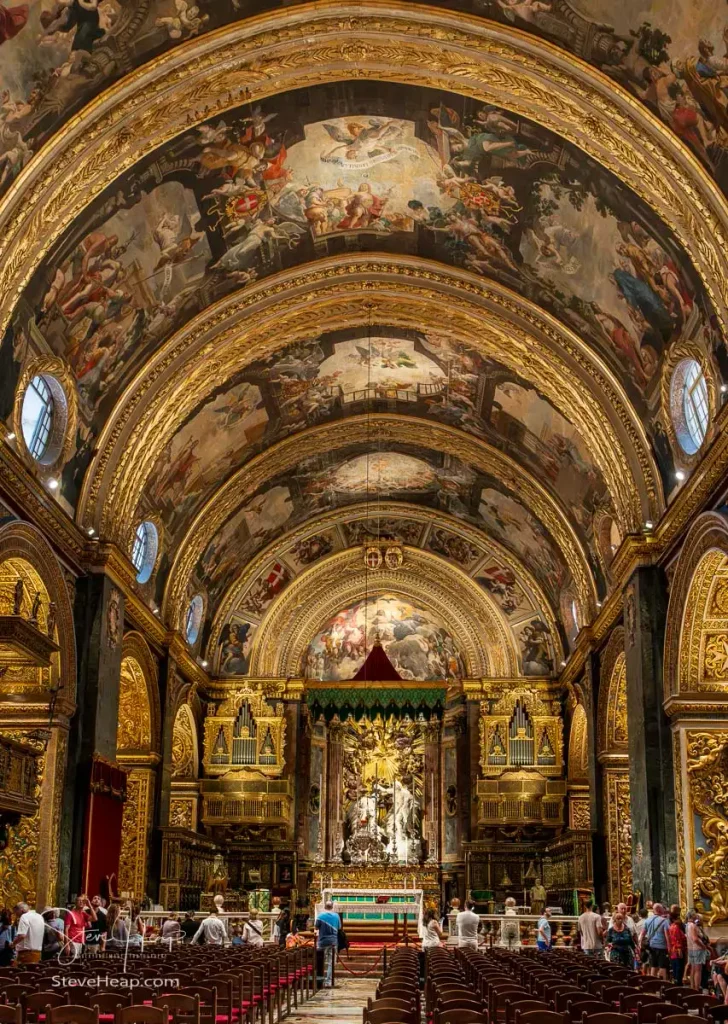
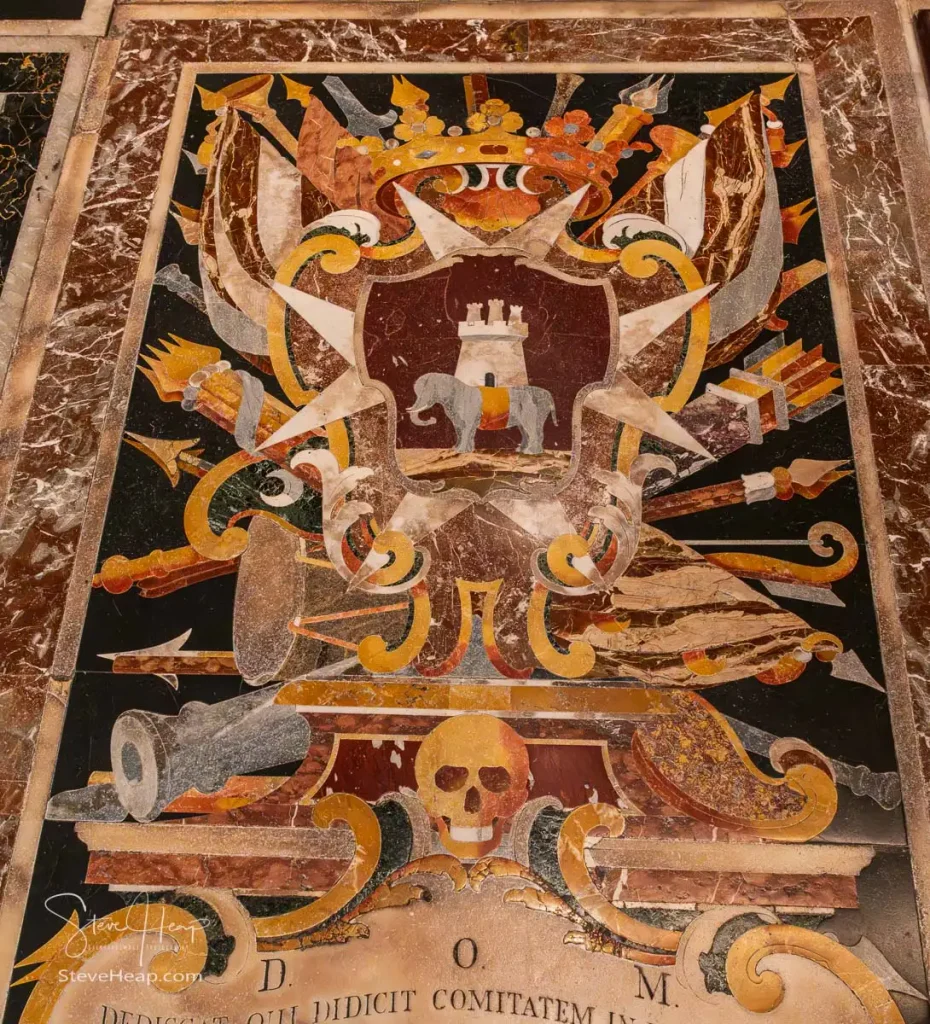
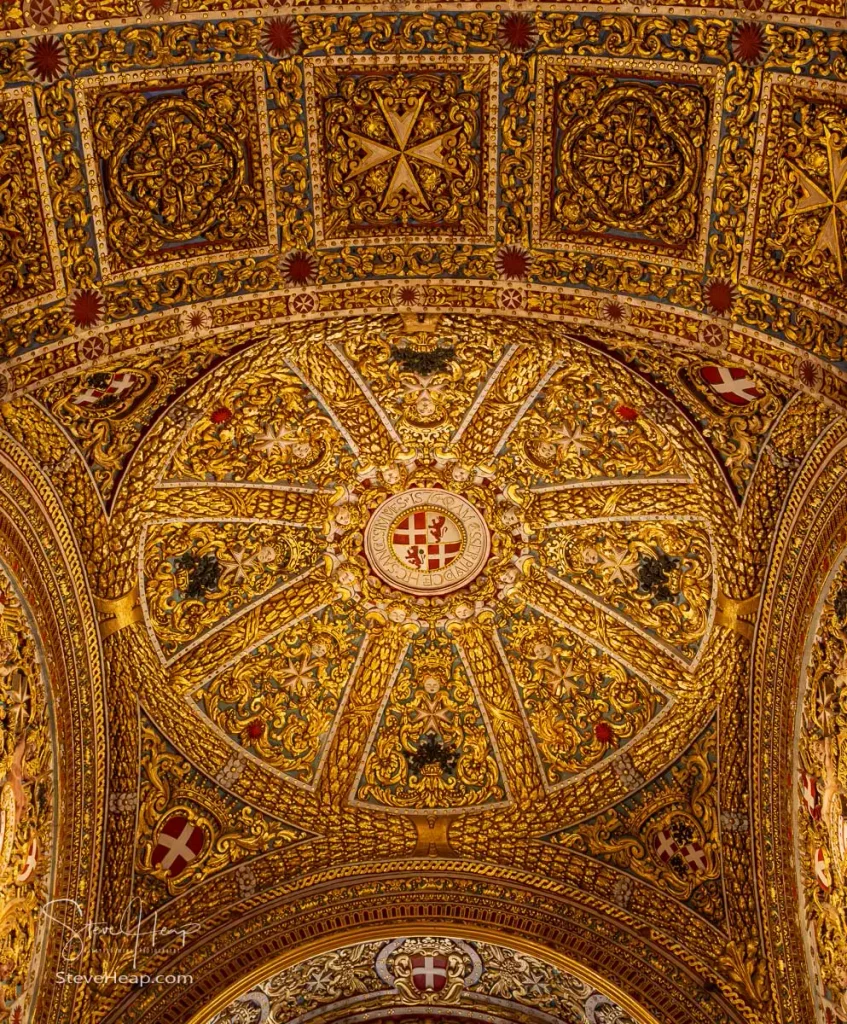
Looking down the main nave, every inch of the barrel-vaulted ceiling is covered in vivid frescoes, flanked by walls of intricately carved, gilded limestone. Even the floor is a work of art, paved with hundreds of colorful inlaid marble tombstones commemorating the Knights of St. John, complete with elaborate coats of arms, military trophies, and reminders of mortality.
Heading into the Chapel of the Blessed Sacrament in the co-cathedral, you find yet another marvel. Unlike the main nave—where Mattia Preti painted directly onto the stone vault—the Chapel of the Blessed Sacrament features deep, sculptural relief carving in Maltese limestone covered in 24-karat gold leaf, built specifically to house the reserved Eucharist and the silver tabernacle.
Once again, a quick WhatsApp message reconnected us with Reuben and we were quickly off again across the island to the southern coast.
The Southern Coast and Marsaxlokk
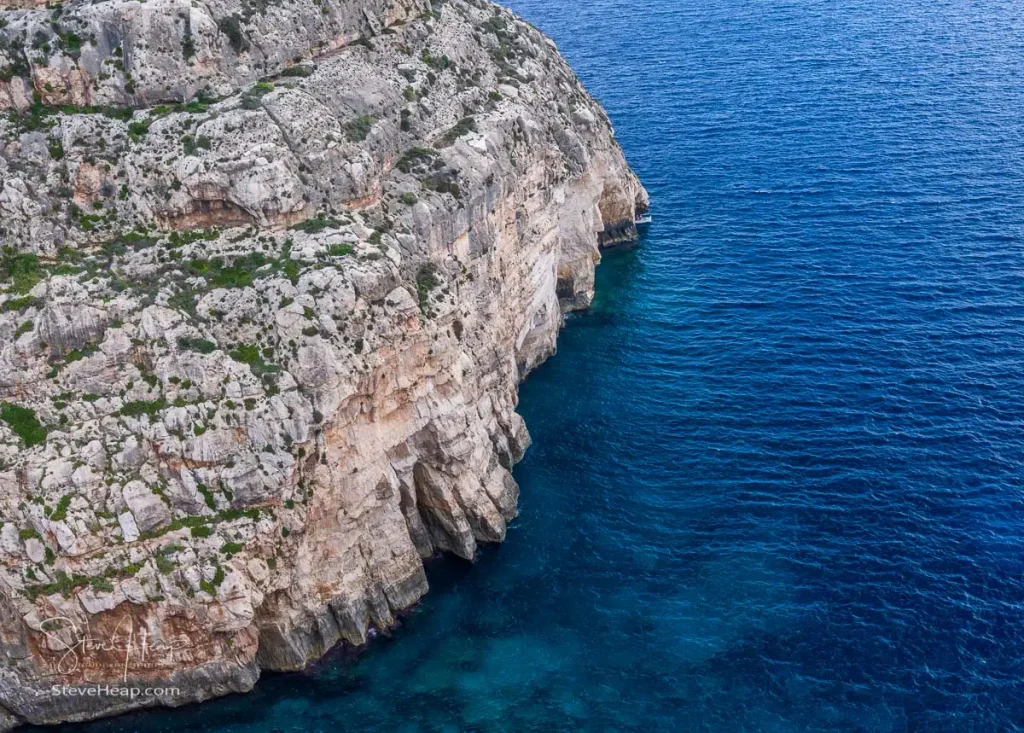
To round out our loop with our driver, we headed down toward Malta’s southern coastline, stopping to peer down sheer rocky cliffs plunging into cobalt-blue water near the Blue Grotto. We had been on these small boats about 50 years ago – it looked pretty similar still! You can just see the boat heading into a cave towards the top of this image.
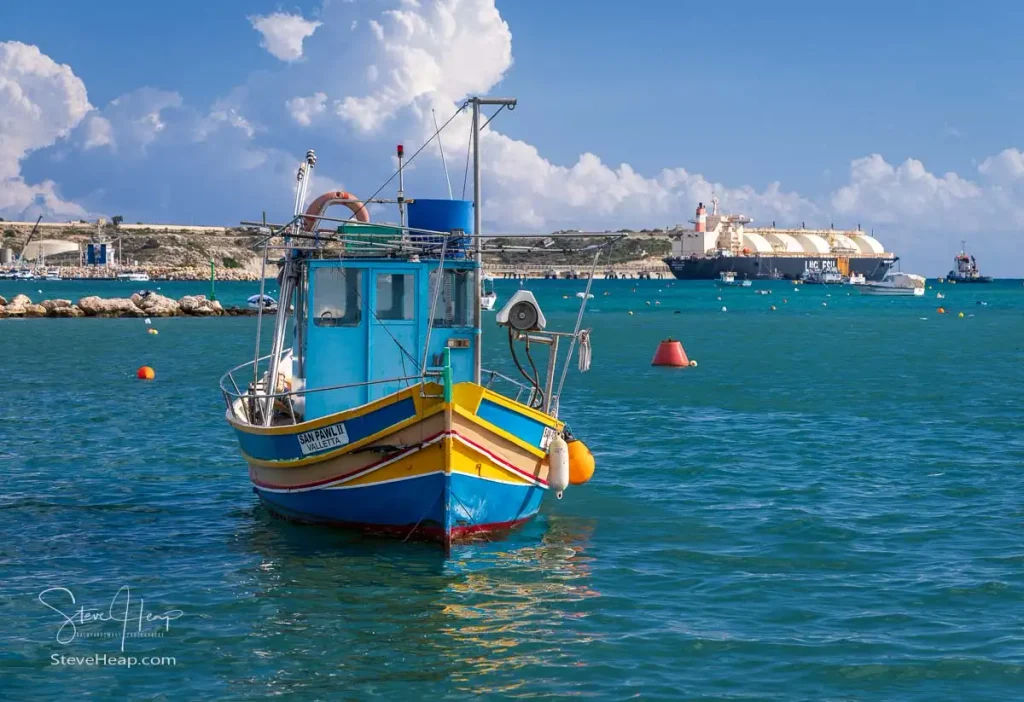
Then on to the traditional fishing village of Marsaxlokk. Out in the harbor, brightly painted wooden luzzu boats—decked out in vivid yellows, blues, and reds—bobbed gently on the water against the backdrop of Malta’s liquefied gas tanker and power station in the distance. I’m not at all sure I would call this a traditional fishing village any longer! A busy coastal town, perhaps.
Back into the Three Cities one last time
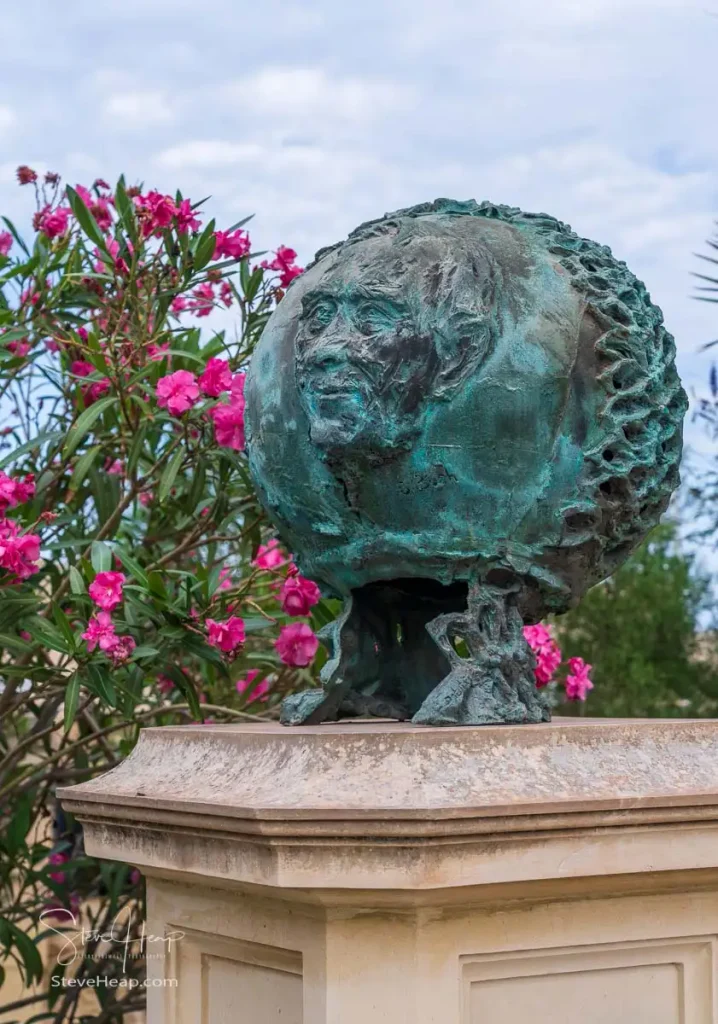
From Marsaxlokk, our driver headed north to the Three Cities across the Grand Harbour from Valletta, stopping first at the tip of the Senglea peninsula at Gardjola Gardens. Beside the historic stone Gardjola watchtower—famous for its carved eye and ear symbols of vigilance—stands a striking bronze globe sculpture commemorating the December 1989 Malta Summit, when U.S. President George H. W. Bush and Soviet leader Mikhail Gorbachev met in Malta to declare an end to the Cold War.
From Senglea, we continued straight into neighboring Birgu (Vittoriosa), the oldest of the Three Cities, where our Reuben told us about a lovely short walking tour through quiet, flower-lined limestone alleys and stepped lanes of this ancient city.
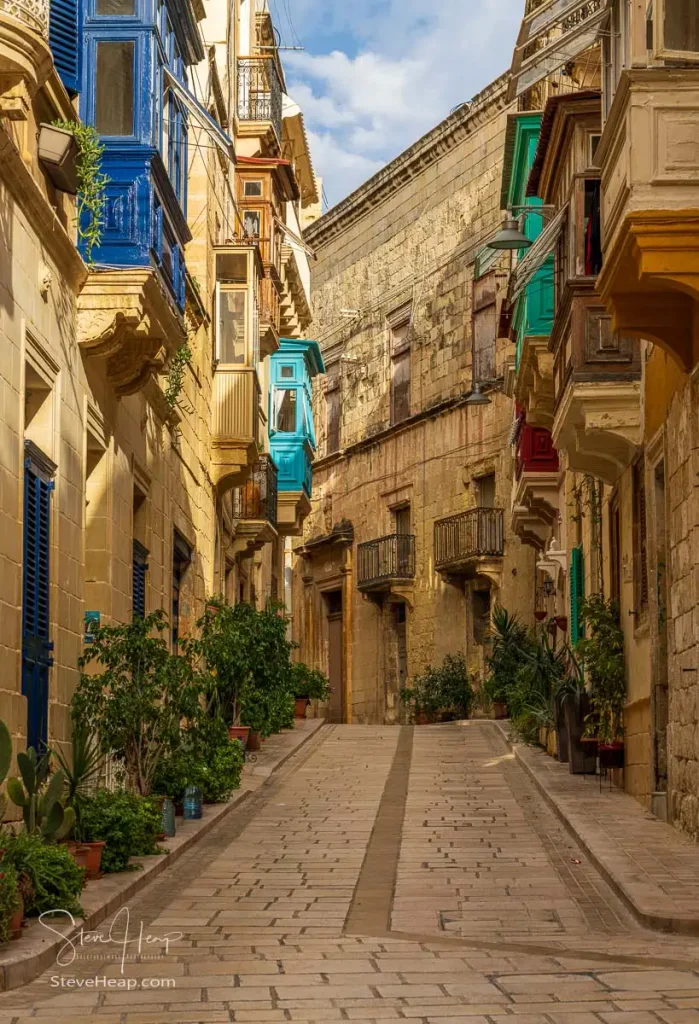
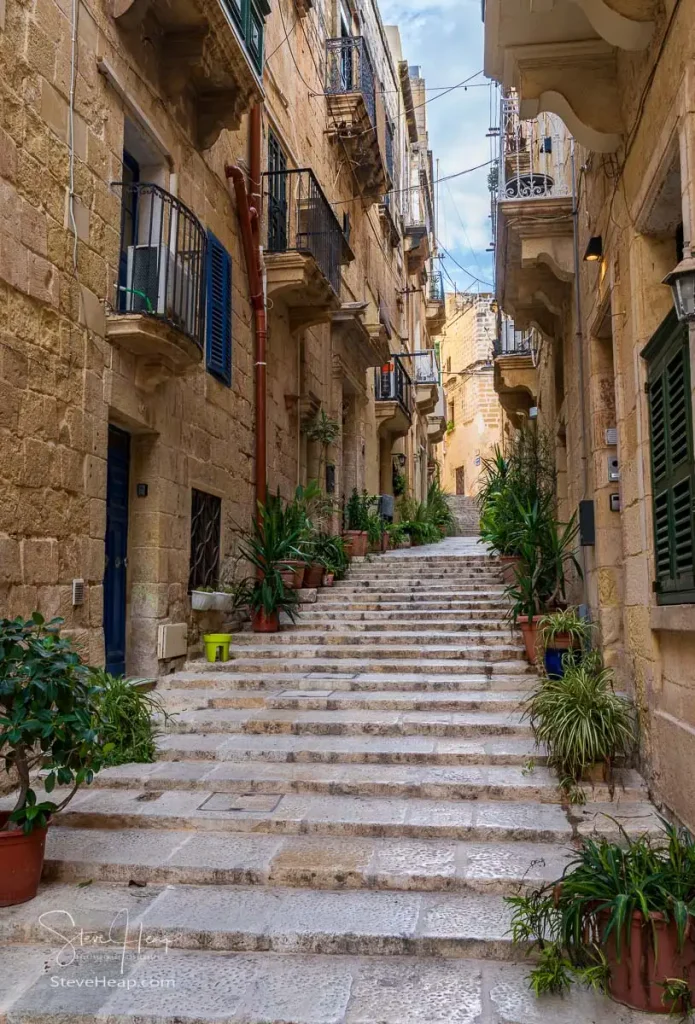
We strolled past the historic Auberge d’Angleterre, the 16th-century headquarters of the English Knights of St. John, before picking up the car one last time as he drove us directly back to our ship at the end of a full, memorable eight-hour day.
Overnight in the Grand Harbour
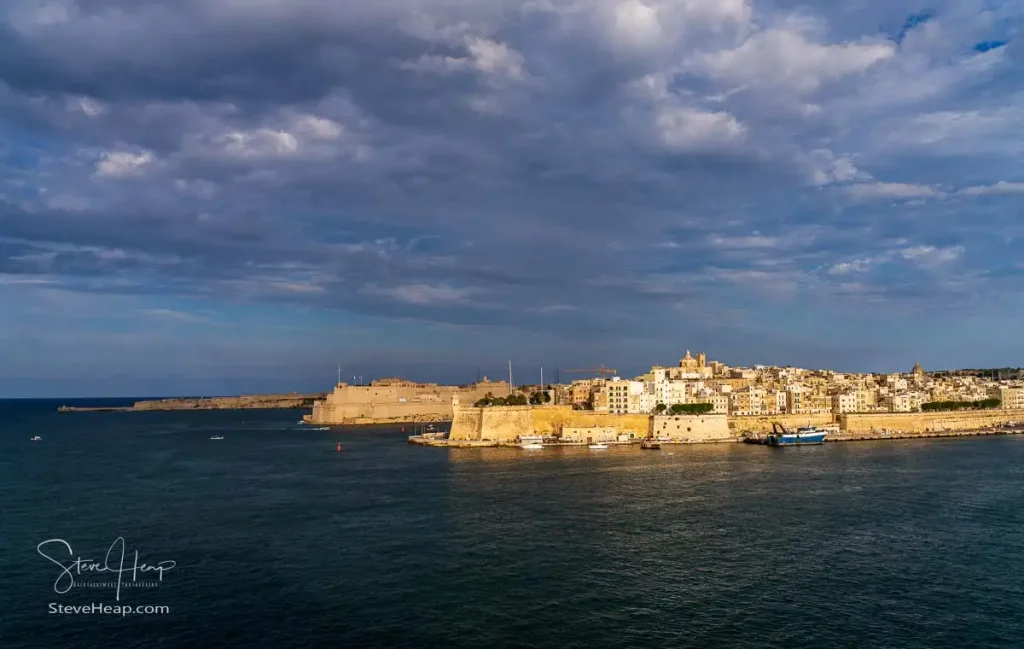
One of the best perks of an overnight port call is watching how the Grand Harbour transforms as the day draws to a close. Late-afternoon sunlight turned Valletta’s massive fortifications a deep, warm gold beneath brooding clouds.
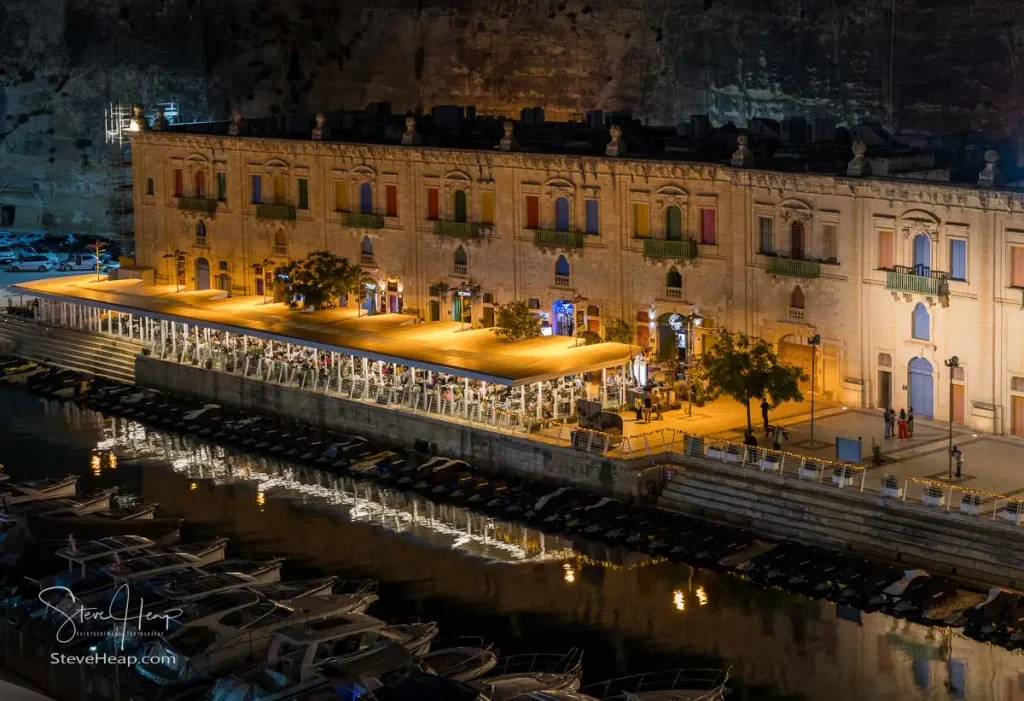
After dark, from our deck overlooking the water, the illuminated stone arches of the Valletta Waterfront glowed like a stage set along the marina as locals and tourists alike enjoyed dinner alongside the water.
Day 2: A Walking Tour of Valletta
I’m thinking that this article is getting way too long and so Day 2 can have its own article! There is so much to see and do in Valletta that I should do it justice. Here is the link to the article on Valletta itself (will be here shortly!)