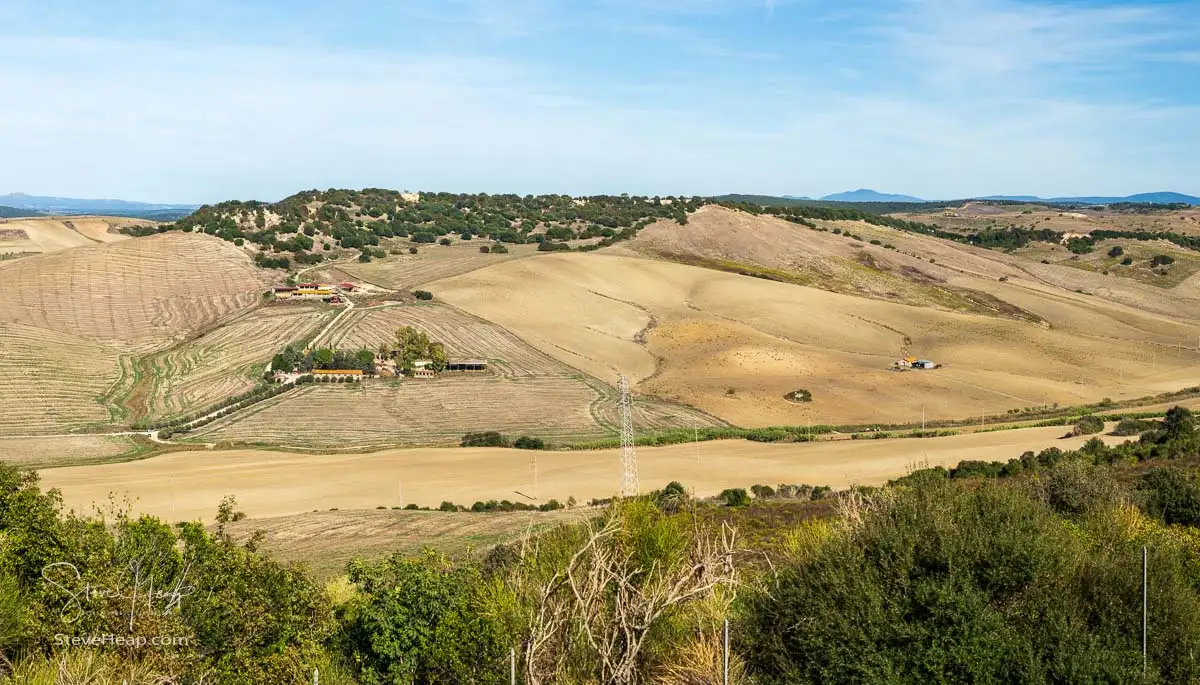
When a cruise ship docks in Civitavecchia, the vast majority of passengers immediately board buses or trains for the 90-minute trek into Rome. Having already spent time in the Eternal City, we decided to skip the long commute and explore something much closer to the port—venturing into the rolling hills north of Civitavecchia to discover the ancient Etruscan heritage of Tarquinia, in one of the two included excursions in this port – the other being a driving tour of the sights of Rome.
This story continues the port-by-port review of the Viking Malta, Morocco and the Mediterranean cruise on the Viking Vela. The initial overview article about the cruise can be found here and the index to all my Viking Cruise reviews is on this page.
A Surprise at the Balcony and Morning Views in Civitavecchia
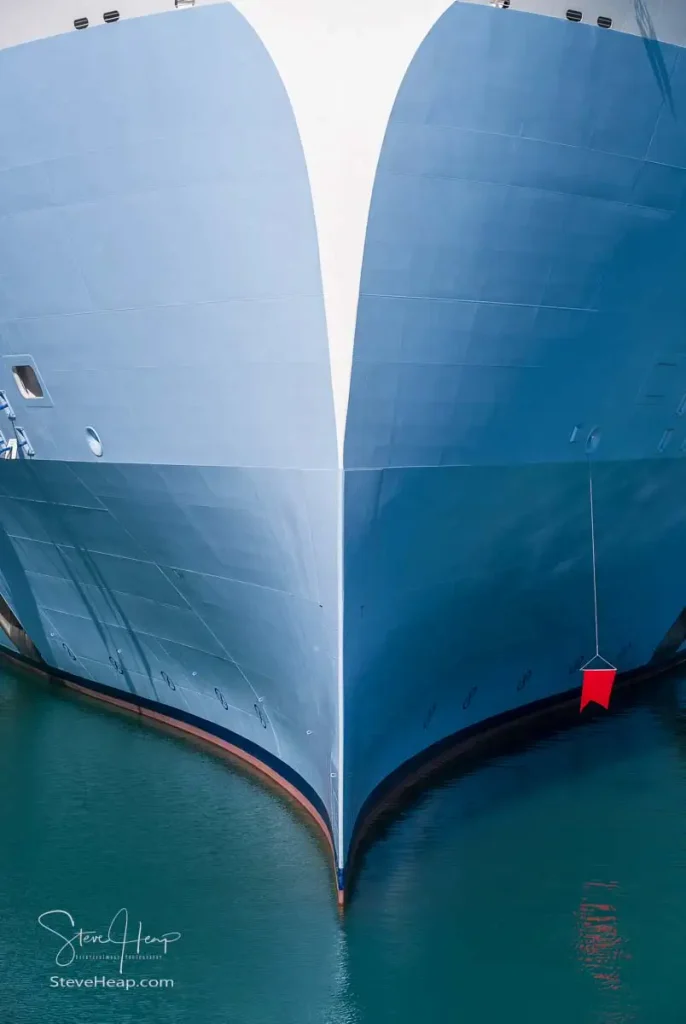
Our morning began with a bit of a surprise the moment we drew back our stateroom curtains. Instead of looking out over open water, we found ourselves staring directly at the massive, razor-sharp blue bow of another ship moored immediately behind us in the port. Makes a nice abstract photo print perhaps!
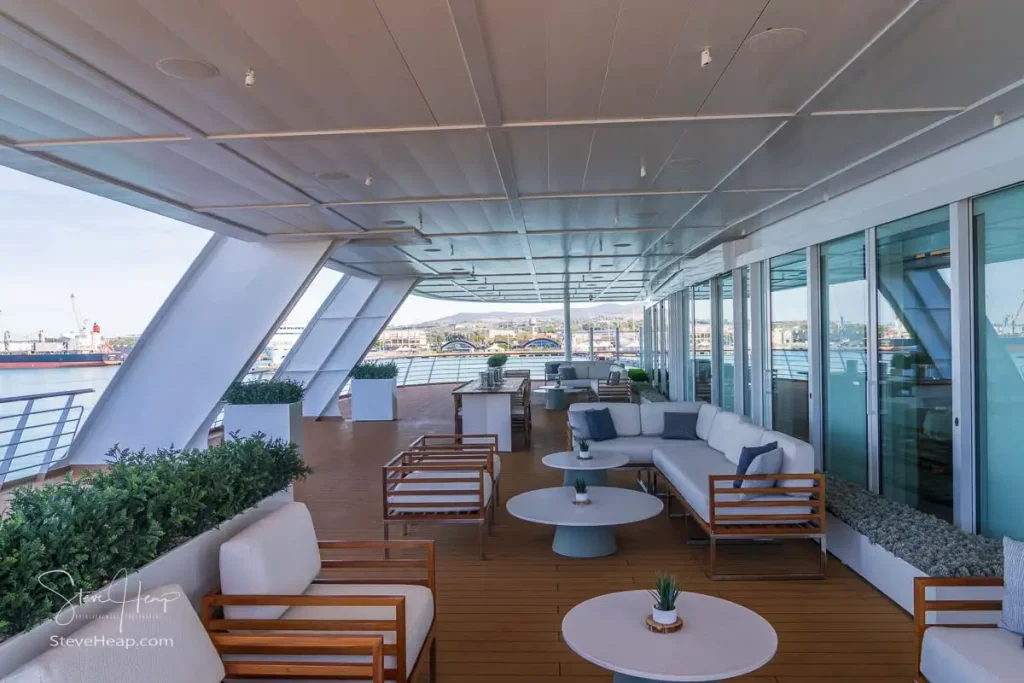
While waiting for the time of our excursion, we took our walking exercise on deck 2 of the ship. This latest class of Viking ship seems to be extended a little at the stern. On deck 7 there is a much more open area between the World Cafe and the exterior which gives it a much more welcoming feel and down on Deck 2, there is this extended seating area overlooking the ocean behind the ship. Definite improvements!
We were docked immediately alongside the historic statue of Santa Fermina in the port, the patron saint of Civitavecchia and protector of sailors.
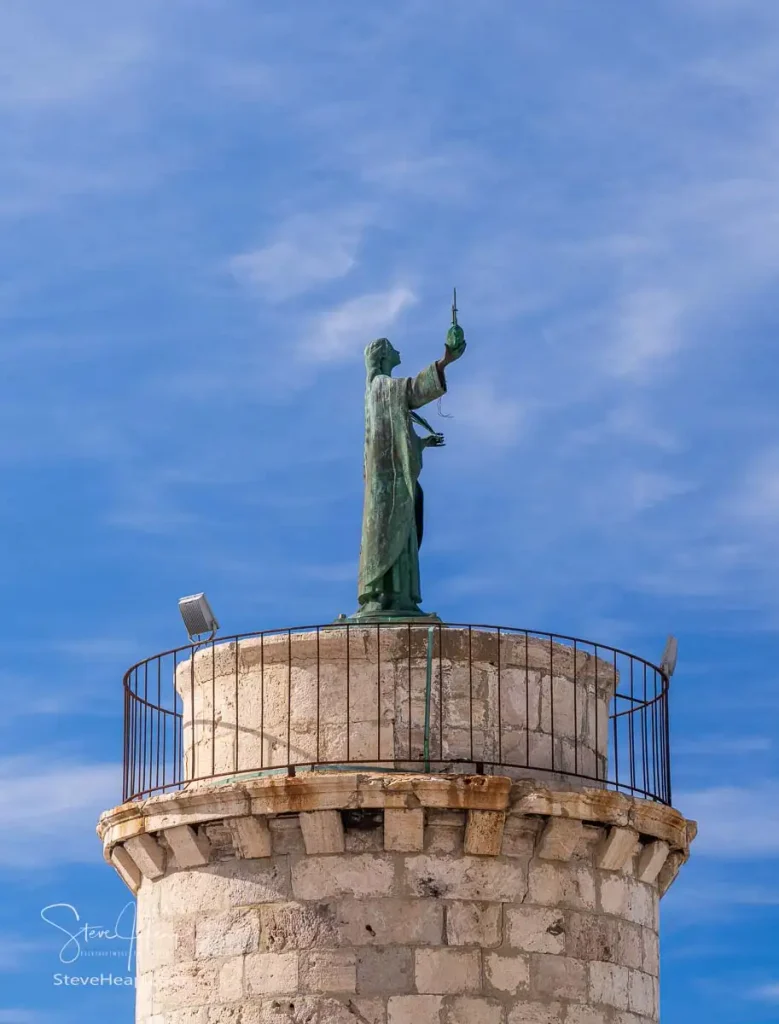
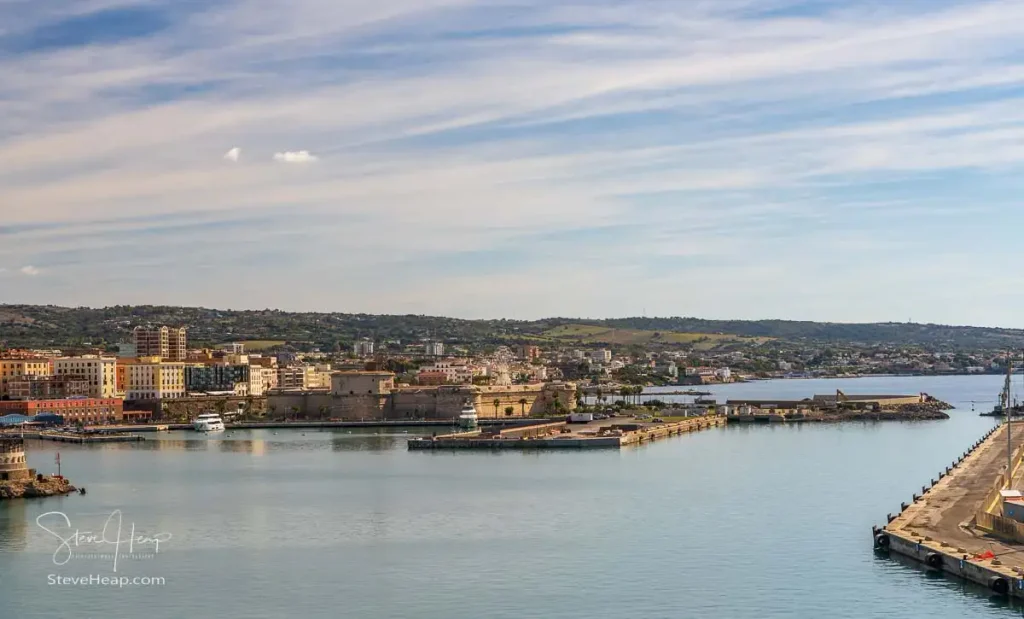
According to local tradition, while sailing from Ostia to Civitavecchia in the 3rd century, the young Christian virgin Fermina was caught in a violent storm that threatened to sink her vessel. Her prayers calmed the sea, allowing the ship to reach the safety of Civitavecchia’s coast, where she took shelter in a seaside grotto now incorporated into the southwestern corner of Fort Michelangelo. She is depicted holding a model ship aloft in her raised hand as a symbol of safe passage for mariners. And here is the wider view of the port and the city that she still protects.
Underground Art at the Monterozzi Necropolis
Just a short drive from the port lies Tarquinia, once one of the most powerful cities of the Etruscan civilization, which thrived in central Italy centuries before the rise of Rome.
Our first stop was the UNESCO-listed Monterozzi Necropolis. At ground level, the site looks like a quiet, sun-drenched meadow dotted with grass-covered burial mounds (tumuli), stone entranceways, and weathered circular stone markers.
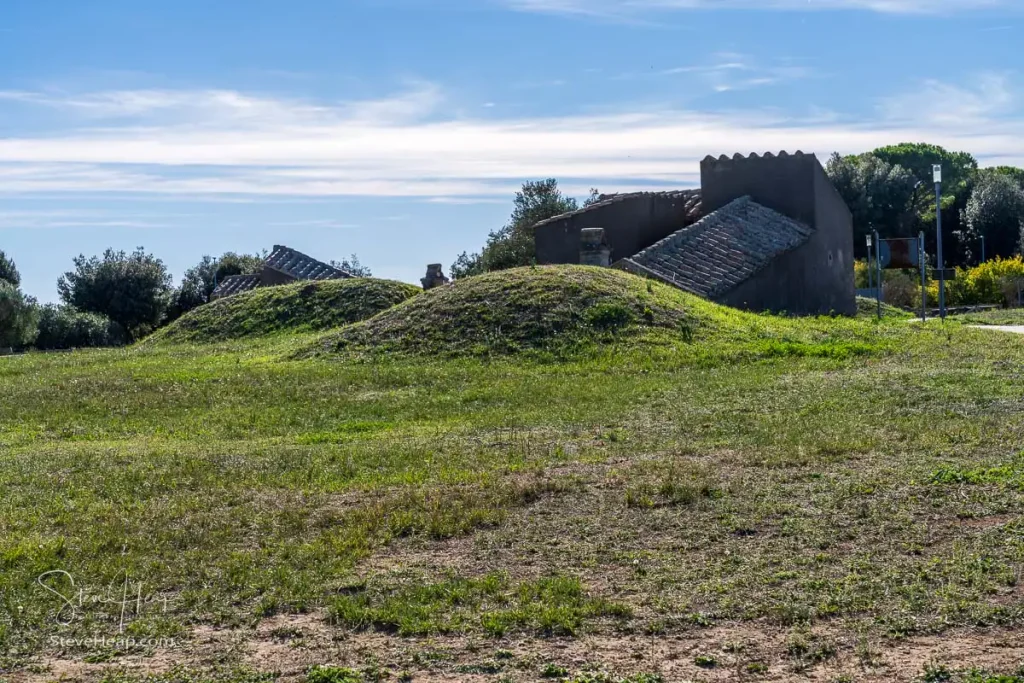
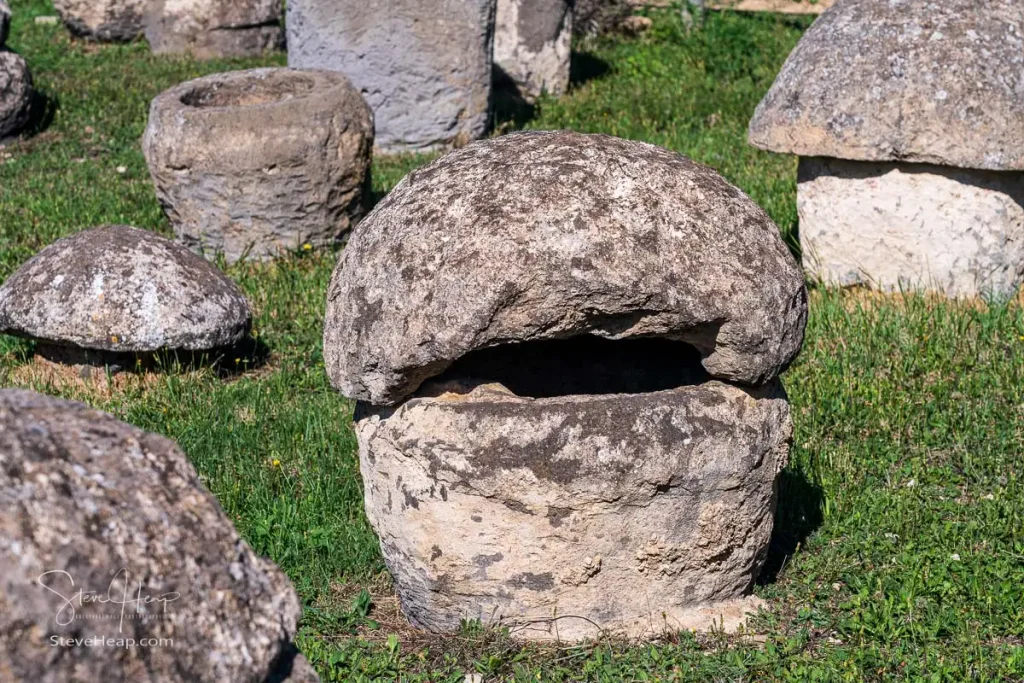
The carved stone vessels are Villanovan stone cremation receptacles. Before the Etruscans began carving elaborate underground rooms for full-body burials, the Villanovan culture practiced cremation. The ashes of the deceased were placed inside a clay or bronze biconical urn (often topped with a ceramic bowl or bronze helmet), and that fragile urn—along with small personal grave goods—was sealed inside one of these hollowed-out volcanic stone cylinders and buried in a pit in the ground.
The real treasures, however, lie hidden beneath the turf.
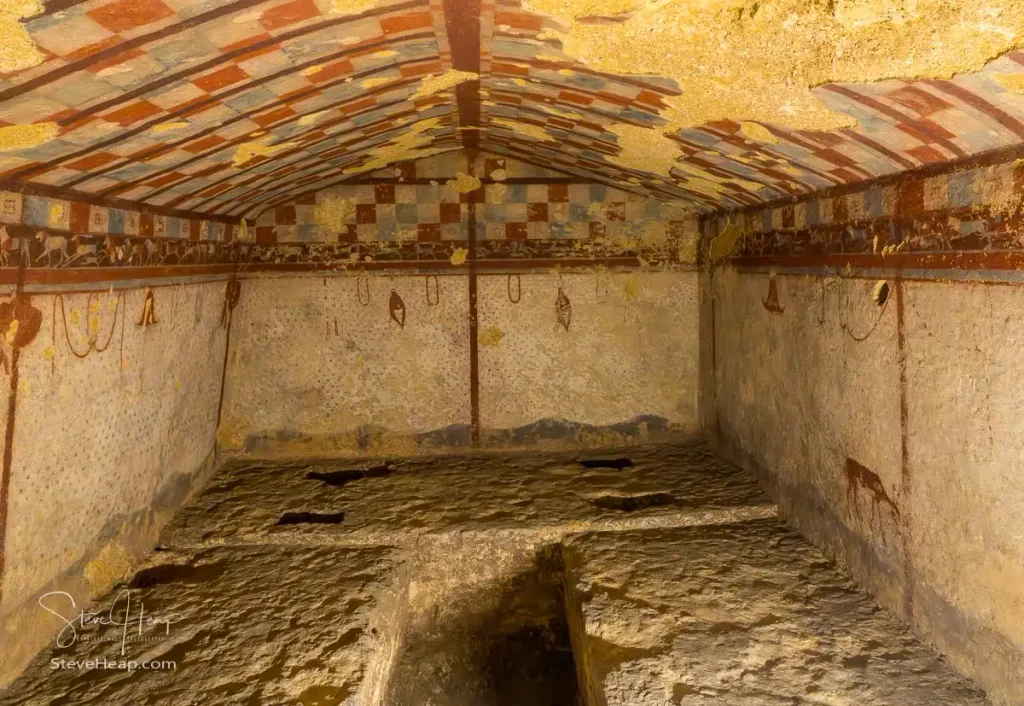
Descending narrow staircases cut straight into the bedrock, we peered into underground tomb chambers dating back more than 2,500 years. Behind climate-controlled glass panels, the walls and pitched ceilings are covered in vibrant, remarkably preserved frescoes—geometric patterns, bold reds and ochres, and lively scenes of banquets, dancers, and musicians meant to accompany the deceased into the afterlife.
Stepping back out into the fresh air, the edge of the necropolis opens up to sweeping views across a broad valley toward the long, tree-lined ridge on the opposite side.
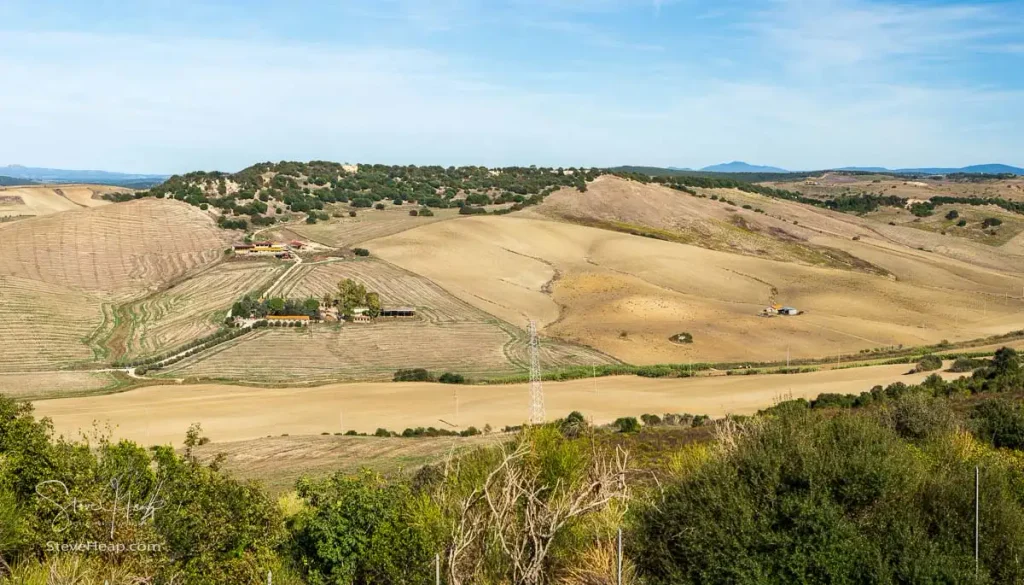
While the Monterozzi hill was reserved as the city of the dead, the living Etruscan metropolis once stretched all along that distant wooded plateau, known today as the Pian di Civita. Looking across the golden, rolling hills separating the two ridges, it is easy to see why the Etruscans chose such a commanding, defensible vantage point—and hidden among the trees along that skyline, archaeological ruins of their ancient walls, streets, and temples still remain.
The Winged Horses and a Quiet Stroll Through Tarquinia
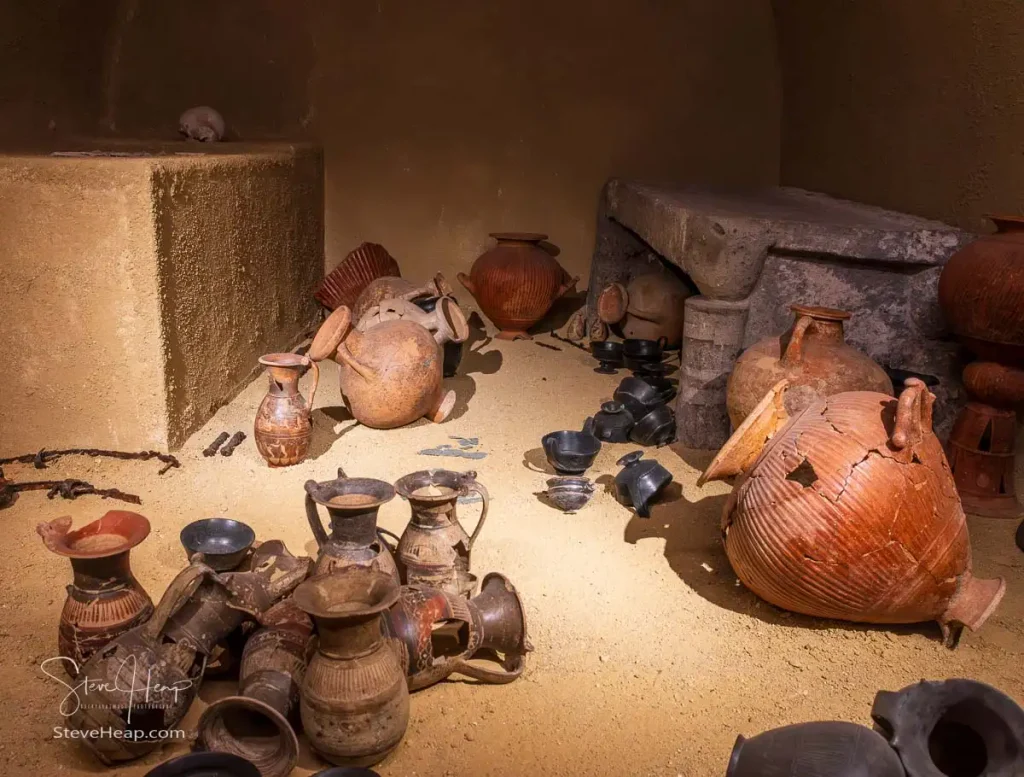
From the burial grounds, we headed into the historic center of Tarquinia to visit the National Etruscan Museum, housed inside the 15th-century Palazzo Vitelleschi. Inside, the galleries display artifacts recovered from the tombs—including reconstructed burial chambers packed with terracotta amphorae, dark pottery, and carved stone sarcophagi.
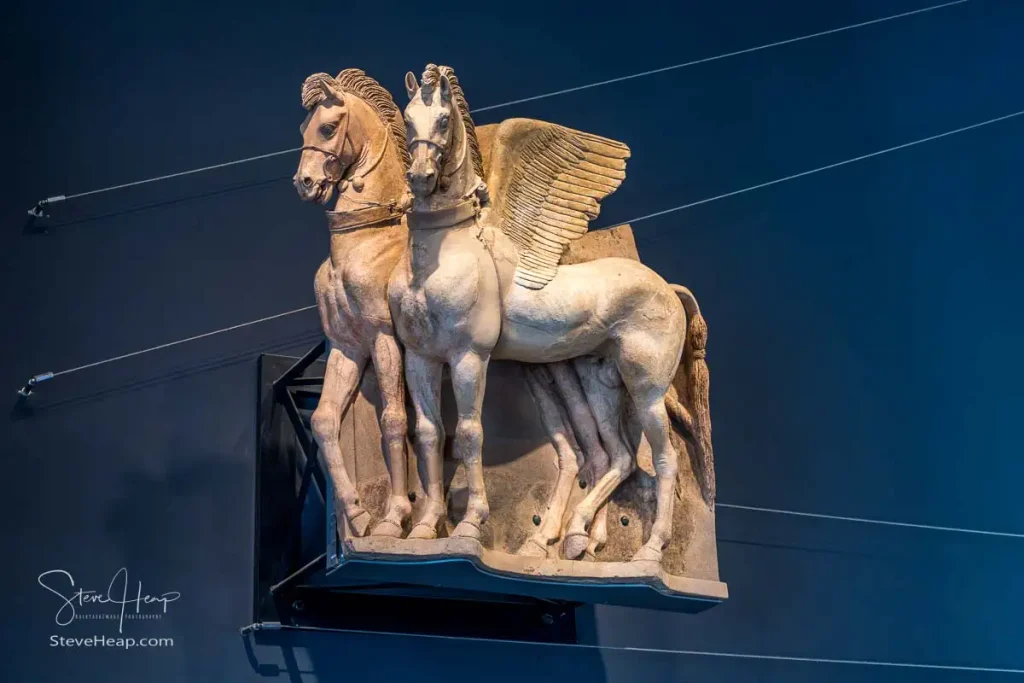
The centerpiece of the collection is the famous Cavalli Alati—a pair of monumental, intricately sculpted winged horses crafted in terracotta that once crowned an ancient Etruscan temple. Seeing the lifelike detail of the horses up close, dramatic against the dark gallery backdrop, is worth the trip on its own. The wires extending backwards show the scale of the entire monument which originally included a chariot being pulled by these horses.
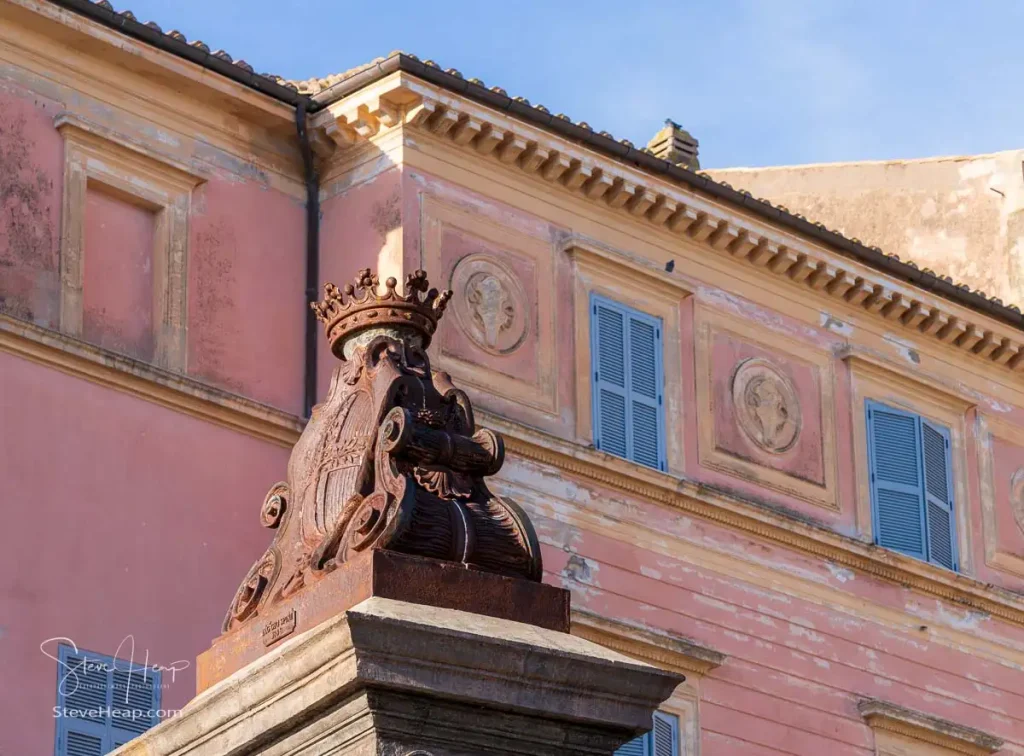
Before returning to the ship, we took a short walk around the surrounding streets, admiring the warm, rose- and ochre-colored historic facades. Passing a towering stone archway in town, a candid everyday scene caught my eye and made me smile: tucked inside the shade of the cavernous arch, a lively group of locals sat together on one bench deep in animated conversation, while on the opposite side, a single man sat completely alone in quiet isolation. It does make you wonder what he had said!
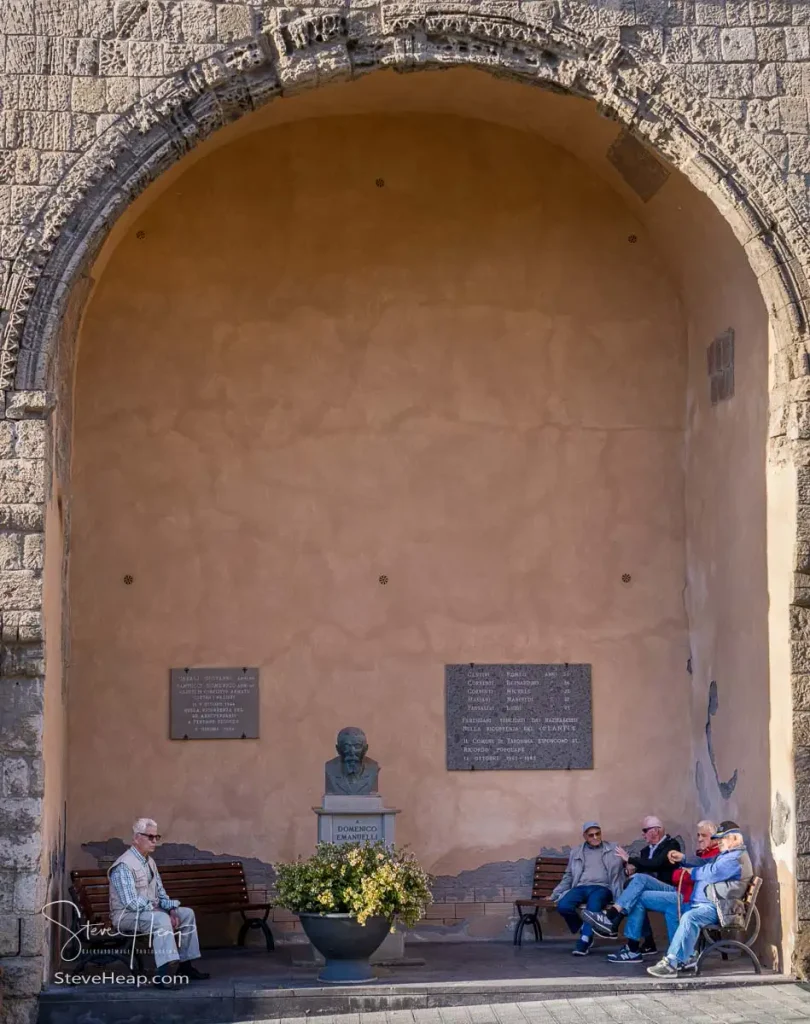
It was a wonderful, unscripted slice of small-town Italian life—and a fitting final snapshot for a deeply rewarding port day.
And with that, we left from the town gates to take the short coach ride back to our ship and the longer sail to the island of Malta.


